 Whalesbook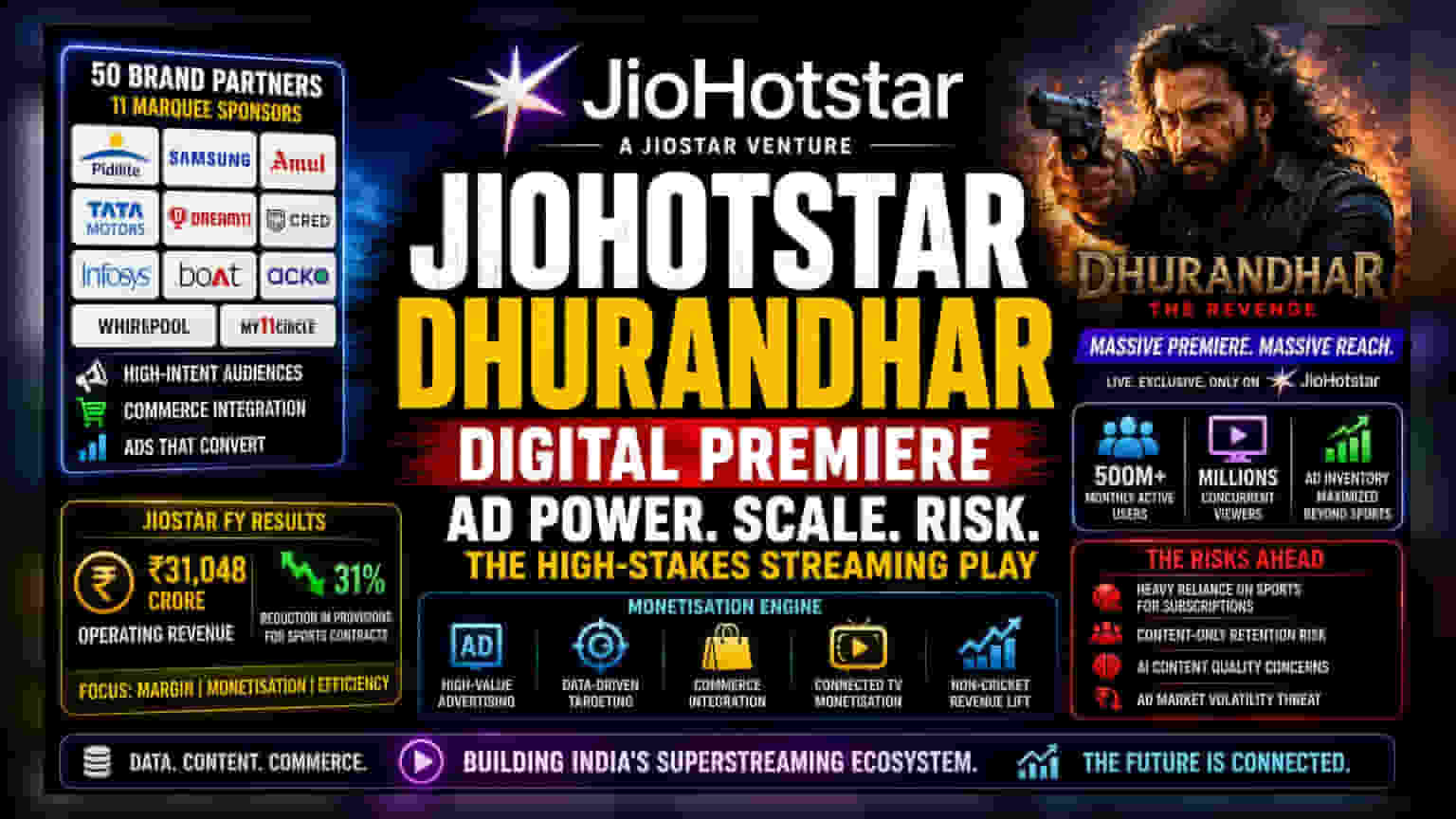


The Shift in Ad-Monetization
The digital premiere of 'Dhurandhar The Revenge' marks a calculated effort by JioHotstar to capitalize on high-intent, live-audience moments. By securing 50 brand partners, including 11 marquee sponsors such as Pidilite Industries and Samsung, the platform is effectively leveraging its massive user base to offset the structural costs of content acquisition. This strategy arrives at a critical juncture; while traditional television advertising in India faces persistent headwinds from FMCG spending cuts, JioHotstar is successfully diverting those budgets toward high-visibility digital tentpoles. The ability to bundle these premieres with interactive features—such as integrated commerce—transforms passive viewership into active transactional opportunities.
Scaling Against Sector Pressures
JioHotstar’s performance exists within the broader financial consolidation of JioStar, the joint venture between Reliance Industries and Walt Disney. Following a fiscal year where the platform reported ₹31,048 crore in operating revenue, the focus has shifted from raw user acquisition to margin improvement and monetisation efficiency. Unlike global competitors prioritizing subscription growth, JioHotstar is operating in a landscape where integrated, data-rich advertising on connected TVs is becoming the primary yield driver. The platform, which recently saw a 31% reduction in provisions for onerous sports contracts, is utilizing these high-profile film premieres to maximize inventory utilization during non-cricket windows.
The Forensic Bear Case
Despite the scale, the venture faces notable structural risks. The platform remains heavily dependent on marquee sports properties to drive churn-free subscriptions, leaving entertainment-only content vulnerable to audience fluctuations. Historical trends suggest that while film premieres generate massive short-term spikes in concurrency, long-term retention remains an uphill battle in India’s hyper-competitive streaming environment. Furthermore, management’s aggressive pivot toward AI-generated content—while theoretically lowering production costs—risks alienating core audiences if quality does not match the output of traditional premium studios. Any failure to maintain these high levels of engagement could jeopardize the EBITDA growth achieved in FY26, particularly if the current reliance on digital ad inventory faces broader economic volatility.
Future Outlook
JioHotstar is positioning itself as a central node in the Indian consumer-tech ecosystem. With over 500 million monthly active users, the platform’s trajectory is increasingly tied to its ability to turn data insights—aided by partnerships with firms like OpenAI—into hyper-personalized ad experiences. While the reliance on big-ticket content remains, the gradual build-out of a commerce-led streaming model suggests a roadmap aimed at reducing dependency on legacy broadcasting economics.