

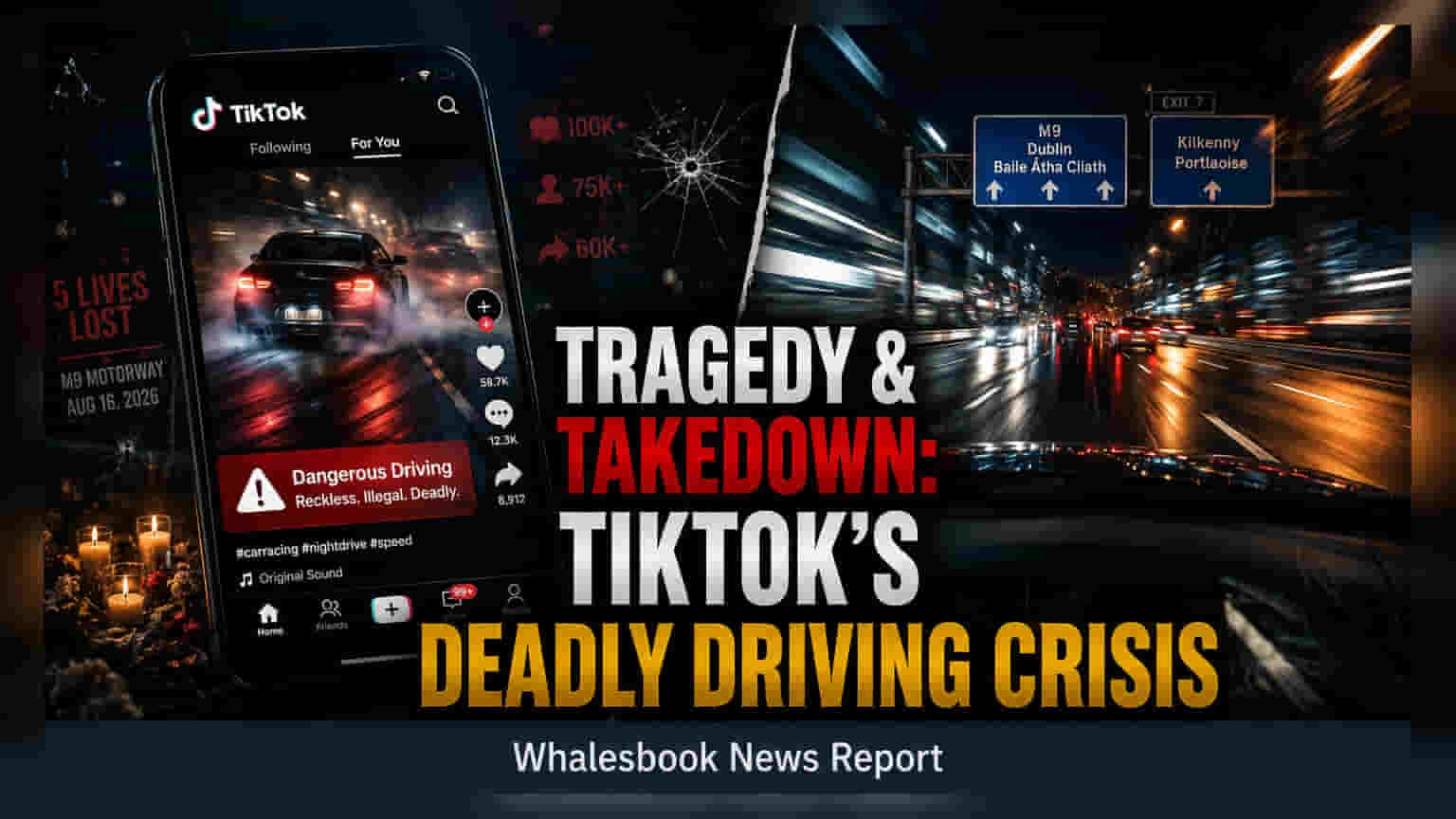
The Irish parliament has summoned TikTok to testify regarding viral content that allegedly encourages dangerous driving, following a fatal crash that claimed five lives. This development underscores the rising regulatory risks for global social media platforms as they face pressure to curb viral trends that lead to real-world harm.
The Irish Oireachtas Committee on Arts, Media, Communications, Culture and Sport has formally summoned TikTok to address the circulation of content that appears to glorify reckless and illegal driving. The request follows a tragic collision on the M9 motorway on August 16, 2026, which resulted in the deaths of five teenage boys. Irish authorities are now investigating whether these dangerous driving behaviors were fueled by a desire for engagement and likes on social media platforms.
Mounting Regulatory Scrutiny
Alan Kelly, the chair of the committee, has expressed deep concern regarding the impact of online trends on public safety. The committee is seeking answers on how TikTok manages and removes content that depicts illegal acts, specifically those involving vehicles. This summons is part of a broader government effort in Ireland to address the issue, with the police force and the Justice Minister signaling a tougher approach to driving offenses.
While TikTok has stated that it is monitoring the situation and removing content that violates its community guidelines, the summons highlights the recurring challenge for social media companies. Platforms are increasingly facing pressure to balance user-generated content with the need for strict, proactive moderation. For digital platforms, this often translates into higher operational costs, as companies must invest more in AI-driven moderation and human review teams to keep up with viral trends.
The Investor Angle on Platform Risk
TikTok is a subsidiary of the private entity ByteDance and is not a publicly traded company on Indian exchanges. However, for investors tracking the technology and digital platform sector, this event serves as a reminder of the regulatory and operational risks facing social media firms. Regulatory bodies worldwide are adopting a stricter stance on how platforms prioritize engagement metrics over public safety.
When social media algorithms are linked to real-world harm, companies often face the risk of government inquiries, fines, and stricter content moderation laws. These measures can impact a platform's ability to operate freely and may require significant changes to how feeds are structured. As governments in different countries—including India, which has seen past bans and restrictions on various digital apps—continue to tighten oversight on digital content, compliance costs and legal risks remain key monitorables for the entire social media and ad-tech sector.
The next step in this matter will be the appearance of company representatives before the Irish committee. Investors and observers of the digital landscape will likely track the outcome of these hearings to see if they lead to new, stricter guidelines for content moderation in the European market, which often influences regulatory trends elsewhere.