

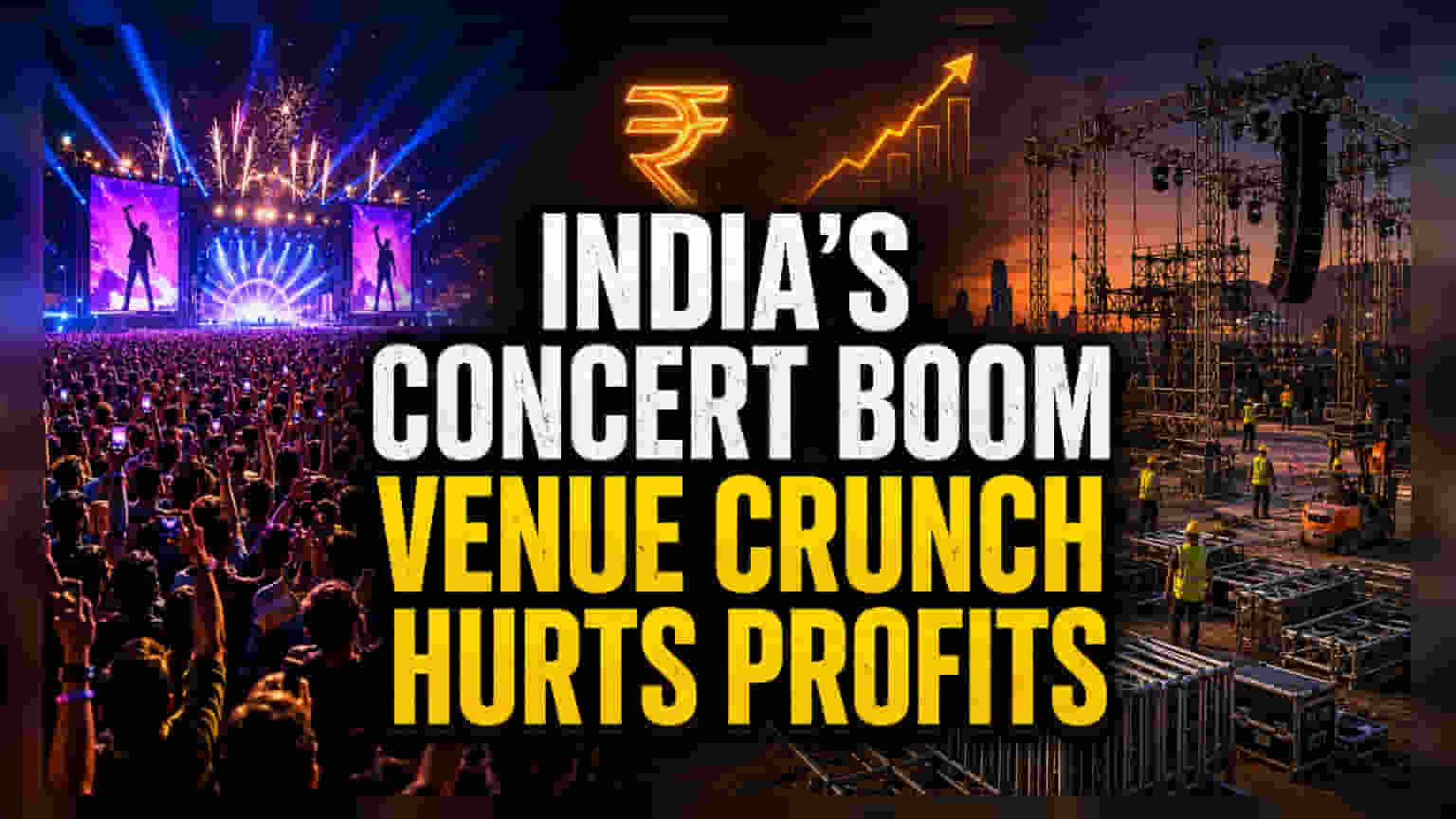
India's booming live entertainment sector is facing a profitability crunch due to a severe lack of permanent concert venues. Promoters currently spend 30-40% of show budgets on temporary infrastructure, which eats into margins. Investors should watch whether the shift toward permanent arenas can reduce these high operational costs and enable sustainable industry growth.
What Happened
India’s live entertainment sector is witnessing record demand, with major global and domestic acts selling out large-scale shows. For instance, the upcoming Travis Scott concert in Delhi has generated approximately ₹100 crore in ticket sales alone. This surge highlights India’s transition into a high-potential global market for live events. However, this rapid growth is currently hitting a structural barrier: the country lacks enough purpose-built, permanent venues to host large concerts. This infrastructure deficit is forcing event promoters to operate like construction companies, building and dismantling temporary arenas for almost every single show.
The Profit Margin Problem
The live event economy in India is currently valued at ₹17,000 crore. While revenue is growing, the current business model is under pressure. Building a temporary arena requires significant upfront capital. According to industry data, venue and production costs can consume between 30% and 40% of a show's total budget. When combined with high artist fees, which often account for 50% of costs, the remaining profit margin is often very thin. This high cost of production makes it difficult for companies to scale profitably even when events are completely sold out.
Why Infrastructure Costs Are High
The root of the issue is the lack of "plug-and-play" venues. These are facilities that come with pre-existing stages, roofing, backstage areas, and utility connections, similar to stadiums like the O2 Arena in London. In India, most venues lack this basic infrastructure. Promoters must rent empty spaces and build everything from scratch. This process is not only expensive but also leads to operational inefficiencies, such as long food and beverage queues, parking issues, and crowd management challenges. These problems can directly impact the quality of the fan experience and, consequently, the long-term brand value of the events.
The Investment Challenge
There is a classic "chicken-and-egg" problem holding back development. Investors are reluctant to fund dedicated concert arenas because they want a proven, steady pipeline of events before committing capital. Meanwhile, promoters are hesitant to commit to more frequent, multi-city tours because the lack of quality venues makes the logistics too expensive and unpredictable. This cycle has historically kept India off the touring routes for many global artists. However, some companies are taking early steps to bridge this gap, with platforms like Zomato’s 'District' initiative beginning to manage venues like the Terraform Arena to improve operational predictability.
What Investors Should Track
For investors, the key monitorable is how the industry moves toward a more sustainable, permanent venue model. Future growth in profit margins for event management and ticketing companies will depend on reducing the current dependency on temporary infrastructure. Market participants should look for announcements regarding new dedicated venue projects, government policy support for live events, and any improvement in artist routing for India. The ability to unlock new revenue streams, such as naming rights and VIP services, will be the next major financial shift for the sector.