

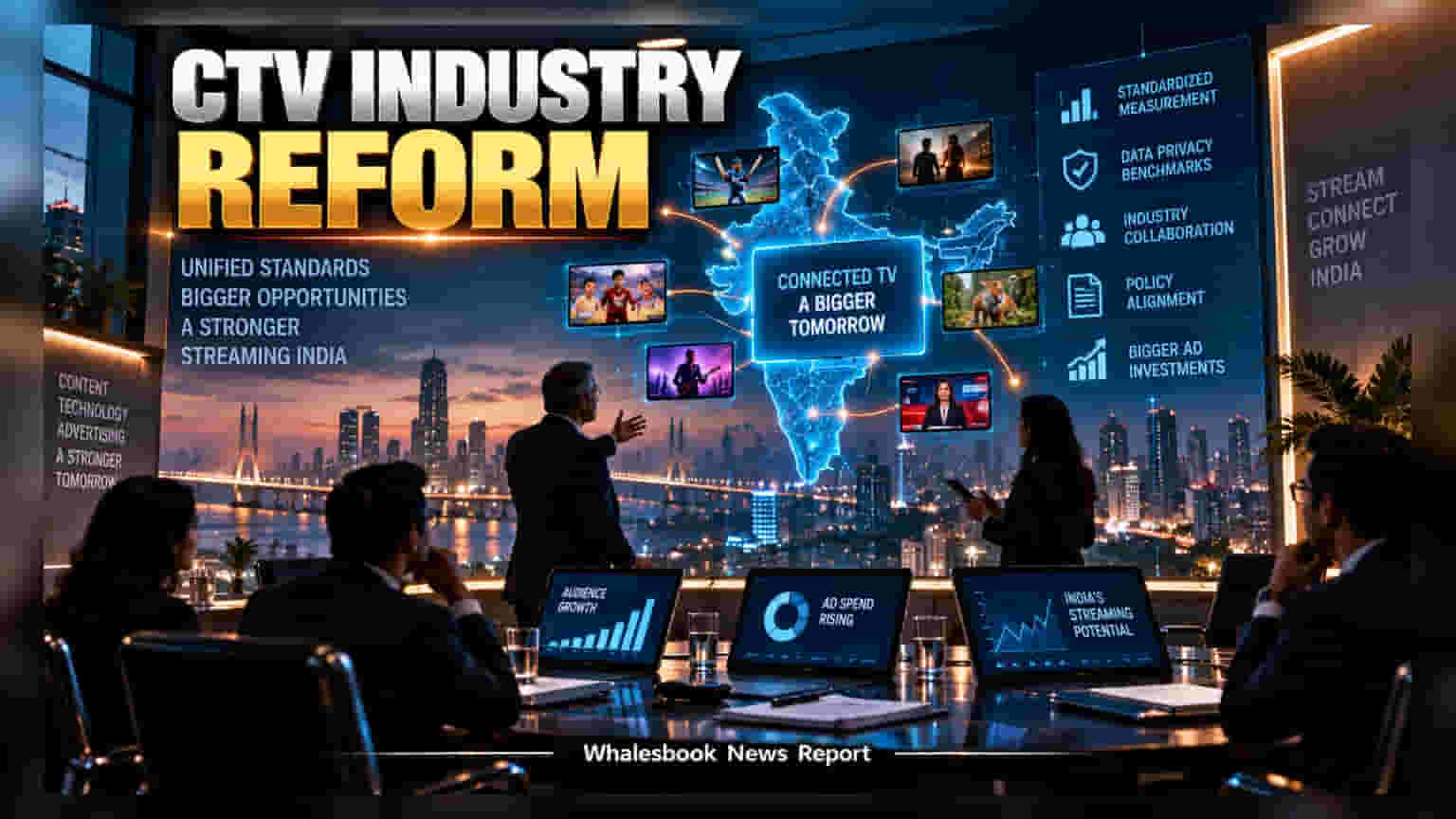
Major Indian streaming and tech companies have initiated talks to form the India Connected TV & FAST Council. The proposed group aims to fix data fragmentation and represent the industry as the government prepares new regulations for digital television services.
Leading stakeholders in India’s Connected TV (CTV) and Free Ad-Supported Streaming Television (FAST) sectors have begun discussions to establish an independent governing body, the India Connected TV & FAST Council (ICFC). The initiative, convened by Runn Media Labs, brought together major players including JioStar, Zee, Magnite, The Trade Desk, and CloudTV in a recent roundtable discussion.
The primary objective of this proposed council is to bring order to a rapidly growing but fragmented market. Currently, digital television advertising and content consumption lack the centralized, standardized measurement systems that traditional television broadcasting has relied upon for decades. By creating a unified body, the industry hopes to develop consistent audience measurement standards and data privacy benchmarks, which are essential for attracting larger and more sustained advertising budgets.
This move comes at a crucial time as the Indian government is actively working on drafting new regulatory frameworks for FAST services and Application-based Linear Television Distribution (ATLD). By forming a collective institutional voice, companies in the streaming and digital TV space aim to ensure that these upcoming regulations are well-aligned with the technical realities of modern digital distribution, rather than being based solely on legacy broadcast models.
For the industry, the transition from an unorganized ecosystem to a structured one is key for long-term growth. Standardized data helps advertisers measure return on investment more accurately, which in turn can lead to more predictable revenue streams for content providers and platform owners. However, the success of this council will depend on its ability to remain inclusive. Participants at the roundtable have emphasized that the body must be designed to avoid monopolistic influence, ensuring that the interests of all stakeholders—including broadcasters, device manufacturers, and advertising technology firms—are fairly represented.
As of now, this initiative is in its early stages. There have been no formal exchange filings or regulatory approvals related to the formation of this council. The primary risks for investors to monitor include potential execution delays and the complexity of aligning competing interests within the industry. Additionally, the final impact will depend on how the government’s pending regulatory framework for digital television services eventually takes shape and how the council navigates that transition.