 Whalesbook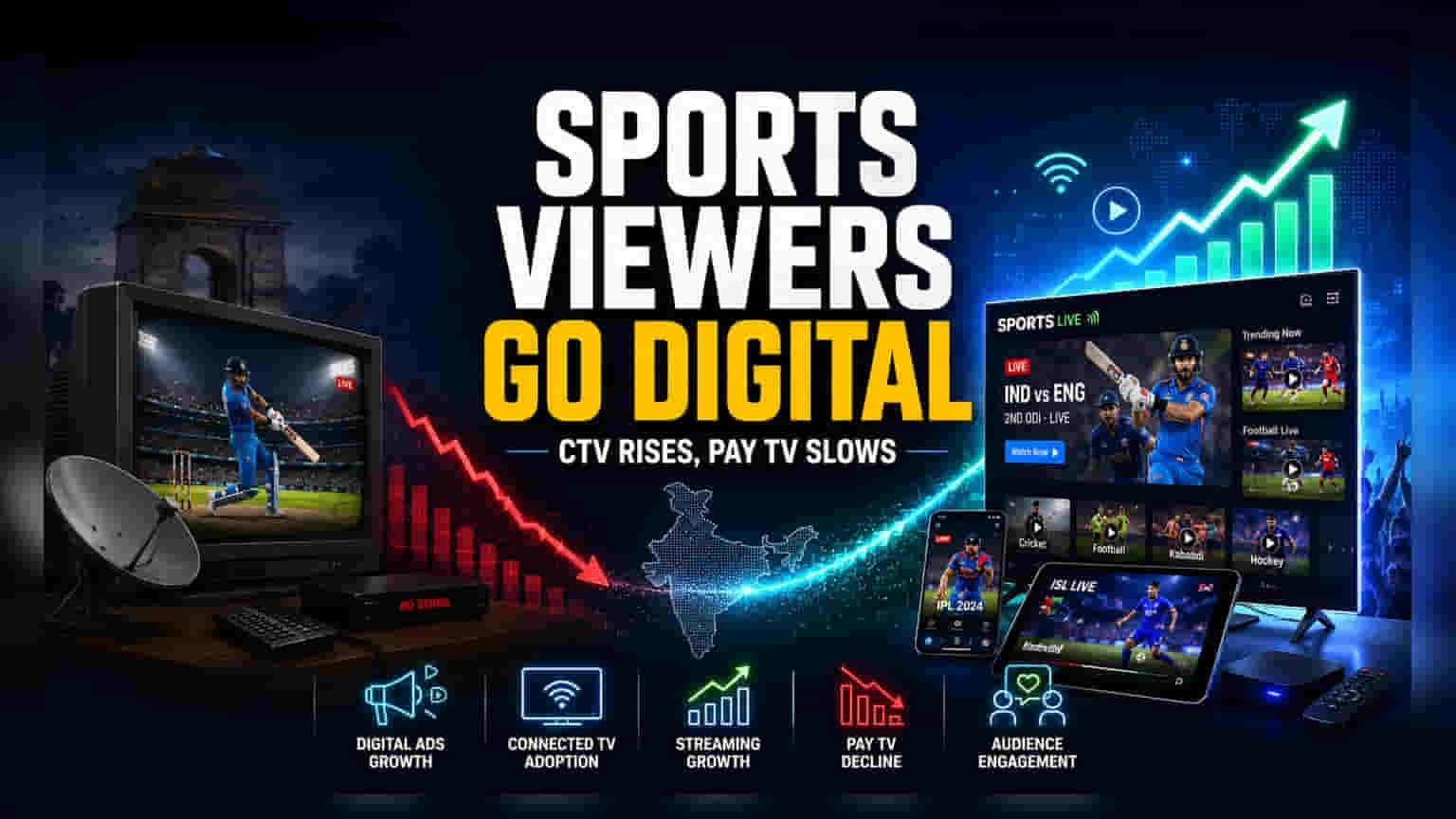


Sports viewership in India is rapidly moving from traditional television to digital and connected TV, with major events like the IPL and FIFA World Cup accelerating this trend. This change is forcing media companies to rethink their revenue models as pay TV households decline and advertisers shift their spending to digital platforms.
What Happened
India’s sports broadcasting landscape is undergoing a structural change as viewers increasingly migrate from traditional television to digital platforms. Recent data from major sporting events, including the FIFA World Cup and the Indian Premier League (IPL), reveals that while audience interest in live sports remains high, the way these matches are consumed has shifted significantly.
The IPL recently concluded with a massive reach of 1.2 billion viewers across television and digital platforms. Viewers spent 870 billion minutes watching the tournament, a 7% year-on-year increase. The FIFA World Cup also demonstrated this multi-platform dominance, reaching 100 million viewers in India with an additional 360 million views generated through social media engagement.
Why This Matters For Investors
The most significant takeaway for investors is the shift in how advertising money flows. For years, traditional linear television was the primary driver of advertising revenue for media conglomerates. However, the surge in Connected TV (CTV) and digital streaming is changing this dynamic. CTV viewership rose by 22% during the recent IPL season, marking it as one of the fastest-growing segments in the media industry.
This shift is important because digital and CTV platforms offer advertisers better data and targeting capabilities compared to traditional television. As viewers move to screens that allow for precise tracking of audience preferences, advertising budgets are increasingly being reallocated toward digital platforms. Companies that can successfully bridge this gap—maintaining a strong presence in linear TV while aggressively building their digital and CTV infrastructure—are likely to see a shift in their revenue composition over the coming years.
The Pay TV Contraction
The flip side of the digital surge is the decline in traditional pay television. According to industry data, India lost approximately 11 million pay TV households in 2025. This contraction in the traditional subscriber base is a critical monitorable for media companies that rely heavily on subscription fees from cable and DTH (Direct-to-Home) operators. As weekly active connected TV homes climbed to around 40 million, up from 30 million in 2024, the business model for traditional broadcasters is facing increased pressure to adapt.
Strategic Challenges for Media Companies
Media giants like Zee Entertainment and JioStar are navigating this transition by pushing for deeper integration between their linear and digital offerings. JioStar has focused on regional language presentation and the communal experience of CTV to drive engagement, particularly among younger and affluent demographics. Zee5 has also seen high engagement, with average viewer engagement for live football matches exceeding 190 minutes during the opening weekend of the World Cup.
However, this transition comes with its own financial trade-offs. Building and scaling digital infrastructure, managing high-bandwidth content delivery, and acquiring digital streaming rights for marquee sports events often require heavy initial capital spending. Investors should watch whether these investments yield sustainable profit margins compared to the established, though declining, cash flows from traditional television.
What Investors Should Track
Going forward, the key metrics for investors will be the growth rate of digital advertising revenue versus the rate of decline in traditional pay TV subscriptions. The ability of companies to retain viewers in the digital ecosystem—measured by concurrent users and average watch time—will determine long-term success. Additionally, monitor management commentary on how they plan to balance the cost of infrastructure expansion with the monetization of their digital user base. The success of regional language content and the continued penetration of connected TV in Tier 2 and Tier 3 markets will also be significant indicators of future growth.