 Whalesbook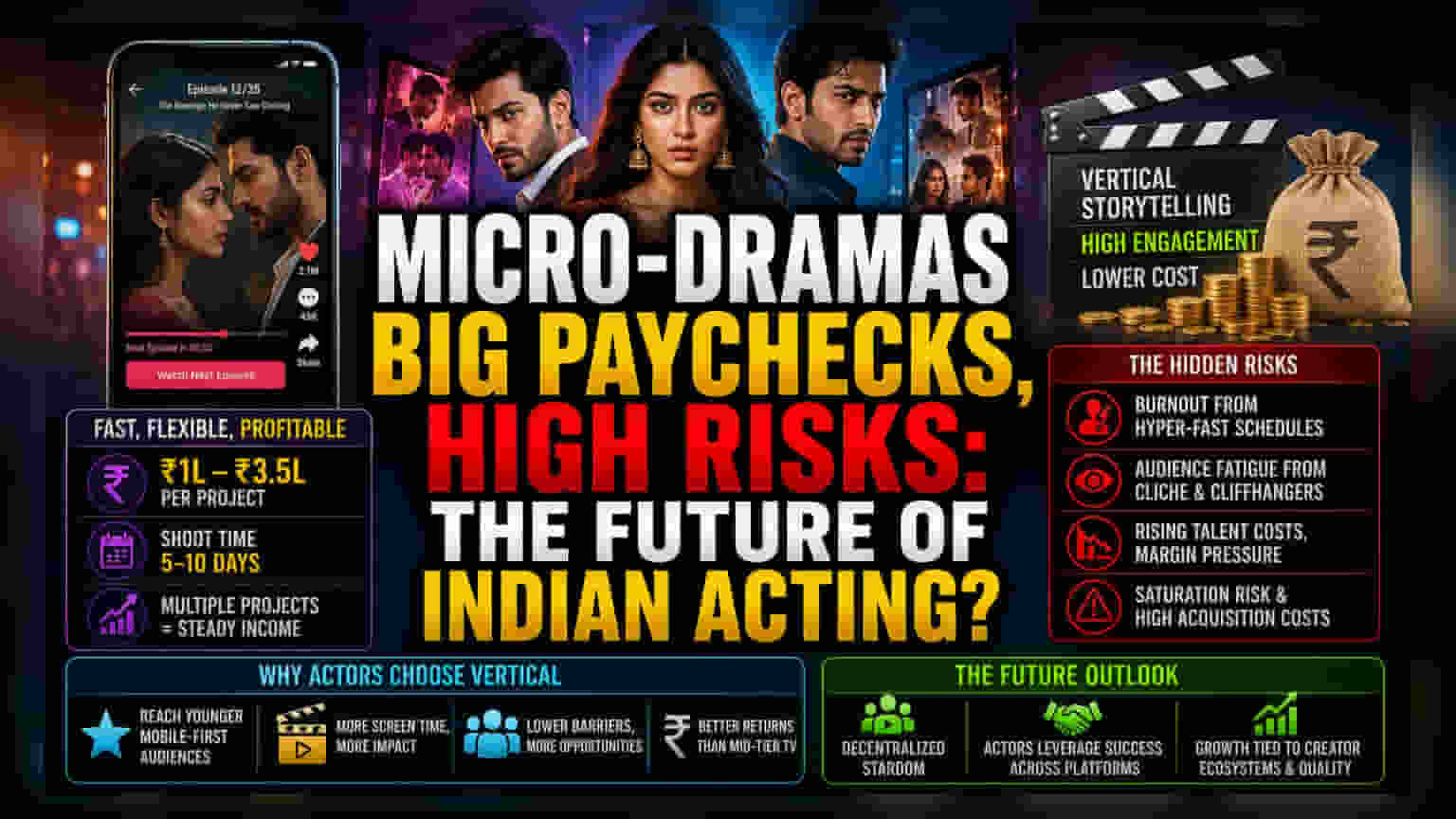


The Economics of Velocity
The transition toward vertical-first storytelling has fundamentally altered the compensation model for Indian performers. While traditional television often mandates restrictive exclusivity contracts and long-lead production cycles, the micro-drama ecosystem operates on a hyper-efficient turnover model. Actors frequently balance multiple projects simultaneously, securing fees between ₹1 lakh and ₹3.5 lakh per project. This volume-based approach creates a consistent revenue stream that rivals, and often exceeds, the earning potential of mid-tier television roles, particularly given the reduced overhead and rapid filming windows that rarely exceed ten days per series.
The Vertical Premium vs. Legacy Constraints
Unlike the measured pacing of theatrical releases or standard web series, vertical content relies on immediate emotional stakes and aggressive cliffhangers. This environment rewards actors who possess high-intensity performance flexibility. For legacy performers whose traditional career trajectories have stagnated, this format serves as a vital bridge to younger, mobile-engaged demographics. The reliance on close-up cinematography and aggressive editing means that the cost-to-production ratio is significantly lower than traditional media, allowing platforms to experiment with talent that might be priced out of larger film budgets but offer higher immediate audience conversion rates.
Structural Risks and Market Sustainability
Despite the recent influx of capital and talent, the micro-drama sector faces distinct challenges regarding long-term viability. The reliance on hyper-fast production schedules creates a high risk of burnout for performers, while the aggressive reliance on cliffhanger-driven narratives risks audience fatigue. From an investor standpoint, the scalability of this model remains tied to the platform's ability to maintain low customer acquisition costs. Furthermore, as market saturation increases, the cost of top-tier talent will inevitably rise, potentially compressing the margins that currently define the sector. Unlike established streaming giants that benefit from deep library catalogs and subscription loyalty, micro-drama platforms depend on a continuous stream of new content, creating a perpetual dependency on high-velocity production cycles that are inherently fragile if viewership interest wanes.
Future Outlook
The shift toward vertical-native stars signifies a broader decentralization of Indian entertainment. As these actors leverage their micro-drama success to cross-promote theatrical projects, the traditional hierarchy of stardom is being bypassed. Future growth will likely be dictated by the ability of platforms to evolve from content repositories into full-scale creator ecosystems, though success will remain contingent on managing the precarious balance between rapid creative output and sustainable production quality.