

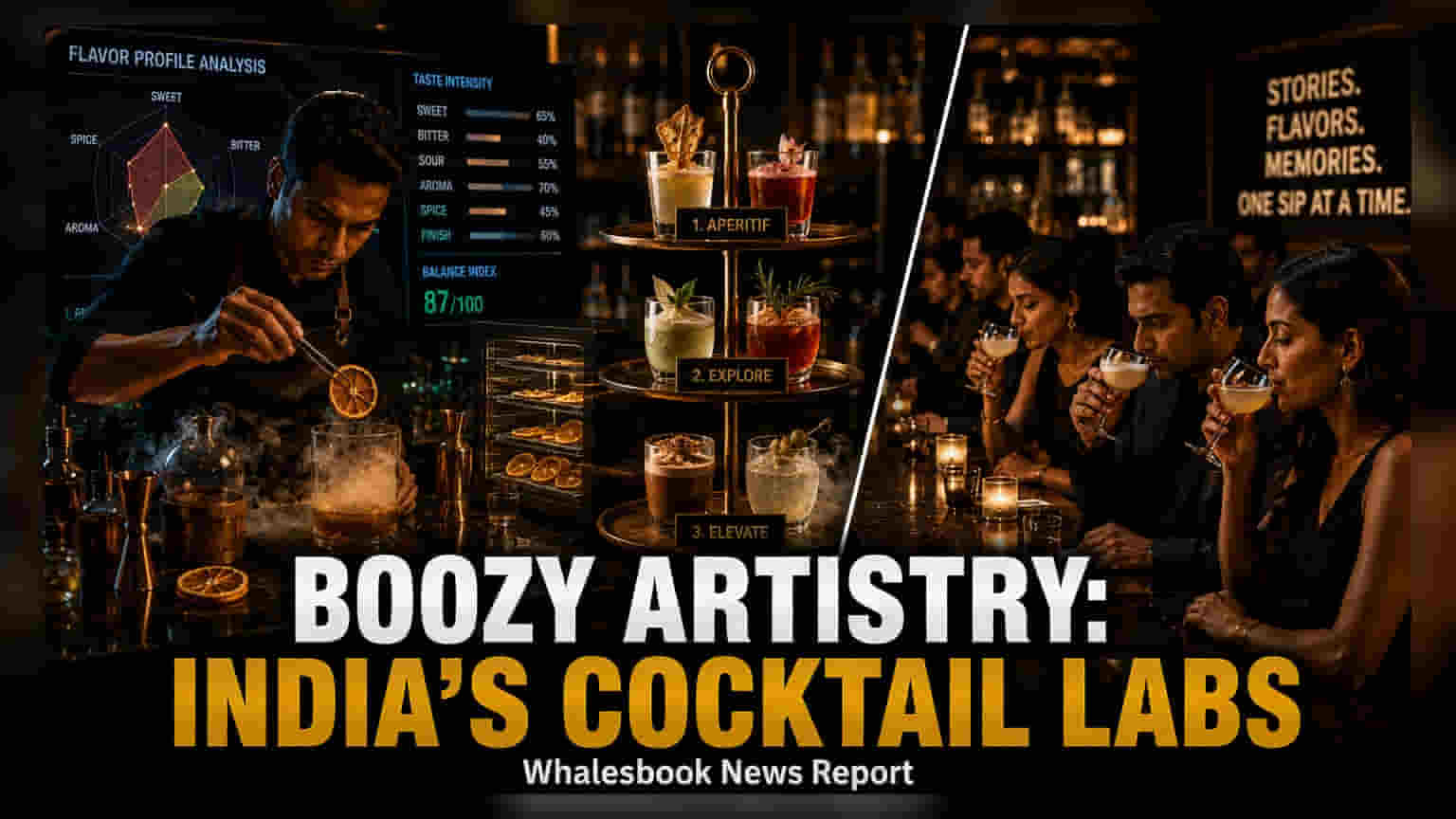
Indian bars are increasingly adopting multi-course cocktail tasting menus to capture higher-spending consumers through experiential luxury. While this strategy builds brand loyalty and signifies a shift toward premiumization in the hospitality sector, the model faces significant challenges regarding scalability, labor costs, and niche audience reach.
The Indian hospitality sector is seeing a shift in how high-end bars engage customers, with the emergence of multi-course cocktail tasting menus. Moving away from the traditional volume-based bar service, select establishments like The Cavity in Delhi and The Bunker Room in Bengaluru are adopting this format to offer curated, storytelling-led drinking experiences.
The Shift to Premiumization
This trend reflects a broader move toward premiumization within India's food and beverage industry. By offering structured, high-value experiences, bars are aiming to move beyond standard transactional service. The model involves intensive preparation techniques, such as fermentation and dehydration, which require specialized labor and premium ingredients. For investors in the hospitality space, this is a distinct strategy to build brand equity and secure customer loyalty, particularly among younger, affluent demographics who are increasingly seeking unique social experiences.
Operational Dynamics and Business Model
Unlike mass-market bar concepts that rely on high table turnover, these tasting menus are designed for intimate groups of 4 to 10 guests. The experience typically lasts one to three hours, with a controlled volume of alcohol served to ensure a curated journey. From a business perspective, the primary goal is not immediate volume-driven revenue but rather the enhancement of the establishment's profile. This allows operators to showcase complex flavor profiles that would otherwise be difficult to highlight on a standard menu.
Risks and Scalability Challenges
While the concept aids in brand differentiation, it carries operational risks that investors typically monitor. The format is highly labor-intensive, requiring skilled mixologists who can guide the consumer through the experience. Furthermore, high operational costs and the need for significant preparation time create a barrier to mass adoption. There is also the challenge of 'palate fatigue,' where the sensory intensity of multiple courses can lead to a diminishing return on customer enjoyment if not carefully balanced. This effectively limits the target market to a niche segment rather than a mass audience.
What Investors Should Monitor
For the broader hospitality and consumer discretionary sector, the success of such niche strategies provides insight into shifting consumer preferences. Investors generally watch whether these premiumization efforts can successfully trickle down into higher profit margins for larger F&B chains or if they remain exclusive to boutique, independent operators. The key monitorable for the industry will be whether these experiential models can achieve consistent profitability through higher ticket sizes, or if the high costs of maintenance and skilled labor will keep them limited to low-scale, marketing-focused experiments.