 Whalesbook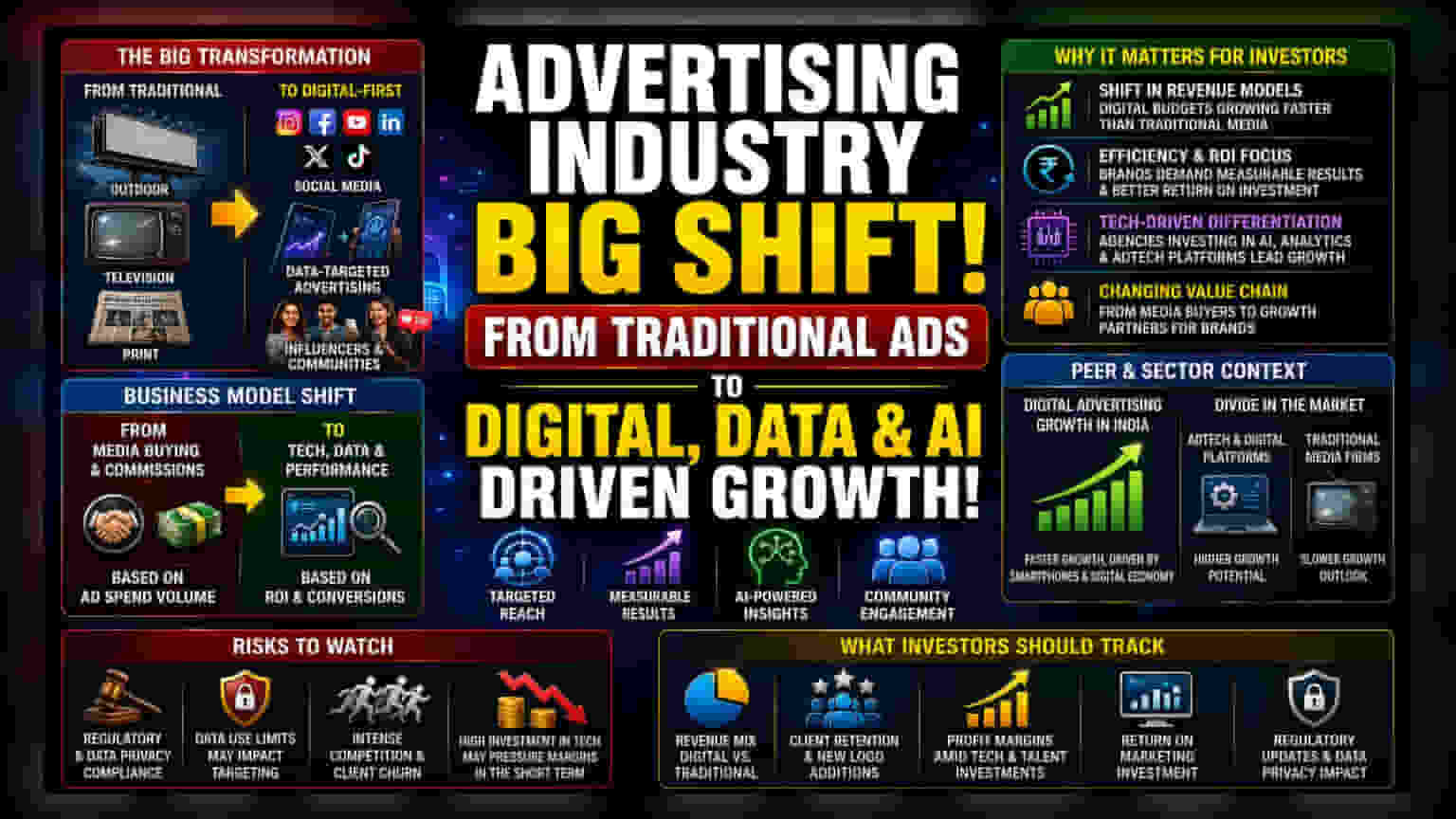


India’s advertising industry is rapidly shifting from traditional billboards to digital-first, AI-driven campaigns. This transition is changing how brands spend their budgets, favoring tech-heavy agencies over legacy media firms. For investors, the focus is on how ad agencies adapt their business models, manage customer acquisition costs, and navigate increasing digital privacy regulations.
What Happened
The Indian advertising industry is undergoing a significant transformation. For decades, the sector relied on traditional mass-media channels like outdoor billboards, television, and print to reach consumers. Today, the focus has shifted heavily toward digital platforms, social media, and AI-driven content strategies. Brands, particularly new-age direct-to-consumer companies, are moving away from traditional media buying and toward content creation, community engagement, and data-targeted advertising.
Why This Matters For Investors
This shift is not just about changing trends; it fundamentally alters the revenue models for companies in the advertising and media space. Traditional advertising agencies that rely on large-scale media buying often earn commissions based on ad spend volume. However, as budgets move toward digital platforms like Google, Meta, or influencer-driven channels, the value chain is changing.
Investors are now evaluating which agencies can transition from traditional media buying to high-tech digital solutions. Agencies that invest in their own technology, analytics, and AI capabilities are generally seeing different growth trajectories compared to those that primarily offer traditional creative services. The ability to demonstrate a clear return on investment—often measured by tracking clicks, conversions, and customer acquisition costs—has become the primary metric for agency success.
The Business Model Shift
The rise of new-age brands, which often operate with limited budgets, has forced the industry to become more efficient. These brands prefer performance-based marketing where they pay for actual results rather than just visibility. This puts pressure on advertising firms to offer more than just creative ideas; they now need to provide deep data analytics, audience segmentation, and technological integration. For companies in this space, this transition requires heavy spending on technology and talent, which can temporarily impact profit margins.
Peer and Sector Context
Within the Indian stock market, there is a clear divide between legacy media companies and modern AdTech players. Listed companies that focus on digital infrastructure, platform-based advertising, and data analytics often command different valuations compared to traditional outdoor or print-focused firms. The digital segment of the advertising sector in India has been growing faster than the traditional segment for several years, supported by increasing smartphone penetration and the expansion of the digital economy.
What Could Go Wrong
While the growth of digital advertising is clear, it is not without risks. One of the biggest challenges is the evolving regulatory environment. With the implementation of data privacy laws like the Digital Personal Data Protection Act, companies collecting consumer data for targeted advertising face stricter compliance requirements. This can limit how effectively they can track users, potentially impacting the efficiency and pricing of digital ad campaigns.
Furthermore, the industry is highly competitive. Advertising firms are constantly battling to retain clients as brand loyalty decreases and the cost of advertising on major digital platforms fluctuates. If a firm fails to update its technological capabilities or loses key clients to more agile, AI-first competitors, its revenue growth can stall.
What Investors Should Track
Investors watching this sector should monitor how agencies are adapting their service offerings. Key monitorables include the proportion of revenue coming from digital services versus traditional media, the retention rate of clients, and the company's ability to maintain profit margins despite higher investments in technology. Additionally, updates regarding data privacy regulations and how they impact the company's data collection practices will be important to watch, as these could influence future growth potential and operational costs.