 Whalesbook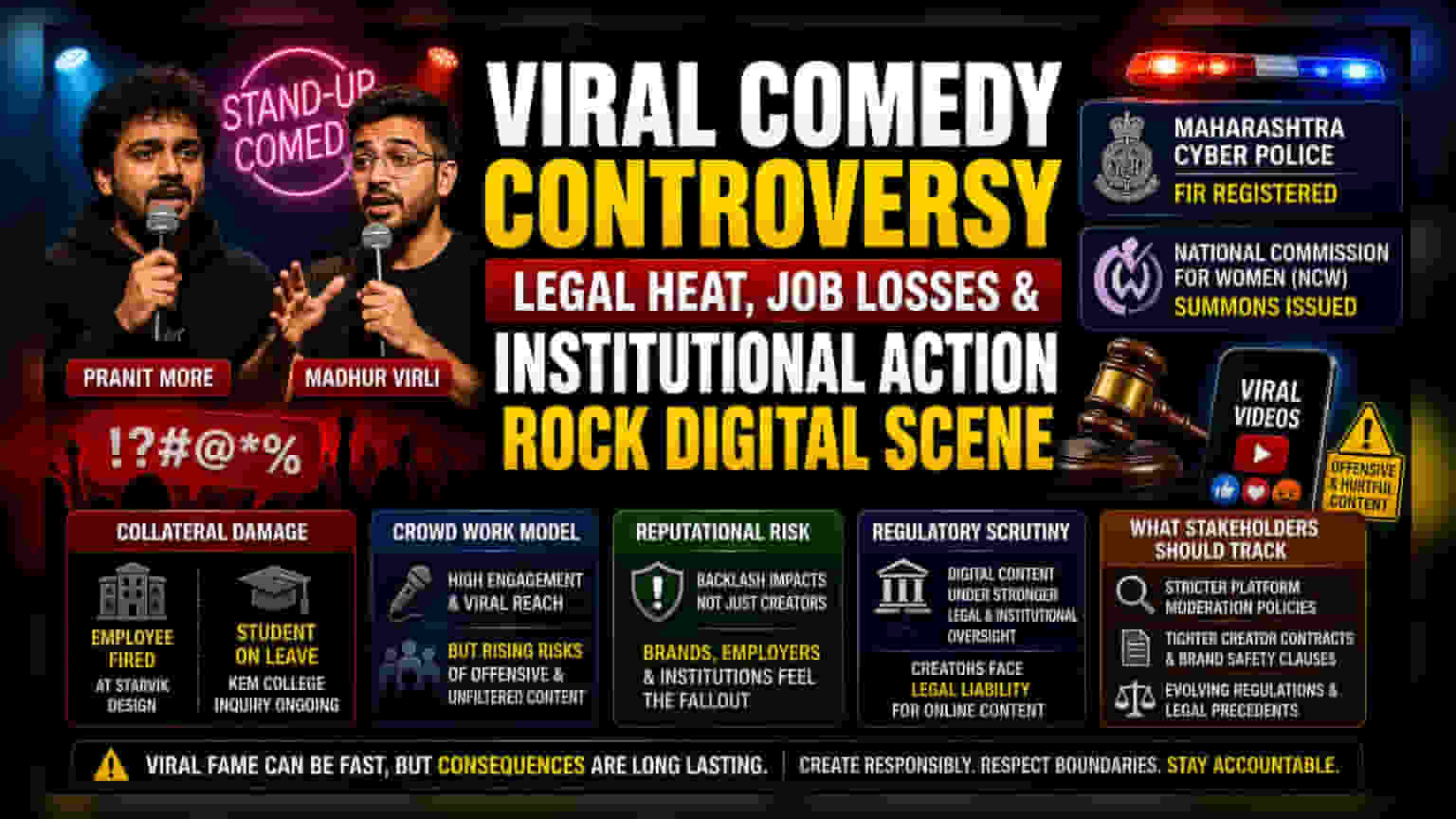


Indian comedians Pranit More and Madhur Virli are facing police FIRs and NCW summons after offensive clips went viral. The controversy has led to job terminations and institutional inquiries, highlighting the business risks of viral-focused content strategies and the growing pressure for accountability in the digital media space.
What Happened
The Indian digital comedy scene is currently under intense scrutiny following the circulation of viral performances by comedians Pranit More and Madhur Virli. These videos, which featured graphic and offensive commentary on sensitive social issues, have triggered significant legal and institutional repercussions. The Maharashtra Cyber Police have registered an FIR against the comedians, and the National Commission for Women (NCW) has issued formal summons, signalling increased regulatory attention toward content posted on social media platforms.
Beyond the legal action against the performers, the fallout has extended to their associates and the professional environments linked to the content. An audience member involved in one of More’s viral segments was fired from his position at Starvik Design following the public backlash. Additionally, KEM College has launched an internal inquiry and placed a student on leave after clips surfaced showing her making offensive jokes during a performance.
The Business of Viral Content
The controversy has brought the "crowd work" comedy model under the spotlight. This format, which relies on unscripted, spontaneous interactions with audience members, is often used by creators to generate high-engagement content for social media platforms. While this approach is effective for driving viewership and platform algorithms, the current situation highlights the risks associated with prioritizing virality over content moderation and ethical standards. For creators and production houses, the pursuit of engagement can sometimes conflict with brand safety and the evolving expectations of public discourse.
Reputational and Institutional Risk
The incident serves as a case study in reputational risk for individuals and organizations associated with controversial creators. When private interactions or public performances result in widespread backlash, the impact is not limited to the performers alone. Corporate entities, such as the employer involved in the Starvik Design incident, are increasingly forced to address the off-duty conduct of their employees to protect their brand image. Similarly, educational and professional institutions face pressure to maintain decorum and public trust, leading to swift administrative actions like inquiries and suspensions.
Regulatory and Platform Scrutiny
The involvement of the Maharashtra Cyber Police and the NCW indicates that digital content is facing stricter oversight. As social media platforms become the primary distribution channel for such entertainment, regulators and law enforcement are increasingly treating digital content as public speech with tangible legal consequences. This environment creates a challenging landscape for content creators, who must now navigate the intersection of creative freedom and strict liability laws. For platforms hosting this content, the situation raises questions about their responsibility in moderating material that may violate legal or community standards.
What Investors and Stakeholders Should Track
Moving forward, stakeholders in the digital media and entertainment sectors should monitor several key areas. First, expect stricter content moderation policies from social media platforms, as companies look to mitigate legal risks associated with user-generated and creator-generated content. Second, watch for shifts in creator contracts and production standards, where brand safety clauses may become more rigorous. Finally, the evolving regulatory approach toward digital comedy and social media content will be a critical monitorable, as it could set precedents for how far-reaching legal accountability can be for content posted online.