

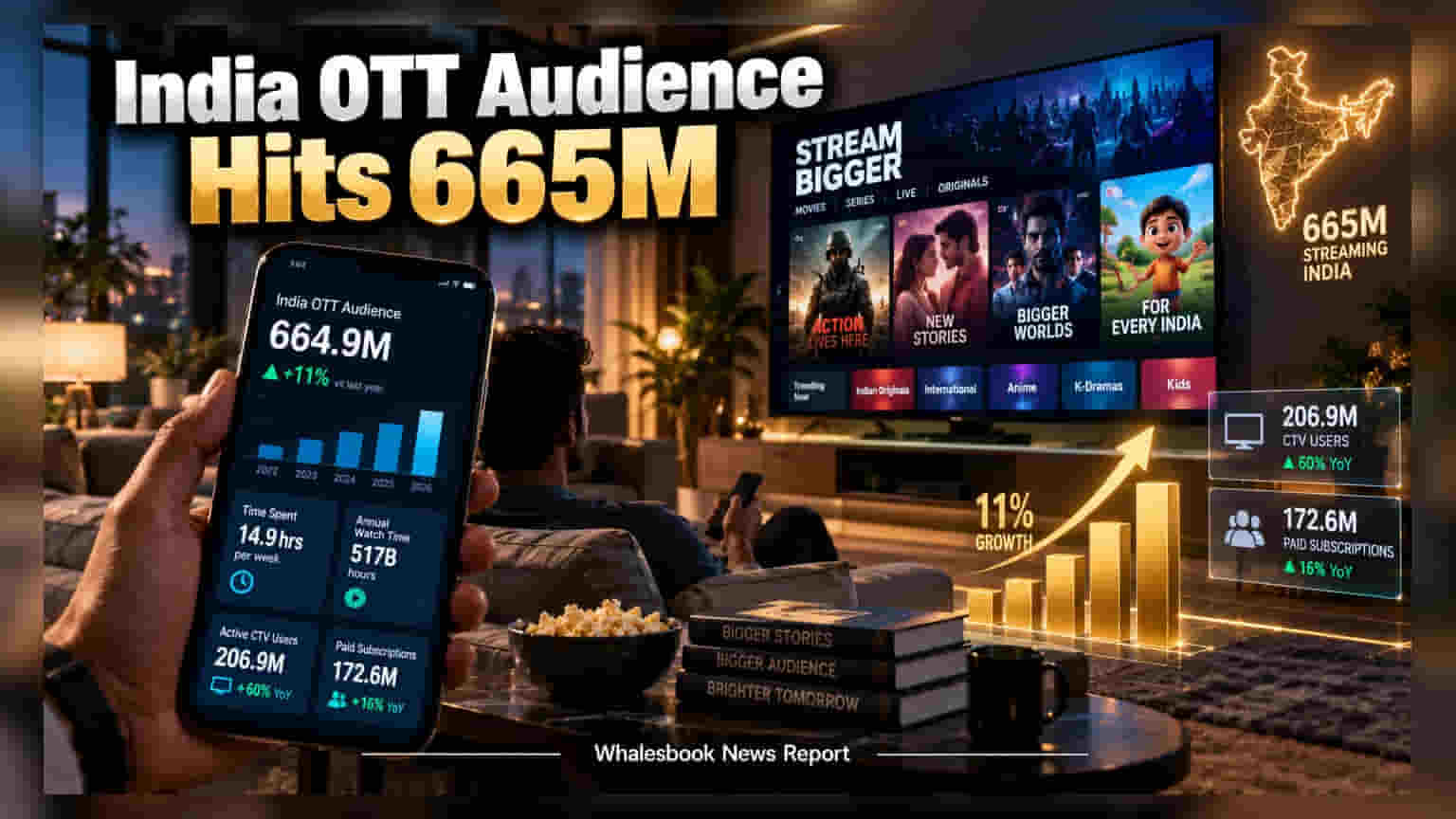
India's OTT audience grew to 664.9 million in 2026, with paid subscriptions rising to 172.6 million. A 60% surge in connected TV usage marks a major shift toward larger-screen viewing. While total viewership is expanding rapidly, companies face challenges in converting free users into paying subscribers amid high price sensitivity and intense competition.
India’s digital video streaming industry reached a significant milestone in 2026, with the total audience base hitting 664.9 million. This represents an 11% increase over the previous year, with the streaming audience now covering nearly 45% of the national population. The latest data from the Ormax OTT Audience Report highlights that viewers are spending an average of 14.9 hours per week on digital video platforms, totaling 517 billion hours of consumption annually.
The most notable change in the market is the rapid adoption of Connected TV (CTV). The number of active CTV users jumped by 60% year-on-year to reach 206.9 million. This marks a structural shift from a mobile-only market to a two-screen ecosystem, where households consume content via both smartphones and televisions. For streaming platforms, this shift is important because larger screens often lead to higher engagement levels and longer viewing sessions compared to mobile devices.
While the reach is vast, the monetization story remains complex. The number of active paid OTT subscriptions increased by 16% to 172.6 million. This creates a significant gap between the total audience of 665 million and the paid subscriber base. A substantial portion of this subscription growth is driven by telecom bundles and aggregator platforms, where users access content as part of a larger service package rather than through direct, individual subscriptions.
For media companies, the road to profitability faces several hurdles. Viewer price sensitivity in Tier 2 and Tier 3 cities remains high, limiting the ability of platforms to increase subscription fees. There is also a constant risk of customer churn if viewers do not find the content valuable enough to keep paying, especially as the sector becomes more crowded. Furthermore, heavy reliance on third-party bundles can make it difficult for platforms to build direct relationships with users and protect their own profit margins, as revenue must be shared with telecom and aggregator partners.
Looking ahead, the focus for streaming platforms will be on balancing high content production costs with the need for sustainable subscriber growth. The rise of niche formats like micro-dramas, K-dramas, and anime—which saw audience growth of 50%, 48%, and 32% respectively—indicates that viewers are diversifying their preferences. Investors should monitor how effectively these platforms can convert the massive free-viewer base into paying customers and whether companies can achieve profitability without relying solely on aggressive bundling strategies.