

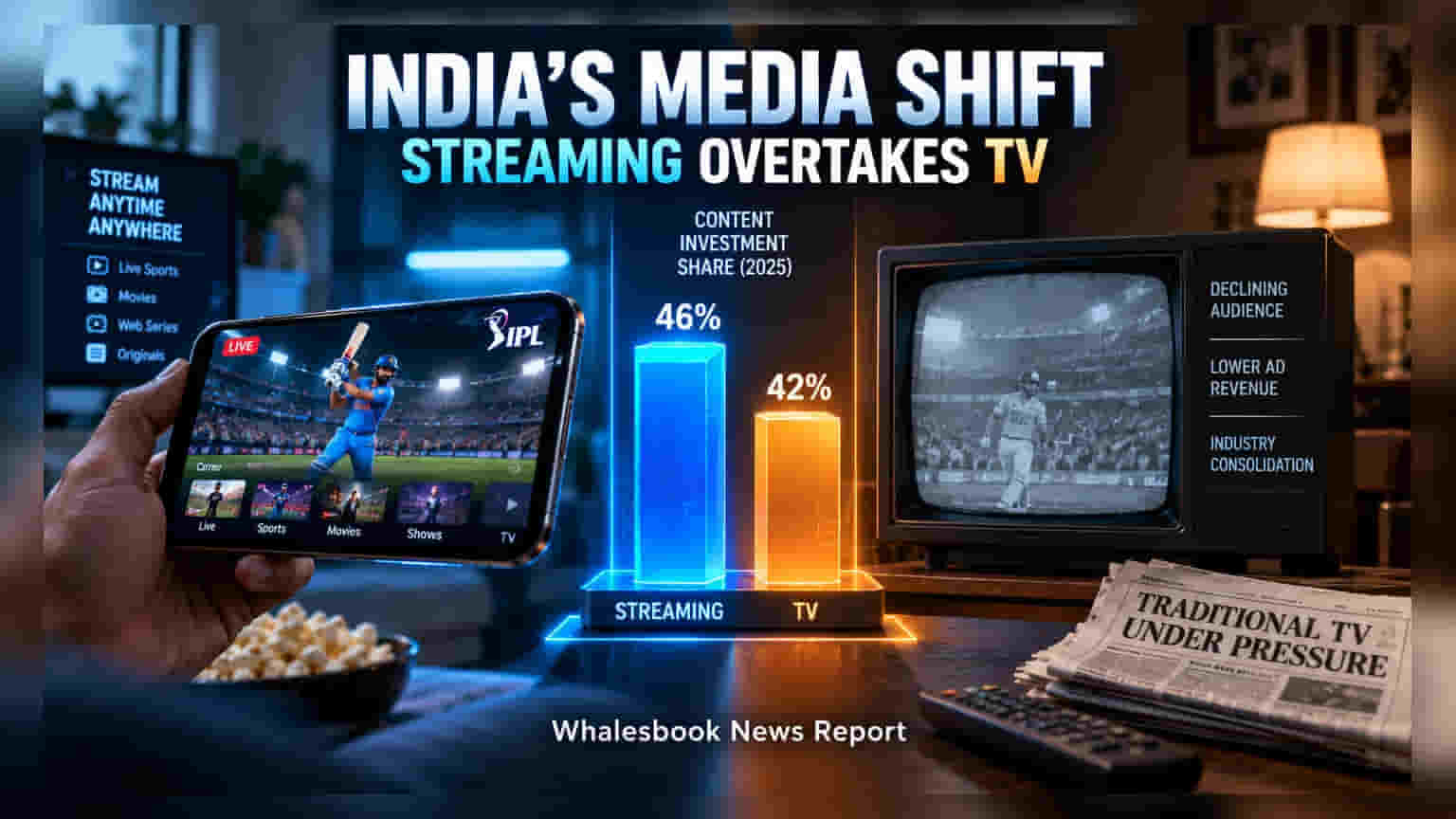
In 2025, digital streaming captured 46% of India’s content investment, surpassing traditional television’s 42% for the first time. This shift, led by high sports consumption and digital viewership, puts pressure on the advertising revenue of legacy broadcasters. Investors should track how traditional media firms manage this transition while digital-first platforms continue to expand their reach.
The Indian media industry has reached a significant turning point as capital flows from traditional broadcast television into digital streaming. For the first time in 2025, online video captured 46% of total content investment, while traditional television accounted for 42%. This movement represents a fundamental change in how money is being spent to create and distribute content in India, driven by the massive migration of viewers to digital platforms.
The Rise of Digital Consumption
The scale of this shift is evident in the 420 billion hours of online video consumed by Indian users throughout 2025. A large portion of this traffic is driven by live sports, which has become the primary tool for bringing new users to digital platforms. During the 2026 Indian Premier League, for instance, streaming services saw a 26% increase in reach on connected televisions. Platforms like JioHotstar have solidified their position, commanding a 58% viewing share with over 180 million paying subscribers. This trend shows that advertisers are increasingly following audiences to digital channels, which is creating a long-term challenge for the traditional advertising revenue models that have long supported television broadcasters.
Challenges for Traditional Broadcasters
While streaming is growing, traditional television faces intensifying pressure. As advertising dollars move toward digital, legacy broadcasters face shrinking margins and a need to restructure their operations. The industry is currently seeing a focus on consolidation, as smaller media players look to combine resources to survive against larger, better-funded digital platforms. For investors, this creates a complex environment. Traditional media companies, such as Zee Entertainment or Sun TV Network, face the hurdle of maintaining profitability as the audience base for cable and satellite TV evolves.
The State of Theatrical Content
Despite the digital boom, the theatrical market remains a significant revenue engine. India recorded a $1.41 billion box office total in 2025, showing that cinema still holds a strong place in Indian culture. However, production strategies are changing. Companies are moving away from producing high volumes of content to focusing on selective, high-value projects. The goal is to own intellectual property (IP), which allows these companies to monetize content across both cinema and streaming platforms over the long term. Players like PVR Inox and various content production houses are adapting to this by prioritizing quality over quantity.
What Investors Should Monitor
The structural shift toward digital is likely to continue, making it essential to monitor how media companies adapt their business models. Key areas to watch include how traditional broadcasters manage their transition to digital-first strategies, the level of debt on their balance sheets as they invest in new technology, and their ability to protect profit margins amidst falling TV advertising revenue. Additionally, the ability of companies to secure valuable IP will be a critical differentiator. As the industry moves toward further consolidation, management quality and the efficient use of new technologies, including artificial intelligence for content delivery and viewer engagement, will likely define which companies maintain market share in the coming years.