

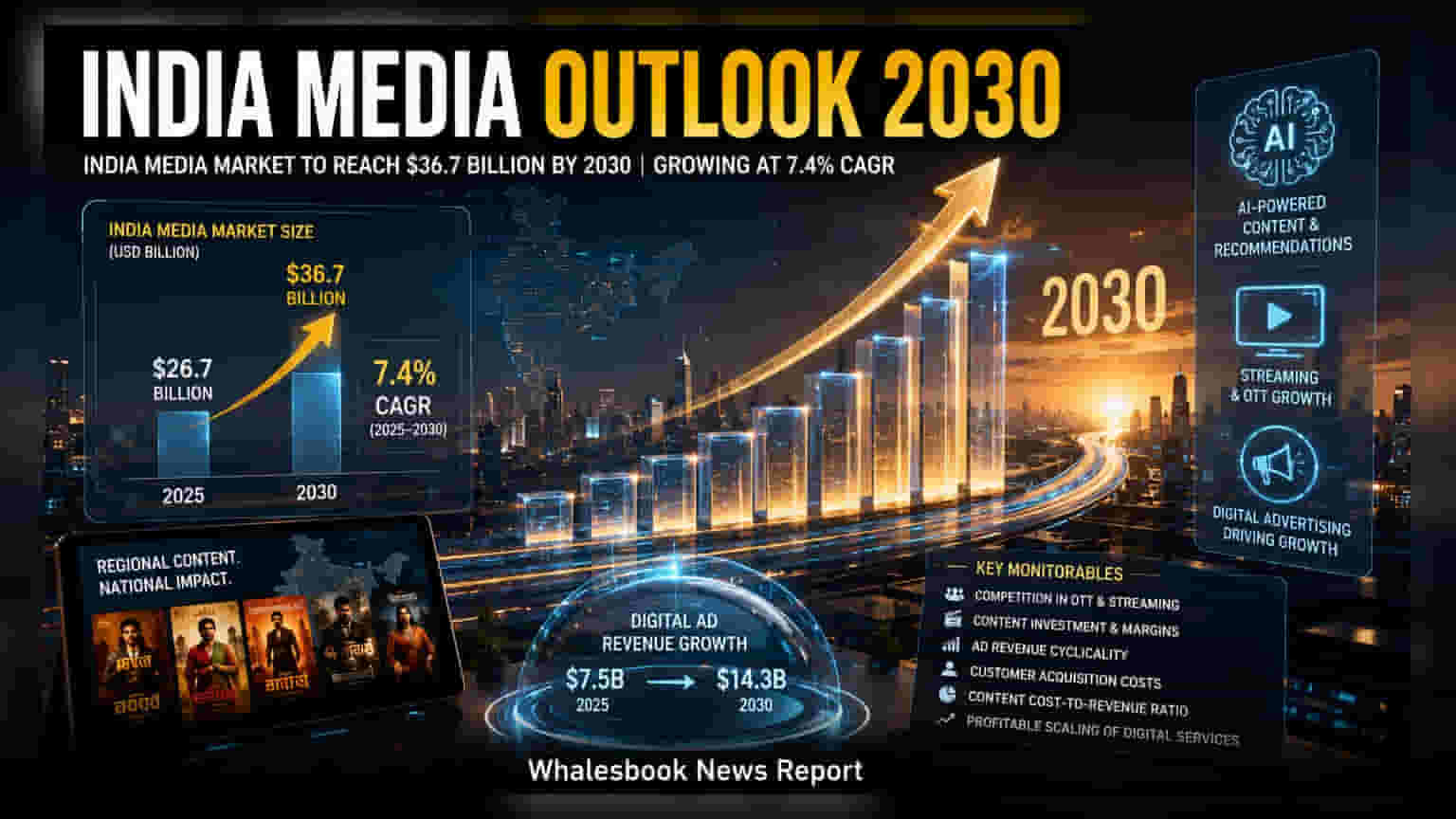
India's entertainment and media sector is projected to reach $36.7 billion by 2030, growing at a 7.4% CAGR. This shift toward digital advertising and AI-led monetization is outpacing global growth rates. Investors are watching how companies manage rising content costs and competitive pressures while aiming to boost profit margins.
The Indian entertainment and media sector is poised for substantial growth, with projections suggesting the market will expand to $36.7 billion by 2030, according to industry reports. This forecast implies an annual growth rate of 7.4%, a pace that stands out as roughly double the projected 4% global average. The trend indicates that the Indian market is moving past its phase of raw audience expansion and entering a period focused on higher-value monetization.
Digital Advertising as the Growth Driver
The core of this market expansion lies in internet advertising, which is expected to see the most significant gains. Projections suggest revenues in this segment could jump from $7.5 billion in 2025 to $14.3 billion by 2030, representing an annual growth rate of nearly 14%. As digital connectivity improves through 5G and fiber networks, marketing budgets are increasingly moving toward search, video, and social media platforms. This shift allows media firms to move away from low-value reach models and toward high-value, targeted advertising.
The Shift to Monetization and AI
Companies in the sector are retooling their business models. Instead of purely chasing user numbers, the focus has shifted toward getting more revenue from each user. This involves deploying artificial intelligence for better content recommendations, hyper-targeted advertising, and creating new revenue streams through content-commerce. Regional content remains a key pillar of this strategy, with production houses moving from sequential dubbed releases to simultaneous multilingual launches to tap into deeper demand in tier-two and tier-three cities.
Risks and Monitorables for Investors
While the growth trajectory appears strong, the industry faces specific challenges that investors should monitor. The most significant is the competitive intensity in the OTT and streaming space. Maintaining high-quality content requires consistent and heavy spending on production. For shareholders, the critical metric is whether companies can protect their profit margins while investing heavily in original content and technology.
Additionally, the heavy reliance on advertising revenue introduces cyclical risks. During economic slowdowns, corporate marketing budgets are often among the first expenses to be trimmed, which can directly impact media company revenues. Another factor to track is the cost of acquiring and retaining customers in a crowded digital space. Investors may focus on how media firms manage their content cost-to-revenue ratios and whether they can scale their digital services profitably without putting excessive pressure on their balance sheets.