 Whalesbook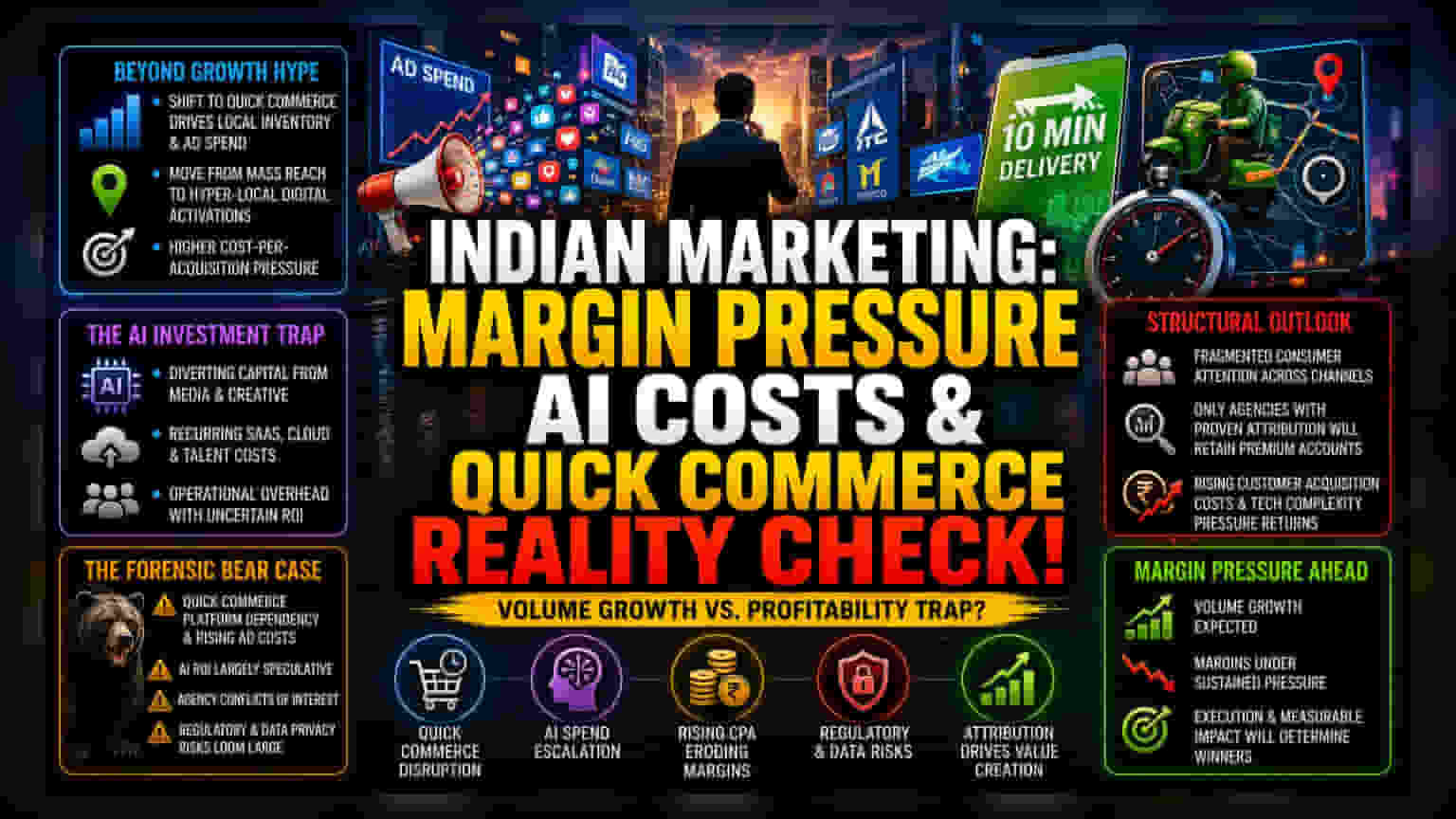


Beyond The Growth Narrative
While leadership at major holding companies remains optimistic about top-line expansion, the underlying reality for Indian marketers involves significant margin friction. The pivot toward quick commerce—where delivery windows are measured in minutes—is forcing brands to localize inventory and advertising spend in ways that traditional, national-level campaigns cannot support. This structural shift necessitates a move away from mass-reach media toward hyper-localized digital activations, often at a higher cost-per-acquisition.
The AI Investment Trap
Capital allocation is increasingly diverted into AI infrastructure, moving funds away from traditional media buying and creative development. Organizations are now grappling with recurring software expenditures, cloud computing costs, and high-end talent acquisition to manage these systems. Unlike legacy digital tools that offered scalable reach, current AI deployments act as operational overhead. Investors should note that until these systems demonstrate clear efficiency gains or significant revenue uplift, the margin drag from these technology budgets will likely persist throughout the fiscal year.
The Forensic Bear Case
From an institutional perspective, the reliance on quick commerce platforms introduces significant counterparty risk. As these platforms consolidate, advertising inventory costs are expected to rise, potentially eroding the marketing budgets of consumer brands. Furthermore, the push for AI integration remains largely speculative regarding long-term return on investment. Agencies promoting these tools often face a conflict of interest, as their revenue models may rely on maintaining client expenditure on subscription-based digital services rather than delivering purely performance-driven outcomes. Additionally, the regulatory environment concerning data privacy and AI-generated content remains opaque, presenting a potential litigation bottleneck that could stifle ad spend velocity if stricter compliance mandates are enacted.
Structural Market Outlook
Brokerage analysts remain cautious on the long-term impact of these shifts on agency profitability. While volume growth is anticipated, the fragmentation of consumer attention across social commerce and direct-to-consumer channels suggests that only agencies capable of proving attribution will retain premium account status. Brands that fail to harmonize their quick commerce presence with broader digital strategies risk diminishing returns, as the cost of customer acquisition continues to climb alongside the technical complexity of the ecosystem.