 Whalesbook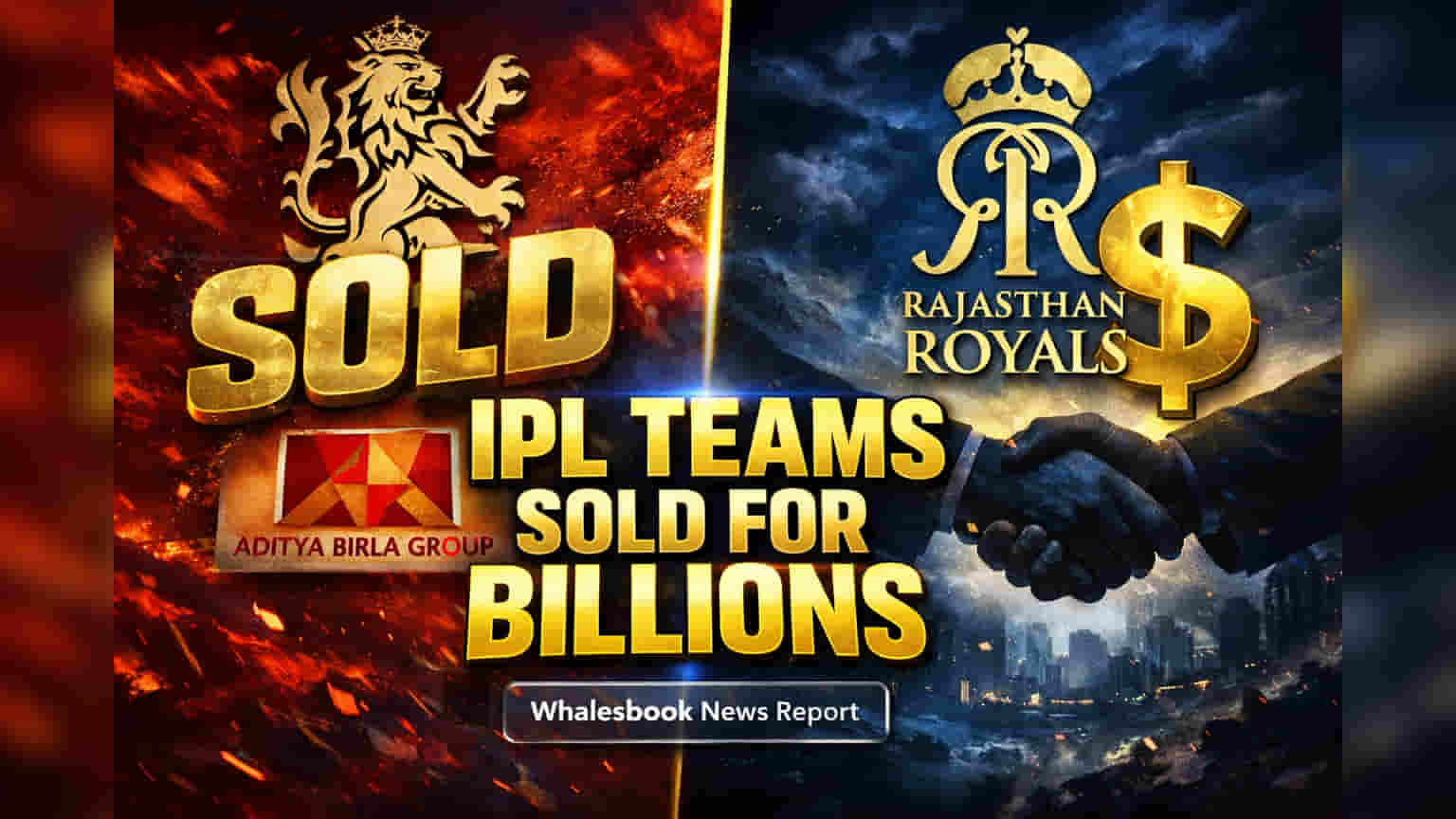
### Sports Franchises Hit New Highs
The Indian Premier League is seeing record-high valuations, with two major franchises sold for billions. Royal Challengers Bengaluru (RCB) has been acquired by a consortium including the Aditya Birla Group, Times Internet, Bolt Ventures, and Blackstone for a reported $1.78 billion (approximately ₹16,706 crore). Simultaneously, a consortium led by entrepreneur Kal Somani and backed by American businessman Rob Walton of the Walmart family is set to acquire the Rajasthan Royals for $1.63 billion (approximately ₹15,200 crore). These deals mark a significant step for sports franchises, confirming their status as valuable investment assets. Franchise values have grown rapidly, mainly due to rising media rights deals, which are now a key revenue source for sports leagues worldwide. Media rights make up most of the revenue for leagues like the NFL, directly leading to higher team values. The NBA's recent $76 billion media deal shows this trend, making sports entertainment a strong and growing market.
### Top Companies Invest in Teams
Aditya Birla Group's investment, using its companies like Aditya Birla Capital and Aditya Birla Fashion and Retail (ABFRL), allows investors to track this trend through these entities. Aditya Birla Capital reported a market capitalization of approximately ₹77,130 crore as of March 2026, with a P/E ratio around 21.52-26.16. In contrast, ABFRL currently operates with a negative P/E ratio, indicating losses, with its market capitalization standing at approximately ₹7,093 crore as of March 2026. This shows the different financial conditions among the group's companies. Buying RCB offers the group a chance to boost its brand and connect with more customers, using the IPL's large audience for merchandise and partnerships.
### United Spirits Sells RCB for Profit
United Spirits Limited (USL) sold RCB after owning it for 18 years, turning a non-essential asset into cash. The $1.78 billion sale is expected to bring significant value, with analysts predicting a large special dividend. If figures are finalized, a 25% payout could mean about ₹57.2 per share, and a 100% payout could reach ₹228.3 per share. Market data indicates USL's P/E ratio hovers around 53.91-57.77, with a market capitalization of approximately ₹92,741 crore as of March 2026. The company has maintained a consistent dividend payout history, with a yield around 1.36%. This sale is a strategic move by USL to focus on its main beverage alcohol business, streamline operations, and return money to shareholders by selling assets that, though important, are no longer core.
### Sponsorships Also Growing
Waaree Energies, though not an owner, is the title sponsor for Rajasthan Royals, showing how commercial opportunities are growing for IPL franchises. This sponsorship gives Waaree Energies strong brand visibility, making it part of the team's identity. The company exhibits strong financial metrics, with a market capitalization around ₹82,929 crore and a P/E ratio of approximately 23.54-27.11.
### Risks and Concerns Remain
Despite the high valuations, not all companies involved in these deals have strong financial results. Aditya Birla Fashion and Retail (ABFRL) is currently unprofitable, reflected in its negative P/E ratio. This suggests investors are buying into a turnaround story or future growth potential rather than current earnings. The wider consumer discretionary sector has performed flatly over the last year, although future earnings are expected to grow by 23% annually. Sports franchise investments, while lucrative, are not immune to market volatility or external economic shocks; historical downturns have shown team valuations can stagnate or decline. Rob Walton, for example, has previously bought sports teams like the Denver Broncos for $4.65 billion, showing a pattern of large sports investments but also the huge financial commitment required.
### What's Next for IPL Investments
The arrival of large companies and private equity firms as IPL owners suggests India's sports investment market is growing up. This trend is likely to continue, fueled by strong media rights deals and the brand appeal of successful teams. Further growth is expected in sports entertainment, with potential for higher profits and partnerships, if these ventures can manage market challenges and show consistent financial results.