

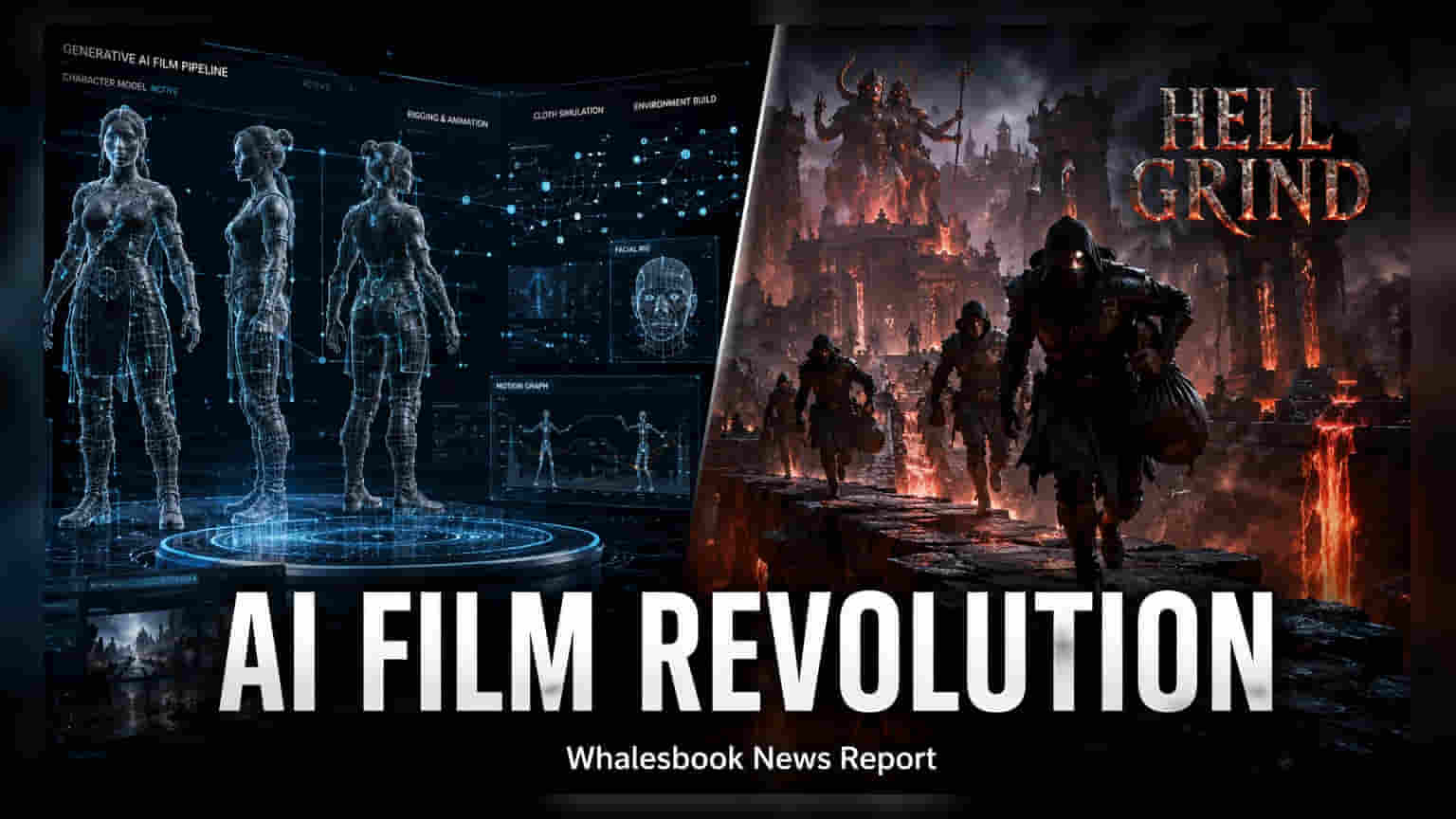
Generative AI startup Higgsfield has open-sourced the production pipeline for its 95-minute feature "Hell Grind," which was produced in 14 days for $500,000. While the company is private and not listed on public stock exchanges, the release provides a framework for independent filmmakers to manage AI character consistency and costs, potentially influencing the media technology sector.
San Francisco-based Higgsfield AI has publicly released the full production pipeline for its generative AI feature film, "Hell Grind." This move provides independent creators with access to the prompts, shot lists, and character-consistency techniques used to create the 95-minute movie. The project, which was completed in 14 days with a budget of $500,000, highlights the potential for AI tools to reduce production timelines and capital spending in the media and entertainment industry.
Production Efficiency and Tech Hurdles
The efficiency of the project contrasts with traditional feature film production, which often involves multi-million dollar budgets and lengthy cycles. Higgsfield reported that approximately 80% of the $500,000 budget was dedicated to cloud computing costs for GPU processing, while the remaining 20% supported a 15-person crew. Despite these efficiency gains, the technical process remains demanding. The company noted that the first 25 minutes of the film required generating over 16,000 video clips to select just 253 usable shots, demonstrating that AI filmmaking still requires significant manual curation to maintain quality.
Private Company Status
For investors monitoring the media-tech sector, it is important to note that Higgsfield AI is a private company and is not a publicly traded entity on any stock exchange, including the NSE or BSE. As of early 2026, the company was reported to have a valuation of approximately $1.3 billion following a Series A funding extension. Being a venture-backed startup, its shares are generally not available to the public and are restricted to private markets, which carry different liquidity and transparency risks compared to standard public equities.
Sector Risks and Regulatory Outlook
While this technology enables faster production, AI filmmaking faces significant industry challenges. The sector is currently navigating complex questions regarding copyright law, as AI models are often trained on existing intellectual property. Additionally, the technology still struggles with technical limitations like "character drift," where subjects lose visual consistency between frames. Furthermore, the broader media industry faces uncertainty regarding how AI-generated content will be regulated, particularly concerning creative labor, potential copyright infringement, and digital rights management.
Investors may monitor how traditional production houses and streaming platforms react to these tools, as the adoption of such pipelines could disrupt existing business models in the film industry. The key monitorable remains the evolution of global intellectual property regulations, which will determine how AI-generated content can be distributed and monetized in the future.