

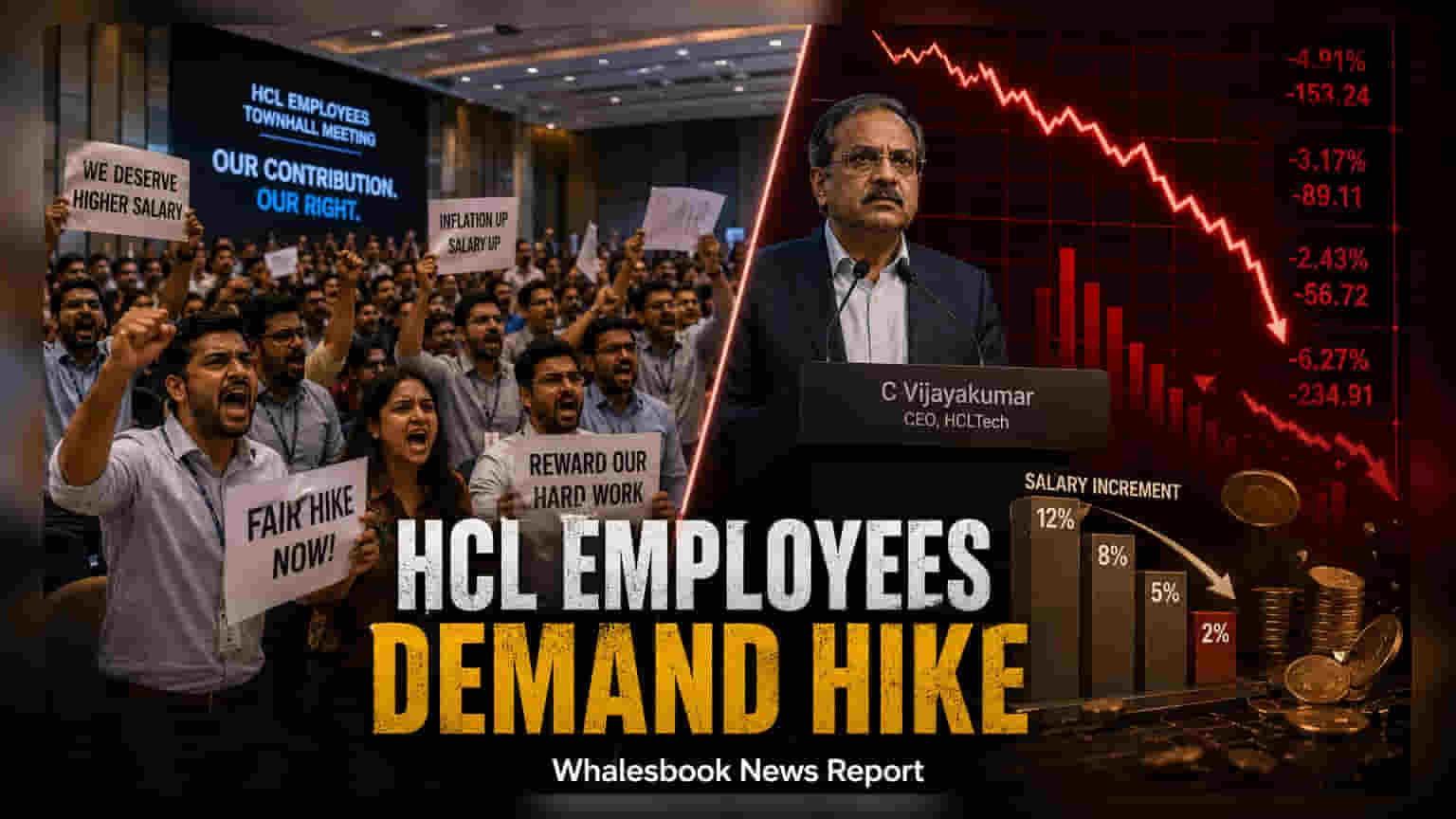
Employees at HCL Tech chanted for salary hikes during the company’s 50th-anniversary event in Chennai while CEO C Vijayakumar was on stage. The incident has drawn attention to wage expectations within the IT sector. Investors may monitor how such internal employee feedback impacts future labor costs and long-term operating margins.
Detailed Coverage
During the 50th-anniversary celebrations of the HCL Group in Chennai, a group of employees chanted slogans demanding salary increases as CEO C Vijayakumar took the stage. The event, intended to mark a significant corporate milestone, became a focal point for discussions regarding employee compensation policies within the Indian IT services sector.
IT Sector Wage Pressures and Financial Impact
While this incident highlights internal employee sentiment, it also reflects broader challenges faced by major Indian IT companies. Over recent quarters, IT firms have navigated a complex environment characterized by fluctuating demand in key markets like the United States and Europe, coupled with the ongoing need to manage personnel costs to protect operating margins. For investors, labor costs represent a significant portion of total expenses. Any pressure to increase salaries or improve compensation packages can directly influence the company’s profit margins, especially if revenue growth does not keep pace with rising operational expenses.
Understanding Employee Cost and Operational Efficiency
Operating margins in the IT sector are closely tied to how efficiently companies manage their talent. Investors often track metrics like employee utilization rates and wage inflation to gauge a company’s long-term profitability. While salary discussions are a regular part of corporate human resources cycles, public expressions of dissatisfaction can draw attention to the company’s internal retention strategies. Companies with strong employee engagement and balanced compensation structures are generally better positioned to handle high attrition, which remains a key risk factor for project execution and service delivery across the IT industry.
What Investors Should Monitor Next
For shareholders, the primary focus remains on the company’s quarterly financial reports. Specifically, investors may look at the management's commentary regarding wage bill trends, hiring plans, and overall operational efficiency. Monitoring whether these compensation demands lead to any material changes in future employee benefit expenses or if they remain within the company’s planned budget will be important for assessing margin stability. Additionally, long-term trends in employee attrition rates and the company’s ability to maintain high service quality while balancing rising input costs will continue to be essential factors for understanding the company's financial health.