 Whalesbook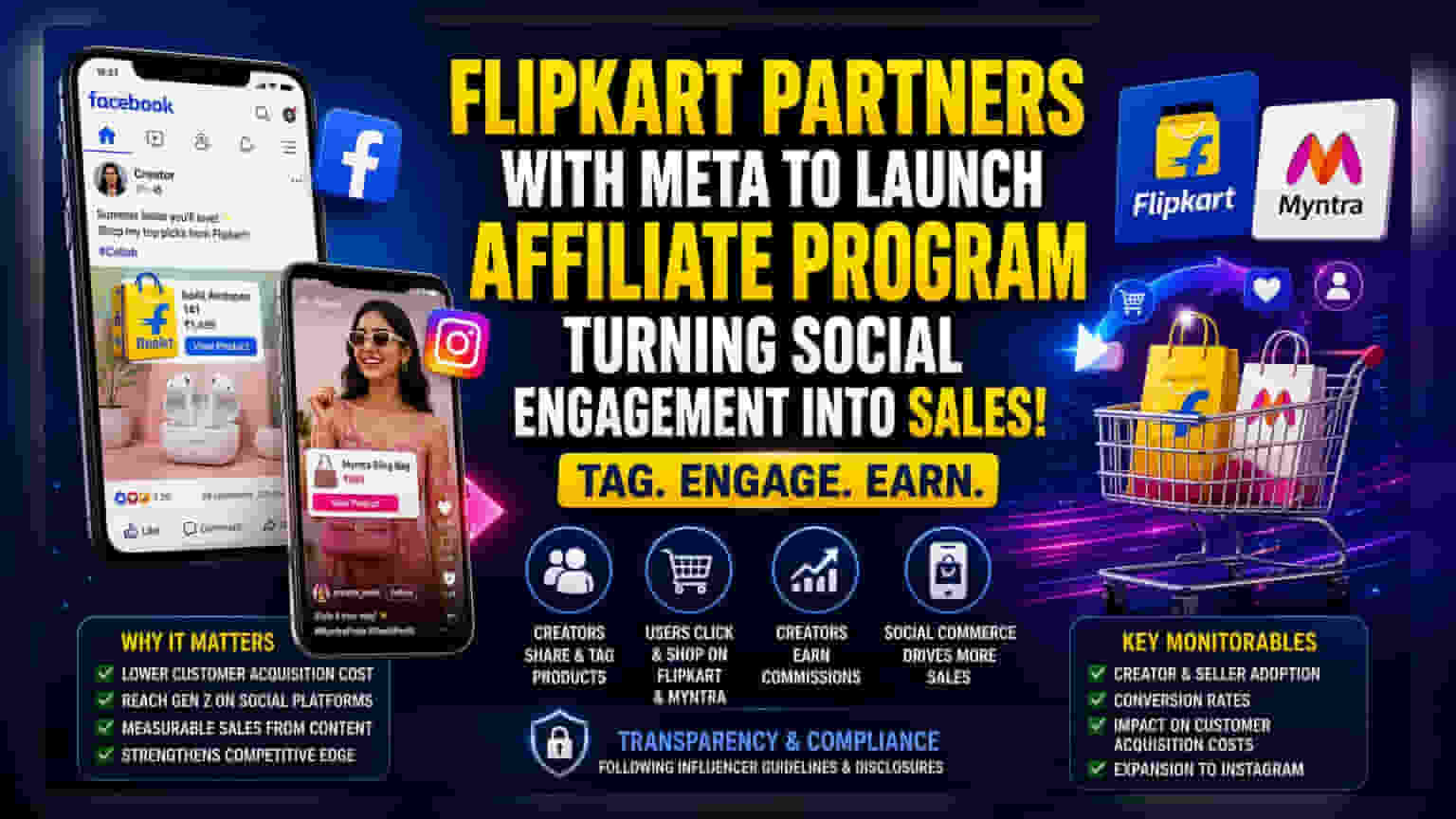


Flipkart has partnered with Meta to allow creators to tag products from Flipkart and Myntra in Facebook and Instagram content. This move aims to turn social media into a direct shopping hub, helping brands reach Gen Z shoppers more effectively and potentially lowering customer acquisition costs.
What Happened
Flipkart has entered a strategic partnership with Meta, the parent company of Facebook and Instagram, to launch a new affiliate program. This initiative allows content creators to tag products from Flipkart and its fashion subsidiary, Myntra, directly within their Facebook posts and Reels. When users engage with this content and click on the tagged products, they are directed to the respective shopping platforms to complete their purchase. The program intends to provide creators with a way to earn commissions based on the sales they generate through their content, while giving Flipkart a direct link between social media engagement and online sales.
Why This Matters For Investors
For major e-commerce players like Flipkart, the challenge has always been to reduce the cost of finding and bringing new customers to their apps. This is often called customer acquisition cost. In the past, companies spent heavily on digital advertising to drive traffic to their websites. By integrating directly with Meta’s platforms, Flipkart is attempting to tap into the 'social commerce' trend. Instead of waiting for customers to open the shopping app and search for a product, the company is bringing the product to where the users already spend their time: on social media feeds. This strategy is designed to capture the attention of younger shoppers, particularly Gen Z, who often use social media platforms for product discovery rather than traditional search engines.
The Competitive Landscape
This move comes as the battle for Indian e-commerce market share intensifies. Flipkart and its primary competitor, Amazon India, have faced pressure from players like Meesho, which successfully built a business model around social commerce and reselling. Furthermore, Reliance Retail’s JioMart is aggressively expanding its digital reach. By partnering with Meta, Flipkart is strengthening its ability to compete in the social commerce space, which relies heavily on influencer trust and visual engagement. The ability to track sales directly from a creator’s post allows for better measurement of return on investment compared to traditional banner ads.
Risks and Regulatory Considerations
While this partnership aims to boost sales, there are factors investors should track. The first is platform dependency. Flipkart is integrating its business into an ecosystem owned by Meta. Any changes to Meta’s algorithms, advertising policies, or rules regarding influencer content could impact the reach of these shopping tags. Additionally, there is the risk of regulatory scrutiny. In India, authorities and bodies like the Advertising Standards Council of India (ASCI) have been tightening rules around influencer advertising, requiring clear disclosure when posts are paid promotions. If the program faces challenges with compliance or transparency, it could lead to reputational risks or changes in how such content is permitted. Finally, the success of this program depends on the quality of creator content and the ability of sellers to maintain competitive pricing.
What Investors Should Track
Moving forward, the key monitorable will be the adoption rate among both creators and sellers. Investors may look for updates on how this partnership affects conversion rates, which is the percentage of viewers who actually buy a product after seeing a tagged post. Additionally, any data or management commentary regarding the impact on customer acquisition costs will be valuable to understand if this shift improves profitability in the long run. The expansion from Facebook to Instagram will also be a critical step to watch, as Instagram is generally considered a more visual and fashion-centric platform, which aligns well with the products sold on Myntra and Flipkart.