

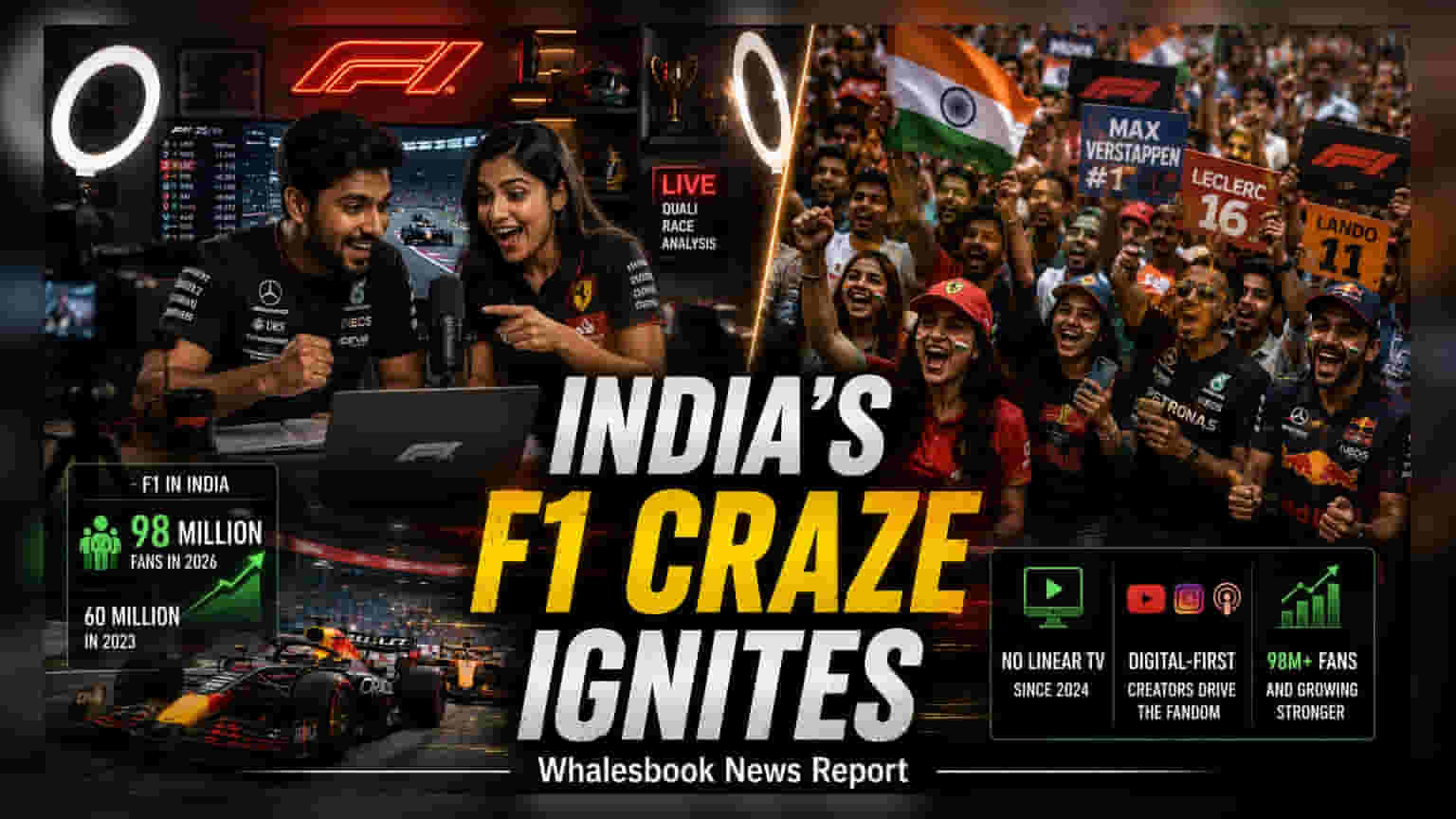
India’s Formula 1 fan base has surged to 98 million as traditional TV coverage has ended. The market is now defined by digital-first engagement via streamers and platforms like FanCode. While the community is growing rapidly, the shift creates a new commercial landscape where investors are evaluating if these digital audiences can generate the same scale and revenue as traditional sports broadcasting.
Formula 1 in India has entered a distinct new era. The sport’s fan base has reached 98 million, a significant jump from 60 million just three years ago. This growth is happening despite the complete absence of traditional linear TV broadcasting for the sport in India since 2024. As mainstream media networks stepped back, the sport did not disappear; instead, it migrated to digital platforms.
FanCode currently holds the official streaming rights in India through 2028, and the official F1 TV app provides a premium experience for dedicated fans. However, the day-to-day cultural conversation and fan engagement are now driven by a decentralized network of independent creators and streamers. These creators act as a bridge, translating complex technical aspects of the sport into local languages and creating community-focused content that traditional media often overlooked.
This shift has fundamentally changed how the sport is consumed. Creators are utilizing platforms like Instagram Reels, YouTube, and specialized podcasts to capture attention. By breaking language barriers and focusing on the personal narratives of drivers—a trend heavily boosted by the Netflix series "Drive to Survive"—they are building a young, engaged audience that traditional broadcasters struggled to capture at scale.
For investors and media analysts, this shift presents a complex financial picture. Formula 1 does not currently operate with the same commercial template as cricket in India, which is an advertiser-friendly, high-frequency revenue machine. Instead, F1 is finding its footing in a digital-first ecosystem where monetization models are still evolving. Converting high-intensity digital engagement into consistent, high-margin revenue streams remains a challenge without the guaranteed income of massive, long-term traditional TV contracts.
There are also structural risks to this growth model. The absence of a physical Indian Grand Prix limits the ability to capitalize on localized commercial deals, merchandise sales, and hospitality revenue. Furthermore, the ecosystem relies heavily on third-party digital platforms, which exposes creators and rights holders to risks like algorithm changes and shifting viewer habits.
The next important phase for this market will be how rights holders and sponsors translate this surge in digital curiosity into long-term commercial value. Investors and market watchers will likely monitor whether this growing community can support the level of sponsorship and media revenue required to justify a more significant, long-term institutional commitment to the Indian market, especially as the sport looks to solidify its footprint without the traditional broadcasting backbone.