 Whalesbook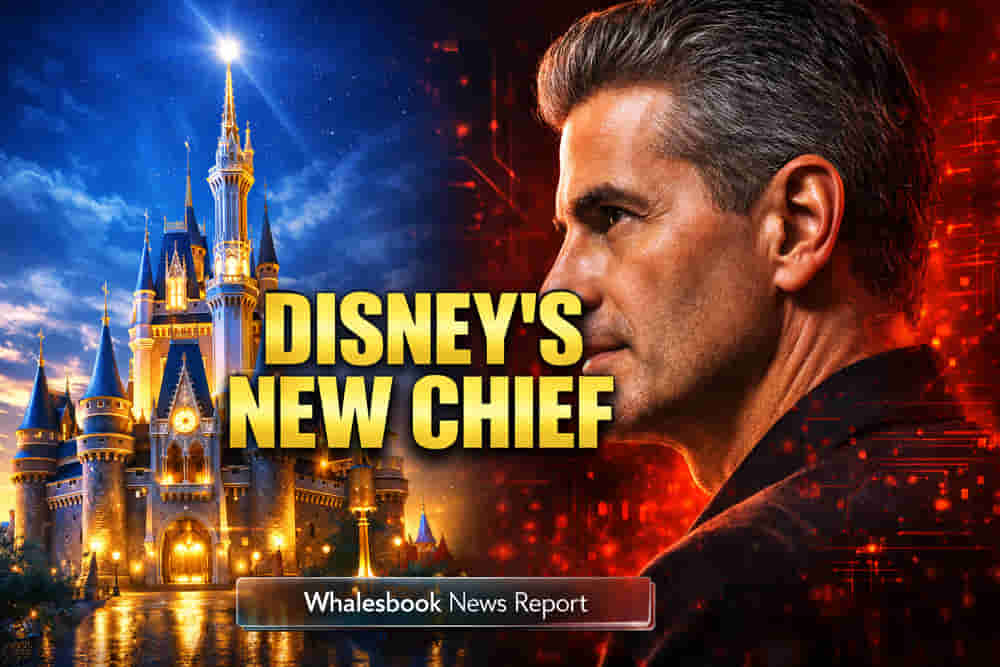
Leadership Shift Amidst Industry Evolution
Walt Disney Co. has officially named Josh D’Amaro as its ninth Chief Executive Officer, marking a significant leadership transition. D'Amaro, 54, steps into the top role from his previous position overseeing the company's Parks, Experiences and Products division, a segment that has become Disney's most substantial profit engine. His appointment concludes a period of intense speculation and board deliberation, aiming to ensure a stable succession after previous transitions proved turbulent. D'Amaro, a 28-year Disney veteran, is known for his operational acumen, having guided the experiences unit through post-pandemic recovery and growth.
Navigating a Fragmented Media Landscape
The entertainment industry is undergoing rapid transformation, driven by advancements in artificial intelligence, ongoing consolidation, and evolving consumer engagement models. Trends for 2026 indicate a strong emphasis on AI integration in content production and personalization, the continued growth of the 'experience economy,' and hybrid monetization strategies combining subscription, advertising, and direct commerce. D'Amaro's operational background is seen by some as a strength in this environment, particularly as Disney commits $60 billion to its parks and cruises through 2033 [cite: original source]. However, this focus on operational execution comes against a backdrop where competitors like Netflix, while boasting higher valuations with a P/E ratio around 32x, still face intense competition. In contrast, Warner Bros. Discovery (WBD) and Paramount Global (PARA) grapple with significantly higher or negative P/E ratios, signaling considerable market challenges and investor skepticism.
Balancing Profit Centers and Underperforming Divisions
Despite D'Amaro's appointment, immediate investor focus remains on Disney's financial performance and strategic direction. The company recently reported fiscal first-quarter 2026 results, showing revenue growth to $25.98 billion but a 6% decline in net profit to $2.4 billion. Profits in the core Entertainment and Sports segments plummeted by 35% and 23%, respectively, a stark contrast to the robust performance of the Experiences division, which now accounts for nearly 60% of the company's operating income. Disney shares experienced a sharp decline of 7.4% on February 3, 2026, following these results and the succession news, reflecting investor concerns about the profitability of its legacy media assets amidst a challenging market. While streaming profitability has improved, swinging to a $1.3 billion profit in fiscal 2025 from a loss the previous year, the path forward requires D'Amaro to address these core segment weaknesses. The company's stock remains nearly 50% below its 2021 peak, highlighting a persistent valuation gap [cite: original source].
Analyst Outlook and Future Trajectory
Wall Street analysts maintain a generally positive outlook, with a consensus rating of 'Strong Buy' and an average price target around $134-$136, suggesting potential upside. Analysts foresee double-digit earnings-per-share growth for fiscal 2026 and expect Disney's streaming services to become its largest profit contributor. However, specific concerns persist regarding a projected $400 million decrease in direct-to-consumer operating income in Q1 FY26 and ongoing weakness in linear television. The appointment of Benjamin Swinburne as Executive Vice President of Investor Relations and Corporate Strategy further signals a focus on sharpening investor communication around these transitional challenges. D'Amaro's mandate will be to integrate these disparate business trends and translate substantial investments, particularly in experiences and streaming, into sustained shareholder value while navigating a rapidly evolving global entertainment ecosystem.