

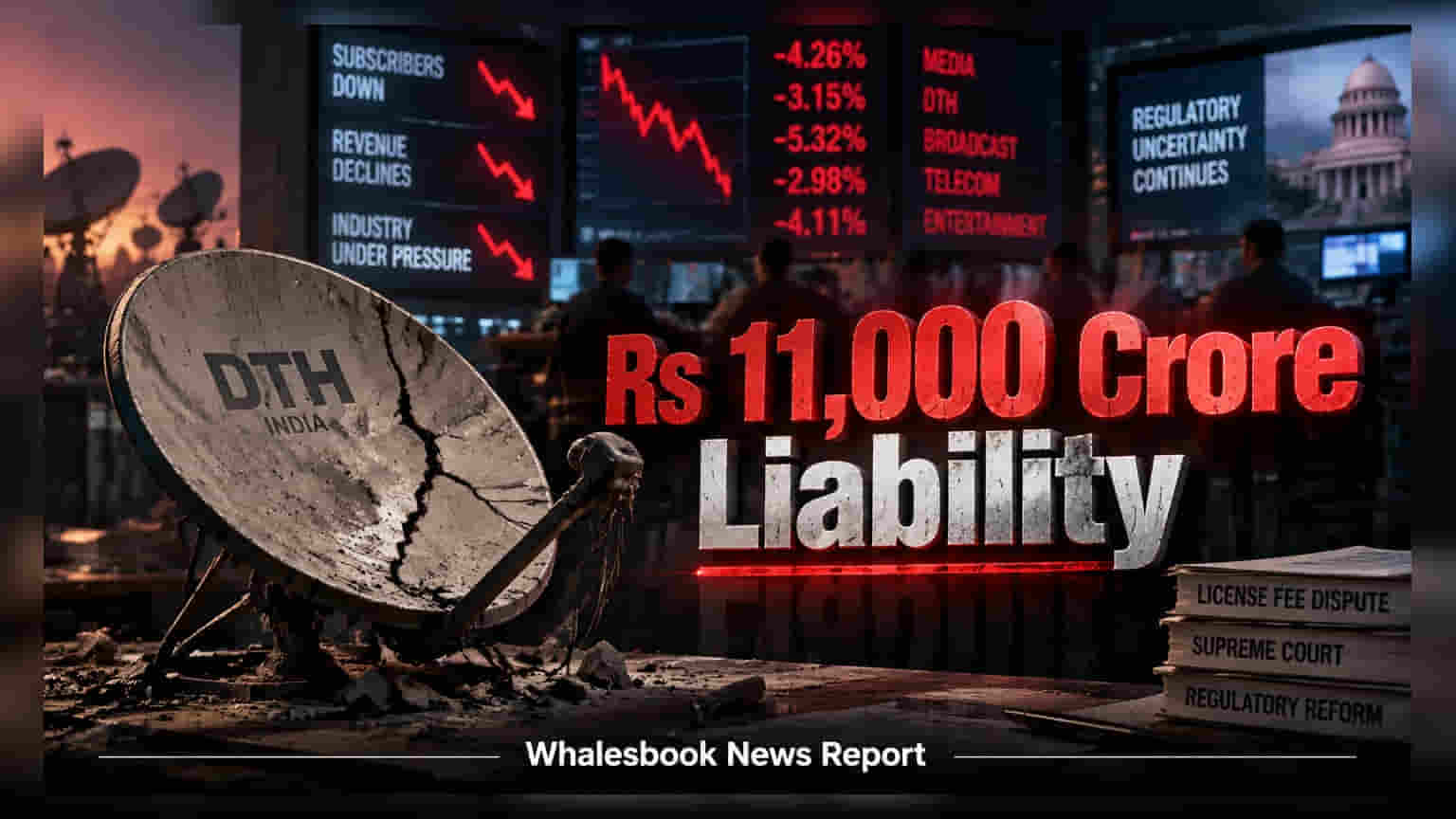
Major Indian DTH players have provisioned over ₹11,000 crore against contested government license fee demands as legal battles continue. The sector faces a double blow from shrinking subscriber bases and high regulatory liabilities. Investors are tracking the potential impact of these provisions on the long-term financial health of companies like Dish TV, especially as the industry struggles to compete with OTT platforms.
The Indian direct-to-home (DTH) sector is navigating a period of severe financial distress as major operators move to set aside over ₹11,000 crore against disputed license fee claims. This massive provisioning highlights the deepening rift between private broadcasters and the Ministry of Information & Broadcasting (MIB) regarding the calculation of license fees, a dispute that has been stuck in judicial chambers for years. While total government demands, including interest, have reportedly reached approximately ₹16,000 crore, the industry continues to challenge the validity of these figures in the Supreme Court and other legal forums.
Financial Health Under Pressure
The financial stability of the DTH industry has come under significant scrutiny due to these mounting liabilities. For instance, Dish TV India reported a net loss of ₹807 crore for the fiscal year 2026, with financial reports revealing a negative net worth of over ₹4,200 crore as of March 31, 2026. This situation raises serious concerns about the long-term viability of standalone satellite television models. The combination of high regulatory overheads and structural shifts in media consumption has left companies with limited room to manoeuvre, forcing them to rely heavily on parent company support or pivot toward broadband and digital services to survive.
Regulatory Relief and Market Shifts
Despite the gravity of the financial situation, a path toward potential relief exists. The Telecom Regulatory Authority of India (TRAI) has recommended reducing the license fee to 3% of Adjusted Gross Revenue (AGR), with a roadmap to phase it out entirely by fiscal year 2027. However, the implementation of these recommendations remains stalled, as the MIB has yet to enact these reforms. Operators argue that the current 8% levy is fundamentally unsustainable, particularly as the sector deals with a steady subscriber exodus.
The Impact of Cord-Cutting
Beyond regulatory battles, the industry is fighting a losing war against changing viewer habits. The rise of connected televisions, aggressive growth in over-the-top (OTT) streaming platforms, and the increasing preference for free-to-air services like DD Free Dish have led to a massive migration of customers. Reports indicate that the industry has lost millions of subscribers over the last few years, leading to a contraction in revenue for major players.
Investors are now closely tracking the outcome of the ongoing court cases and the government's stance on fee rationalization. The next critical update will be the outcome of the Supreme Court proceedings, which could determine whether these companies are required to pay the full amount demanded or if the requested regulatory relief will finally be granted. The ability of these firms to maintain operations amid negative net worth and regulatory uncertainty remains a key area of concern for market observers.