

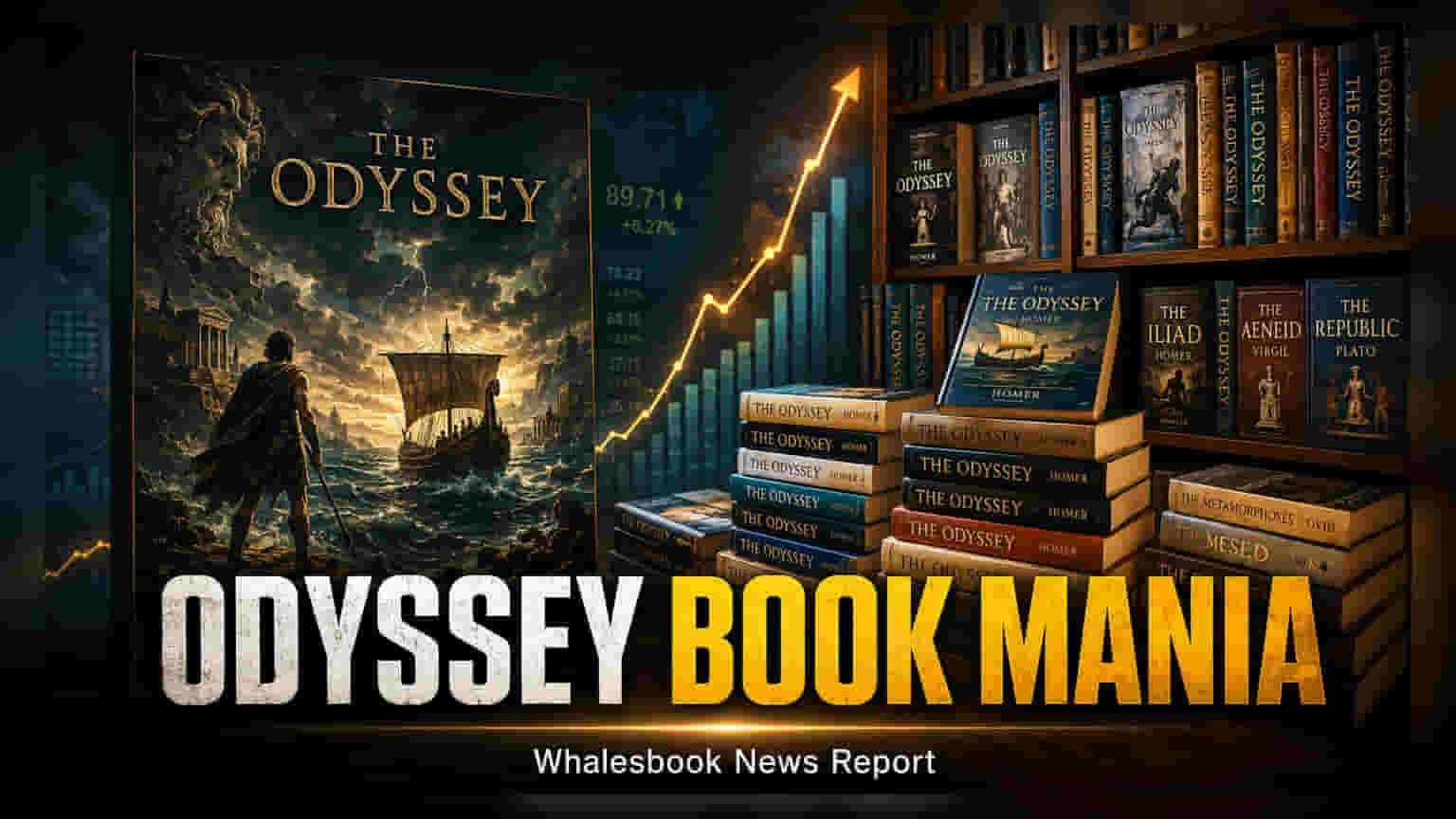
Print sales of Homer’s 'The Odyssey' have more than doubled in India following the release of Christopher Nolan’s cinematic adaptation. The surge is primarily driven by readers in their late teens and twenties, boosting demand for both affordable paperbacks and premium academic translations.
The release of Christopher Nolan's film adaptation of 'The Odyssey' has sparked a sharp rise in interest for classic literature across India. Booksellers report that print sales for Homer's 3,000-year-old epic have more than doubled compared to the previous year. This trend highlights a rare intersection where cinematic popularity directly drives engagement with foundational literary texts among younger demographics.
Impact on Book Retail and Demand
The surge in demand is particularly visible among readers in their late teens and early twenties. While interest in classics had been growing independently among this age group, the film has acted as a major catalyst. Market data indicates that affordable paperbacks are seeing the highest volume growth, with some editions reporting a ten-fold increase in sales. Specifically, the Penguin 'Black Classics' translation by E.V. Rieu has seen significant traction. Meanwhile, higher-priced academic editions, ranging from ₹1,000 to ₹2,000, are also experiencing supply constraints; for example, the version by Emily Wilson is currently facing stock shortages due to unexpected consumer demand.
Sector Ripple Effects
This trend is not limited to a single title. Retailers have noted that interest is spilling over into other classical works, including 'The Iliad' and broader Greek mythology collections. Furthermore, contemporary fiction based on these myths, such as works by Madeline Miller, has also seen a noticeable increase in sales. This suggests that the current interest is broadening into a larger segment of the mythology and classics book category, benefiting publishers and retailers who maintain strong backlists in these genres.
What Investors Should Track Next
The immediate monitorable for this trend is the ability of publishers and bookstore chains to manage supply chain logistics to meet the heightened demand. While this surge is a positive signal for physical book retailers and publishing houses with strong classical catalogues, the longevity of this interest will depend on whether this youthful engagement transitions into sustained reading habits or remains a temporary spike tied to the film's theatrical run. Investors in companies involved in retail book distribution may look to see if this momentum translates into improved quarterly revenue for the relevant segments.