 Whalesbook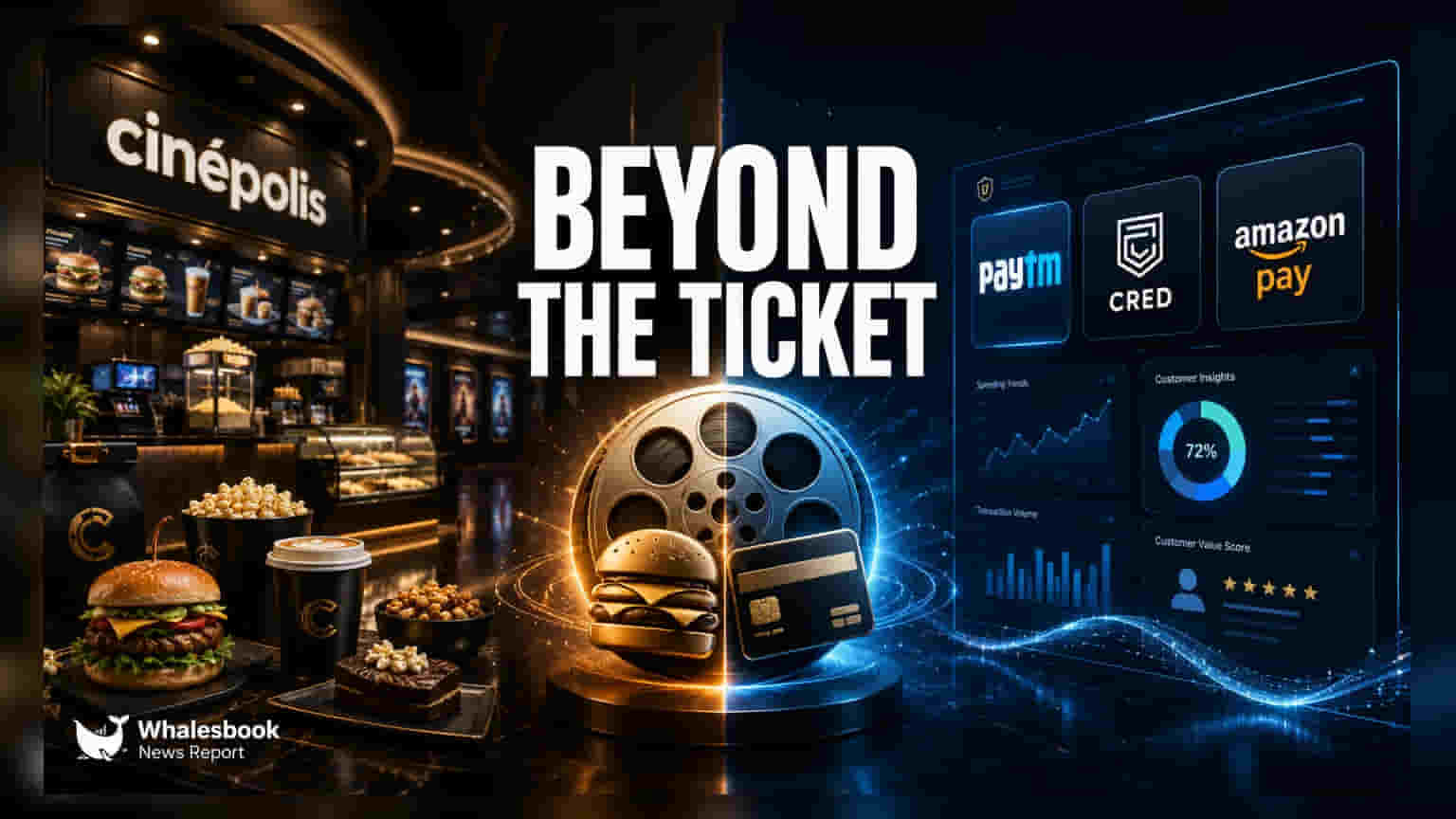


The Valuation Gap
Transitioning from an exhibitor to a high-margin consumer service provider has become an existential necessity for the multiplex sector. The recent financial disclosure, revealing a sharp drop to a ₹61.3 crore net loss from the prior year's profit of ₹32.1 crore, highlights the fragility of a business model heavily tethered to theatrical release cycles. With revenue contracting to ₹1,284 crore, the reliance on top-line growth through mere ticket sales is proving insufficient to offset rising operational overheads. The current strategy reflects a desperate attempt to capture a higher share of wallet through non-theatrical streams.
The Operational Pivot
While the box office in India has achieved nominal record highs, the underlying metrics suggest a structural cooling of the market. Footfall remains stubbornly stagnant, trailing pre-pandemic 2019 benchmarks by nearly 20%. This forced consolidation of the audience means that the average ticket buyer is now older and more discerning, demanding a premium experience or nothing at all. Management is responding by embedding food and beverage services—which currently account for roughly 30% of total revenue—into the core value proposition. By leveraging the 'FOOVIES' platform and integrating high-frequency FMCG and QSR partnerships, the company aims to convert incidental cinema visitors into consistent consumers of premium concessions.
The Fintech Strategy
Beyond consumables, the integration of deep-tech payment and credit partnerships represents a shift toward data-monetization. By aligning with entities like SBI Cards, CRED, and Amazon Pay, the firm is attempting to build a friction-less ecosystem that tracks consumer spending habits in real-time. This is less about transactional volume and more about harvesting granular behavioral data. In a fragmented advertising market, these partnerships provide a captive audience for targeted promotions, theoretically allowing for a higher return on engagement than traditional digital display advertising.
The Forensic Bear Case
Investors should remain cautious regarding the sustainability of this diversification. The transition to a fintech-integrated platform requires significant capital expenditure on technology and personnel at a time when the balance sheet is already showing signs of distress. Furthermore, the company faces intense competition from domestic rivals like PVR INOX, which enjoy deeper market penetration and stronger economies of scale. Unlike its competitors, which have successfully navigated the post-pandemic recovery with more robust property portfolios, Cinepolis continues to struggle with margin compression. Persistent reliance on high-end, premium-priced experiences like IMAX and 4DX risks alienating the mass-market audience, leaving the company vulnerable to a broader economic downturn and a potential contraction in discretionary entertainment spending.