

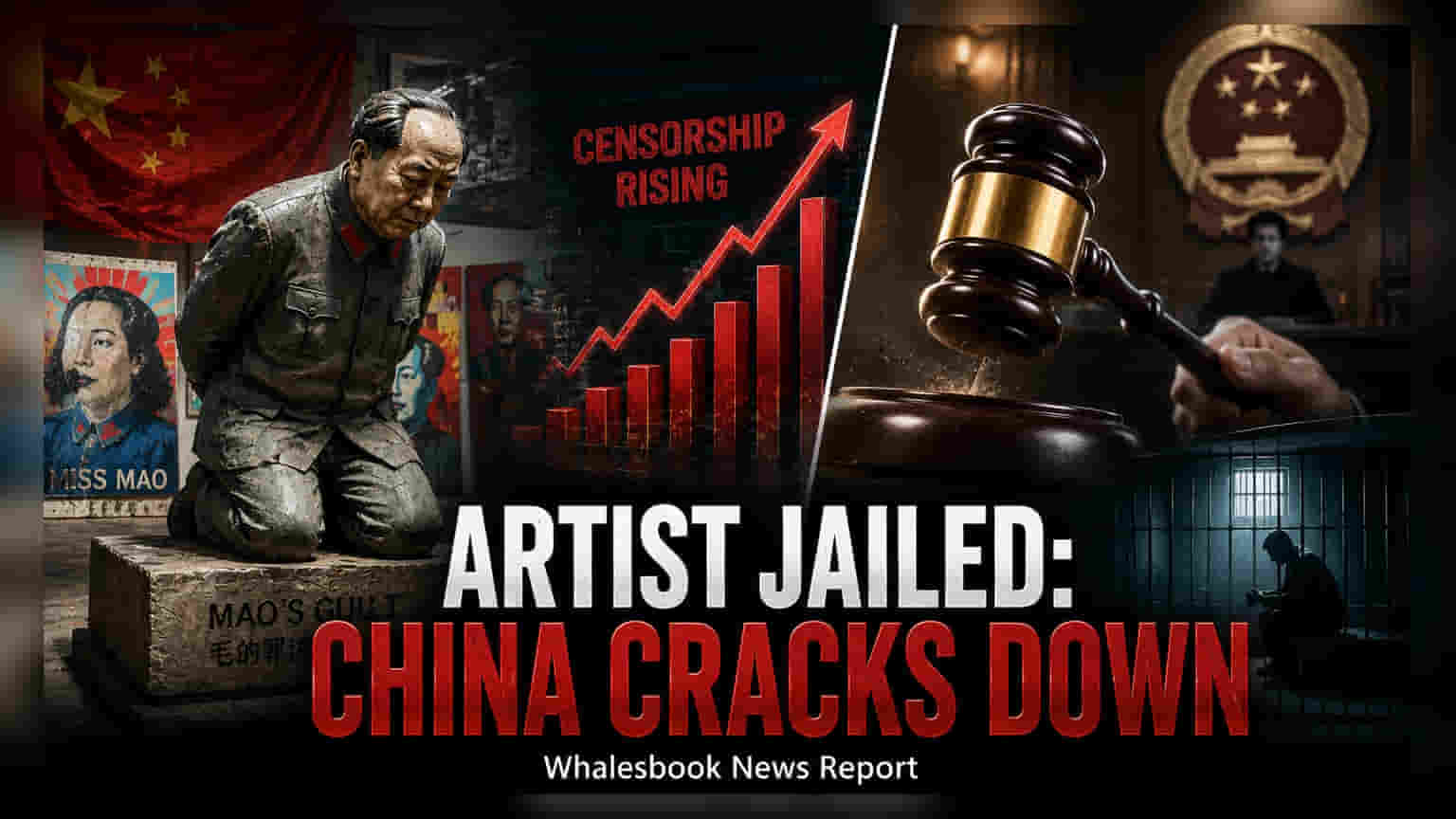
Renowned artist Gao Zhen has been sentenced to three years in prison by a Chinese court for satirical artworks created years ago. The case, involving retroactive application of laws, highlights the increasingly unpredictable regulatory environment in China. For global investors, this underscores the heightened political and legal risks associated with operating or maintaining exposure in the Chinese market.
Gao Zhen, a prominent artist and member of the acclaimed Gao Brothers duo, has been sentenced to three years in prison by the Sanhe City People's Court in Hebei province, China. The sentencing, which took place on August 25, 2026, marks the conclusion of a legal process that began with his arrest in August 2024 while he was visiting family in the country.
The court found the U.S.-based artist guilty of "infringing upon the reputation of heroes and martyrs." The charges stem from a series of satirical artworks and sculptures created between 2005 and 2009, including the controversial "Miss Mao" series and a sculpture titled "Mao's Guilt," which depicted the former Chinese leader kneeling in repentance. The legal action has drawn significant attention because the artworks were produced well before the 2018 law used to prosecute him, leading to concerns regarding the retroactive application of national regulations.
For the global investment community, this development serves as a monitorable indicator of the evolving regulatory landscape in China. While this case involves an individual artist, it reflects a broader trend of tightening state control over historical narratives and public expression. Investors, particularly those managing institutional capital in emerging markets, often track such developments as a proxy for the predictability of the legal and administrative environment.
When legal frameworks are applied to actions from years prior, it creates uncertainty for businesses and individuals alike. This unpredictability can impact the risk premium that international firms attach to operations within China. Companies with significant supply chain dependency, market revenue, or joint ventures in the country are often sensitive to shifts in political climate, as sudden regulatory changes can impact business continuity, compliance costs, and corporate reputation.
International organizations, including Amnesty International and Chinese Human Rights Defenders, have voiced strong criticism regarding the verdict, citing concerns over freedom of expression and the arbitrary nature of the detention. Despite these international reactions, the domestic legal outcome remains firm for now. Gao’s wife, Zhao Yaliang, has confirmed that the artist intends to appeal the court's decision. Investors and market observers will likely continue to monitor the status of the appeal as it may provide further clarity on how such legal matters are resolved within the current system, ultimately influencing perceptions of the rule of law and the stability of the operating environment for foreign interests.