 Whalesbook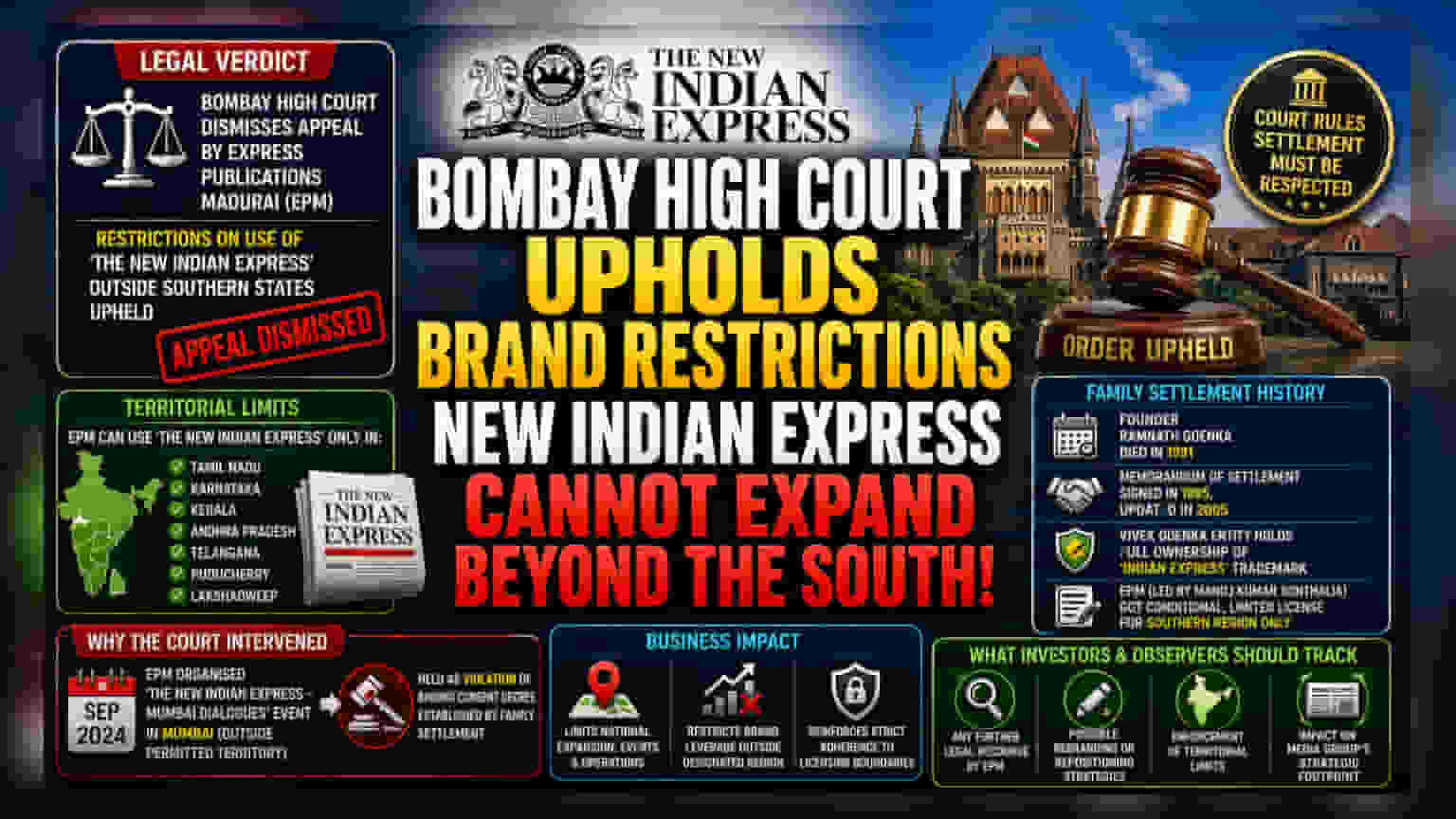


The Bombay High Court has upheld a ruling restricting Express Publications Madurai from using 'The New Indian Express' brand outside its authorized southern territories. This legal decision enforces a long-standing family settlement, setting clear geographical boundaries for the publication's brand operations.
What Happened
The Bombay High Court has delivered a significant legal verdict regarding the usage of the 'The New Indian Express' brand. A division bench of the court dismissed an appeal filed by Express Publications Madurai (EPM), effectively upholding a previous order that restricts the company from using its brand name outside designated southern states and union territories. The court’s decision stems from a dispute over the geographical boundaries established for the use of the 'Indian Express' derivative trademarks.
The Legal and Family Context
This development is the latest chapter in a long-running legal dispute regarding the Indian Express Group’s intellectual property rights. Following the death of the group's founder, Ramnath Goenka, in 1991, the family reached a Memorandum of Settlement in 1995, which was later updated in 2005. This settlement was designed to divide the usage rights of the 'Indian Express' brand between different family factions.
Under the terms of this agreement, the entity managed by Vivek Goenka holds full ownership of the 'Indian Express' trademark. Conversely, Express Publications Madurai, led by Manoj Kumar Sonthalia, was granted a conditional and limited license to use 'The New Indian Express' name solely for publishing a newspaper within specific southern regions. The court ruled that the 'New Indian Express' mark is a derivative of the primary brand and cannot be used by EPM outside these agreed-upon limits.
Business Implications
The court's decision follows legal action initiated after EPM organized an event titled 'The New Indian Express – Mumbai Dialogues' in September 2024. Because this event was held in Mumbai, which falls outside the permitted southern territories, the court determined it was a violation of the binding consent decree established by the family settlement.
For the media group, this ruling underscores the importance of strict adherence to internal agreements and licensing boundaries. By confirming that EPM’s rights are restricted and conditional, the court has effectively limited the ability of the entity to use the 'New Indian Express' brand for national-level expansion, events, or operations outside its designated geographic base.
What Investors and Observers Should Track
While this is a legal and branding matter, it serves as a reminder of how ownership and licensing disputes can directly impact the operational strategy of media organizations. Observers monitoring the media sector should track whether EPM seeks any further legal recourse or if it attempts to rebrand or differentiate its offerings for operations outside the southern region to avoid further litigation. The core monitorable here remains the strict enforcement of the territorial limits, which continues to shape the strategic footprint of the entities involved.