 Whalesbook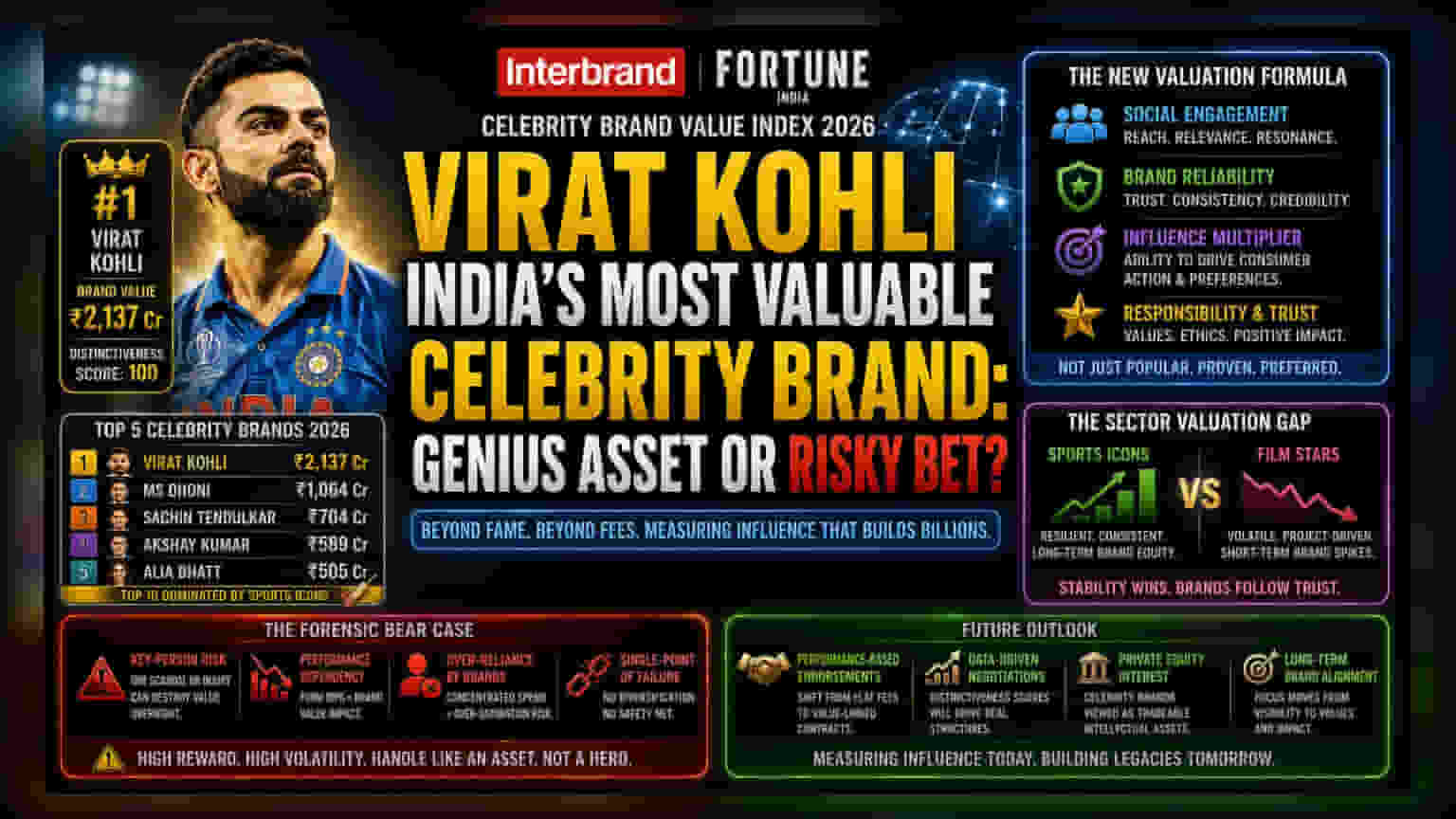


The Shift Toward Intangible Asset Valuation
The financial quantification of celebrity stature has moved beyond simple paychecks, as evidenced by the new valuation framework introduced by Interbrand and Fortune India. By moving away from earnings-based metrics and toward a proprietary methodology focused on social engagement and brand reliability, the industry is acknowledging that celebrity value is increasingly treated as a distinct, tradable corporate asset. Virat Kohli’s leadership in this index is not merely a reflection of public popularity but a quantification of his ability to anchor high-stakes marketing campaigns in a way that minimizes risk for institutional partners.
The Valuation Gap Between Sectors
While sports figures like Kohli, MS Dhoni, and Sachin Tendulkar maintain a strong hold on the top ten, the list reveals a structural divergence between their brand longevity and that of film personalities. Unlike cinema stars, whose brand equity often fluctuates with the box office performance of their latest films, cricketers exhibit a unique form of 'resilience-based' brand value. This trend highlights a broader macroeconomic shift where brands are shifting capital away from volatile entertainment projects toward the perceived stability of athletes who are viewed as consistent, reliable vehicles for mass-market messaging.
The Forensic Bear Case: Celebrity Liquidity Risks
The perception of celebrity as a stable economic asset hides significant structural weaknesses. Every high-ranking individual on this list faces extreme 'key-person risk,' where a single scandal or sudden decline in performance can lead to immediate and drastic impairment of their brand value. Unlike a diversified corporation, a celebrity is a single-point-of-failure entity. Furthermore, the reliance on these individuals to drive consumer behavior creates an over-dependence among consumer packaged goods companies. If marketing spend continues to concentrate heavily on this small pool of top-tier talent, it may lead to oversaturation, ultimately diminishing the return on investment for the brands footing the bill.
Future Outlook: Measuring the Influence Multiplier
Looking ahead, the inclusion of responsibility and trust metrics in these valuations suggests that sponsors are increasingly concerned with long-term brand alignment rather than short-term visibility. Analysts anticipate that as these rankings become more standardized, they will begin to influence how private equity firms and holding companies structure their endorsement contracts, likely moving toward performance-based remuneration tied directly to these distinctiveness scores rather than flat fee structures.