 Whalesbook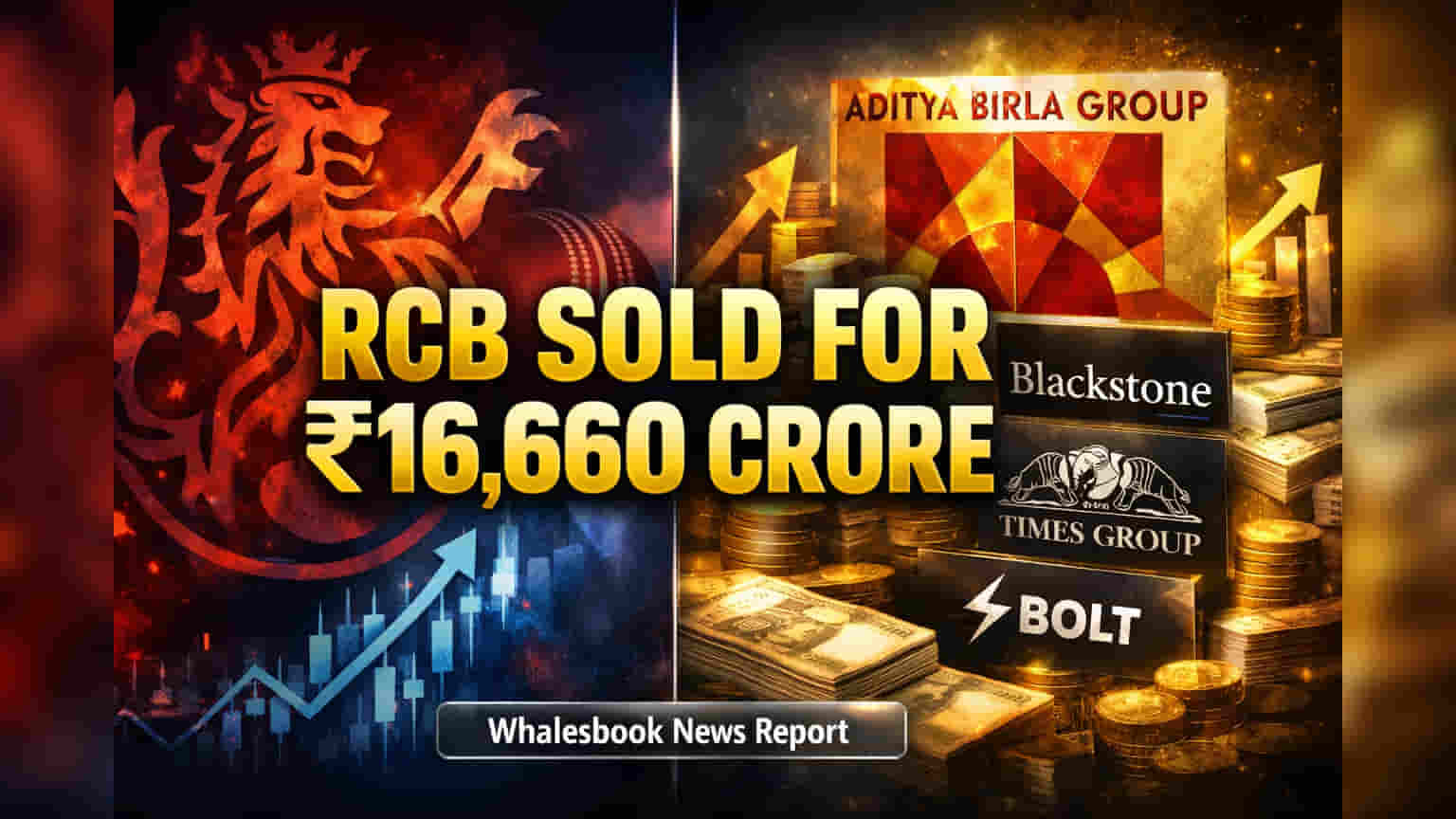
Record Deal for Royal Challengers Bengaluru
United Spirits Ltd., owned by global spirits company Diageo, has finalized the sale of its Indian Premier League (IPL) franchise, Royal Challengers Bengaluru (RCB), for ₹16,660 crore, or about $1.8 billion. The buyers are a group led by the Aditya Birla Group, with participation from the Times of India Group, global investment firm Blackstone, and David Blitzer's Bolt Ventures. This deal represents one of the highest valuations ever for a sports franchise globally and within the fast-growing IPL. The transaction needs approval from regulators, including the Board of Control for Cricket in India (BCCI) and the Competition Commission of India (CCI). It follows United Spirits' review to sell off assets considered 'non-core'. The sale is expected to close after the 2026 IPL season.
Diageo's Strategic Sell-Off
This sale shows Diageo's move to simplify its operations and focus on its core premium spirits. Facing market pressures and a renewed emphasis on profit, Diageo is simplifying its operations globally, selling non-core assets like its East African business and possibly operations in China. Classifying RCB as 'non-core' shows a re-evaluation of its role within Diageo's global brands. United Spirits, which has owned RCB since 2008 and came under Diageo's control in 2012 for £1.28 billion ($1.75 billion), is now exiting the cricket franchise. This move supports a wider company strategy to improve financial flexibility and reduce debt. United Spirits itself, with a P/E ratio of 55.65 and a market cap around ₹95,726.65 crore ($11.5 billion) as of March 24, 2026, is facing its own market challenges.
The Buying Consortium
The group buying RCB offers significant financial backing and broad investment experience. The Aditya Birla Group, an Indian multinational with operations in 42 countries and annual revenues of $70 billion, is a strong local partner. Blackstone, a global investment leader with stakes in various alternative assets and sports-related infrastructure, brings experience in growing businesses. David Blitzer, working through Bolt Ventures, is a veteran sports investor known for stakes in major U.S. professional sports leagues and teams. His background suggests deep knowledge of building value in sports franchises, positioning the consortium to build on RCB's brand and fan base.
IPL Market Faces New Challenges
The deal occurs as the IPL market faces new dynamics. While IPL franchise values have grown strongly, fueled by media deals and fan interest, recent analyses suggest a slowdown. A report from Media Partners Asia indicates that IPL media rights for the 2028-32 period may stay flat at $5.4 billion, with a projected lower value per game due to the league expanding to 94 matches. This puts more pressure on franchises, which get about 75% of their revenue from media rights, requiring them to find more income from other sources like sponsorships and merchandise. Despite these market shifts, the IPL remains a top global sports league, comparable to the NBA and EPL in reach and business appeal. The sale of Rajasthan Royals for $1.63 billion also shows continued investor interest in top IPL assets, even as the market might be adjusting.
Concerns Over $1.8 Billion Price Tag
While the $1.8 billion valuation for RCB is substantial, the deal raises questions about whether the price is too high. The IPL's media rights, the main source of income for franchises, are projected to grow slowly or even decrease per game, which could limit future revenue growth. Franchises rely heavily on this single income stream, creating high risk as advertising growth slows and rules for some industries tighten. Franchises' current high EBITDA margins of about 34% mean potential losses could be larger if media rights values decline. Other IPL franchises, like Rajasthan Royals, attracted bids in the $1.1-$1.4 billion range, suggesting the market might be adjusting. The consortium's strong funding and varied investments are key to handling challenges and finding income beyond media rights. If they can't effectively use the fan base and secure global deals, the investment could face big losses in a market where media rights growth is no longer guaranteed.