

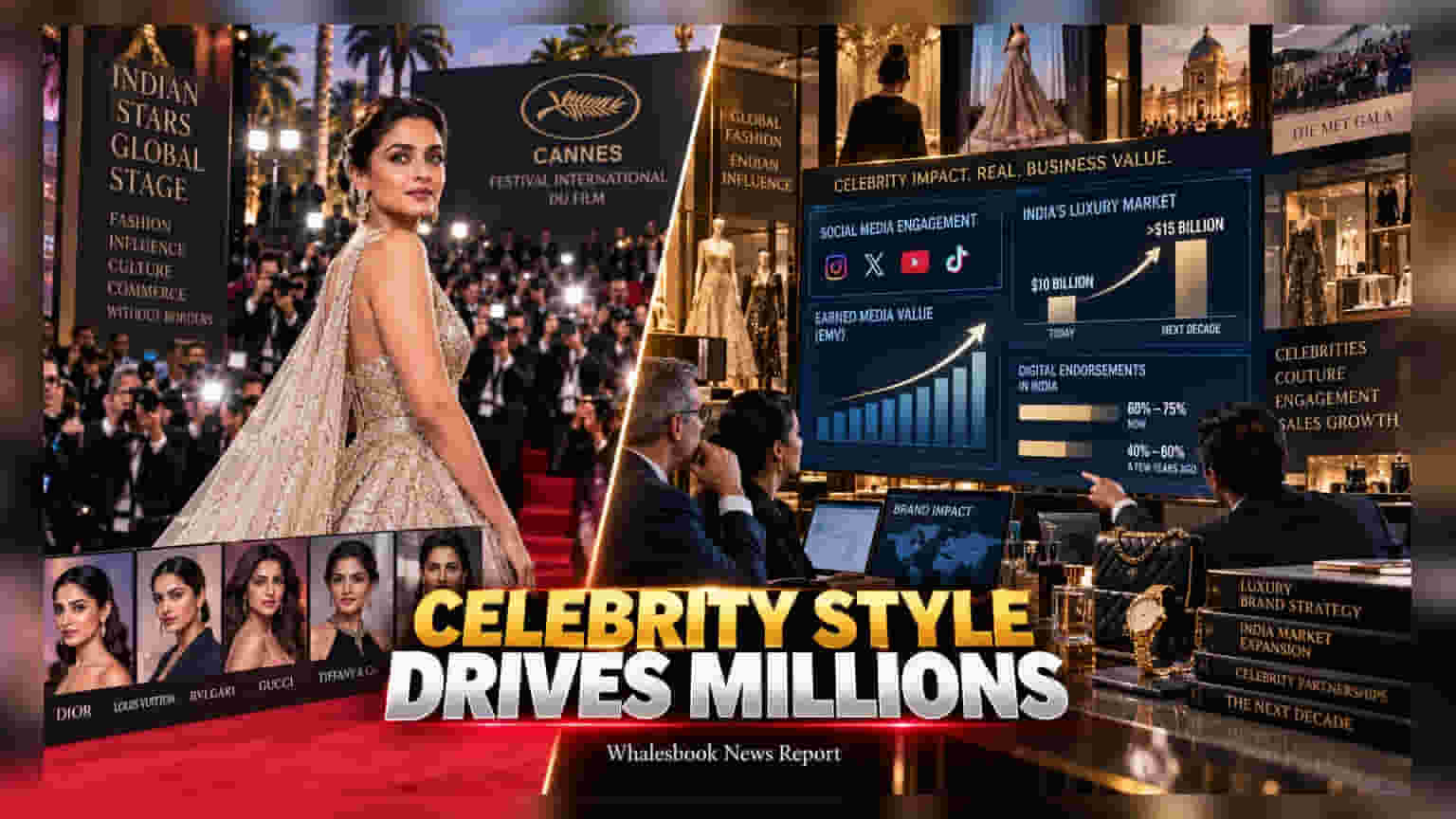
Global luxury brands are increasingly using Indian celebrities to drive measurable business value, with digital campaigns now accounting for up to 75% of endorsement deals. As India’s luxury market tracks toward $15 billion, investors are watching how brands balance these high-value partnerships against the risks of market saturation and changing consumer preferences.
Global luxury brands are redefining their marketing strategy in India by turning celebrity style into a measurable business asset. Rather than relying solely on traditional advertising, companies are now leveraging the established identities of Indian stars to drive consumer engagement and brand visibility. This shift is occurring as India's luxury market, estimated at $10 billion, is projected to exceed $15 billion over the next decade.
Traditionally, luxury brands focused on global campaigns. However, the current strategy involves signing Indian celebrities to deep, long-term ambassador relationships. This is evident in partnerships such as Dior with Sonam Kapoor, Louis Vuitton with Deepika Padukone, Bulgari with Priyanka Chopra, Gucci with Alia Bhatt, and Tiffany & Co. with Ranveer Singh. These collaborations are no longer just about mass reach; they focus on consistent, authentic identity that resonates with target consumers.
The business value of these associations is now tracked through specific metrics like Earned Media Value (EMV) and Media Impact Value (MIV). These data points quantify the visibility generated by celebrities at high-profile events. For instance, appearances at global stages like the Met Gala and Cannes have generated millions of dollars in media impact, helping brands justify the cost of these partnerships through measurable digital exposure.
A significant factor in this shift is the rise of digital endorsements, which now account for 60% to 75% of all celebrity deals in India, compared to 40% to 60% just a few years ago. This move toward digital-first marketing allows brands to generate continuous content rather than relying on occasional, high-budget campaigns. This continuous presence helps brands maintain visibility in a competitive market.
However, this heavy reliance on celebrity-driven marketing introduces specific risks for the sector. Market saturation is a concern; when every public appearance becomes monetized content, audiences may begin to distinguish less effectively between a genuine style identity and a one-off commercial placement. This can lead to consumer fatigue or a loss of brand authenticity if the association feels forced or purely transactional.
For investors monitoring the retail and luxury consumer discretionary space, the key monitorable is the efficiency of these marketing investments. While these partnerships can drive demand and brand equity, the long-term impact on profit margins will depend on whether this celebrity-led strategy can convert high digital visibility into sustained sales growth. Investors may also track how companies balance these high-cost ambassador deals against rising customer acquisition costs, particularly if the trend of saturating digital channels continues.