 Whalesbook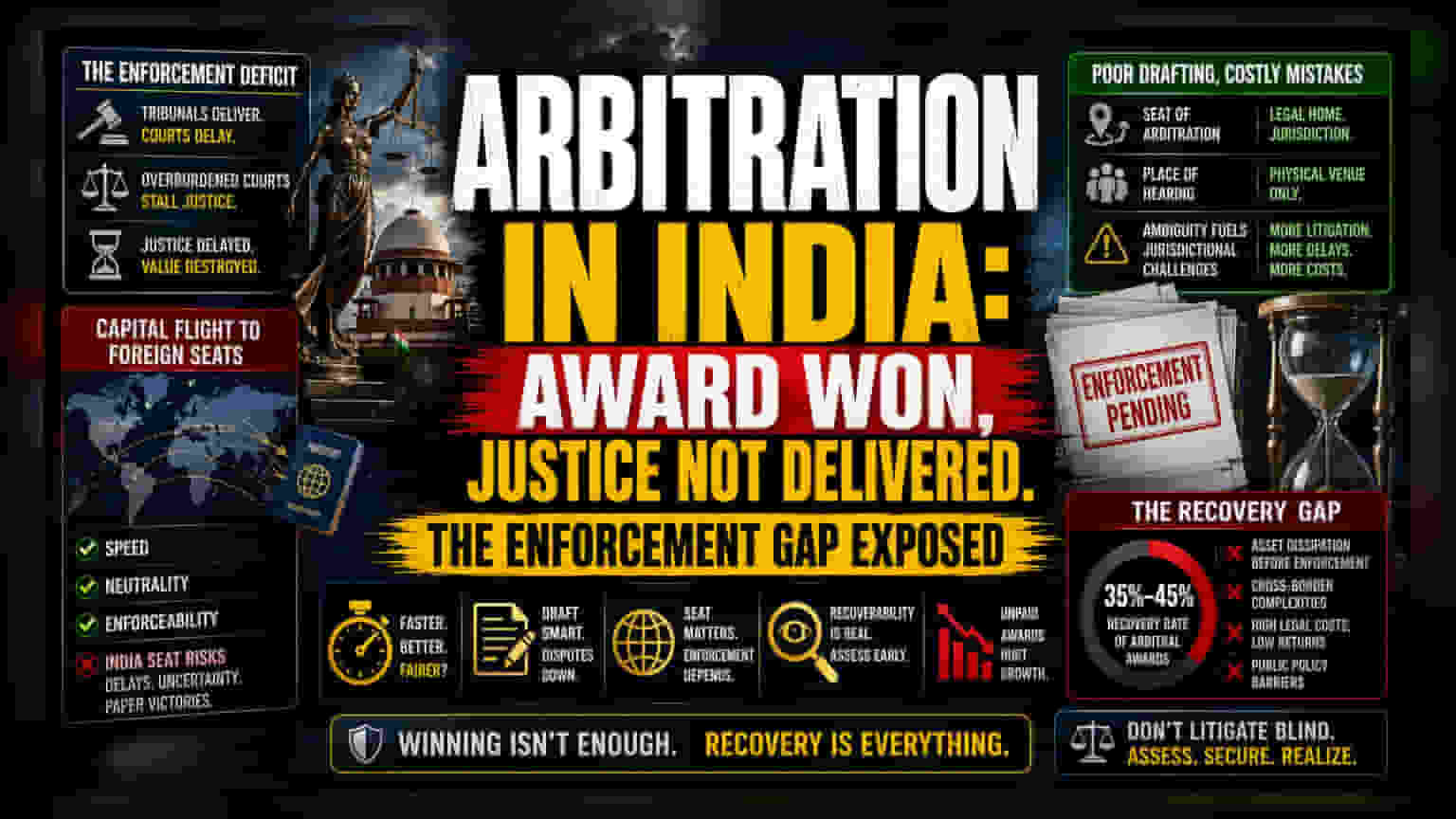


The Enforcement Deficit
While India has made strides in developing local arbitration institutions and fostering a more receptive judiciary, the promise of a streamlined dispute resolution mechanism is frequently undermined by the realities of the courtroom. The bottleneck persists not at the tribunal level, but during the challenging, set-aside, and enforcement phases of litigation. Even as the pool of competent local arbitrators grows, the reliance on an overburdened court system to finalize or execute awards remains the primary friction point for international capital.
The Capital Flight to Foreign Seats
International investors, prioritizing certainty and speed, are increasingly bypassing Indian venues for seat selection. This trend persists even when neighboring jurisdictions offer similar geographic or cultural proximity. The strategic preference for neutral seats stems from a fundamental distrust in the timeliness of the Indian judicial process. When interim protections or final enforcement orders are subject to protracted court delays, the arbitration award itself is often viewed by stakeholders as a paper victory rather than a definitive financial outcome.
The Hidden Costs of Poor Drafting
Legal practitioners identify the root of many enforcement failures in the initial contract formation phase. Common drafting oversights—specifically regarding the distinction between the physical place of hearing and the legal seat of arbitration—frequently act as catalysts for jurisdictional challenges. These ambiguities provide a runway for losing parties to initiate collateral litigation, effectively neutralizing the advantages of choosing arbitration over traditional court proceedings. Legislative reform is frequently cited as the necessary remedy to standardize these procedural definitions.
The Forensic Bear Case: The Recovery Gap
From a risk management perspective, the disparity between winning an award and actualizing a payout is stark. Internal industry data suggests a recovery rate as low as 35% to 45% for arbitral awards. This abysmal conversion rate forces institutional investors to treat the litigation process with the same rigor as an M&A transaction. Success is increasingly defined not by the arbitrator's ruling, but by the ability to identify and secure assets before the opposing party can initiate evasive measures. Without a forensic 'recoverability assessment' conducted alongside the merits case, the arbitration process risks becoming an exercise in value destruction, characterized by high legal fees and negligible net returns. For entities operating in cross-border markets, ignoring the host country's public policy regarding enforcement is no longer a sustainable strategy.