

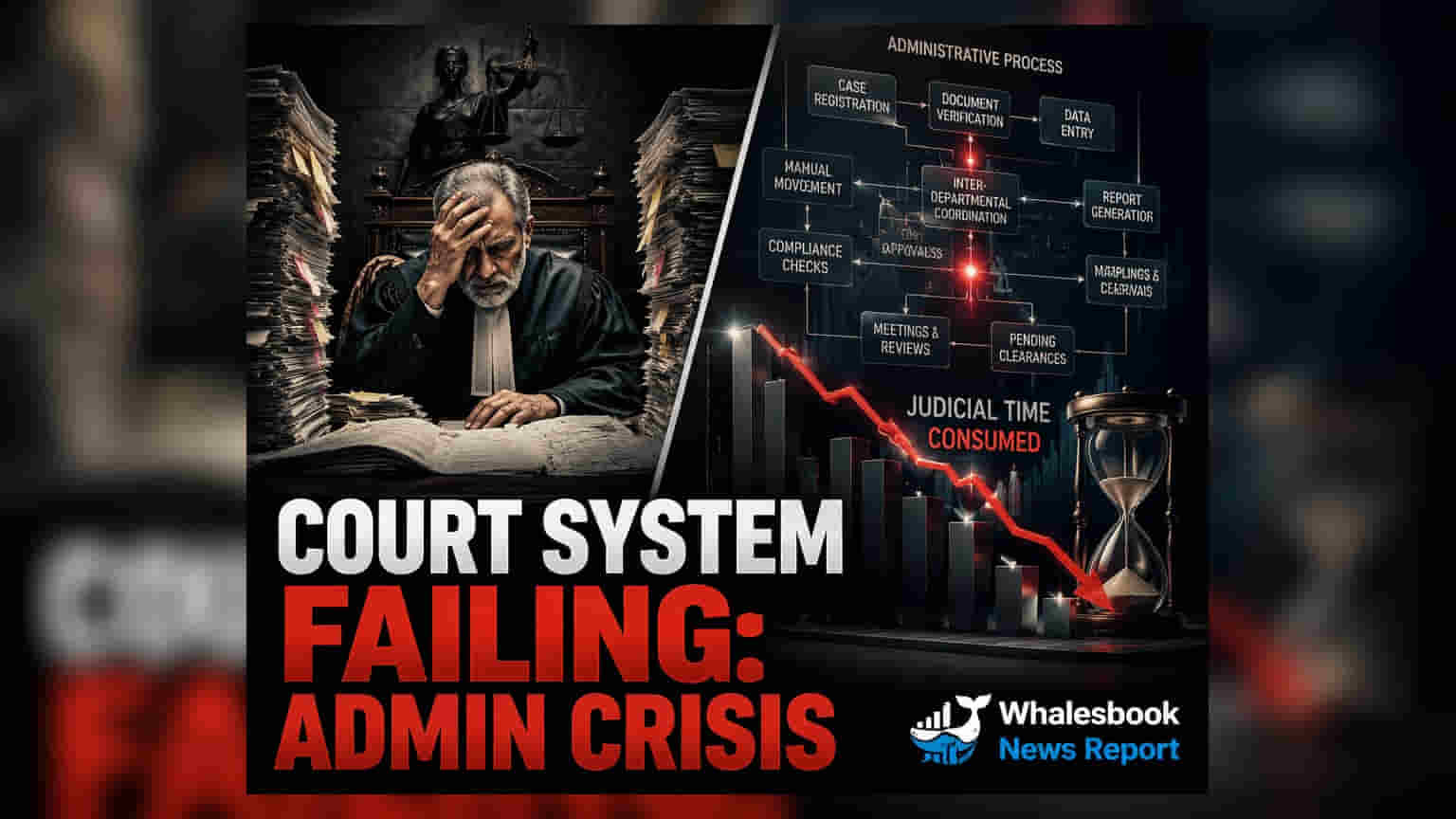
India's judicial reform debate is shifting from simply adding judges to improving administrative efficiency. Experts argue that modernizing court registries through professional management and data analytics is essential to reduce case delays. This structural focus aims to save judicial time by ensuring only ready-to-hear cases reach courtrooms.
What Happened
The ongoing debate regarding judicial reform in India is moving beyond the traditional focus on judge-to-population ratios and court vacations. Current discussions highlight that administrative inefficiencies within court registries—such as case scrutiny, listing processes, and record management—are major contributors to case pendency. By focusing on the 'administrative backbone' of the judicial system, the conversation is pivoting toward the need for modern management practices, specialized training for registry staff, and the use of data analytics to streamline the flow of justice.
The Administrative Gap
Courts operate as complex organizations that require professional management, yet many administrative roles are currently filled without specialized training in operations or systems design. Registry officials manage thousands of matters and coordinate between various stakeholders, effectively performing the duties of complex project managers. Without adequate training in modern office technology and process management, these offices often struggle to handle the sheer volume of filings, leading to procedural defects that cause cases to stall before they even reach a judge.
The Hidden Tax on Judicial Time
One of the most significant impacts of administrative inefficiency is the 'hidden tax' on judicial time. When cases are listed for hearing without proper documentation or before procedural requirements are met, it forces judges to spend valuable time addressing clerical errors rather than adjudicating complex legal issues. This leads to frequent adjournments, which further clogs the docket. Stronger pre-screening processes and strict adherence to filing timelines are being proposed as necessary steps to ensure that only hearing-ready cases consume the limited time of the judiciary.
Moving Toward Professional Administration
A proposed long-term solution is the creation of an Indian Judicial Administrative Service (IJAS). This specialized cadre would focus exclusively on court management, data governance, and technology implementation. By professionalizing the registry, the judiciary could offload non-legal responsibilities from judges, allowing them to dedicate their time entirely to hearing disputes and writing judgments. This model aims to replicate the efficiency seen in other public administrative services.
Data-Driven Judicial Reform
Digitization of records is only the first step. The next critical phase is using the data captured during this process to identify specific bottlenecks and adjournment patterns. By converting case data into actionable intelligence, court administrators can better allocate resources, understand which categories of cases contribute most to delays, and implement targeted interventions. The success of these reforms will likely depend on whether the judicial system can integrate expertise from fields such as data science, public policy, and technology to support legal practitioners.