

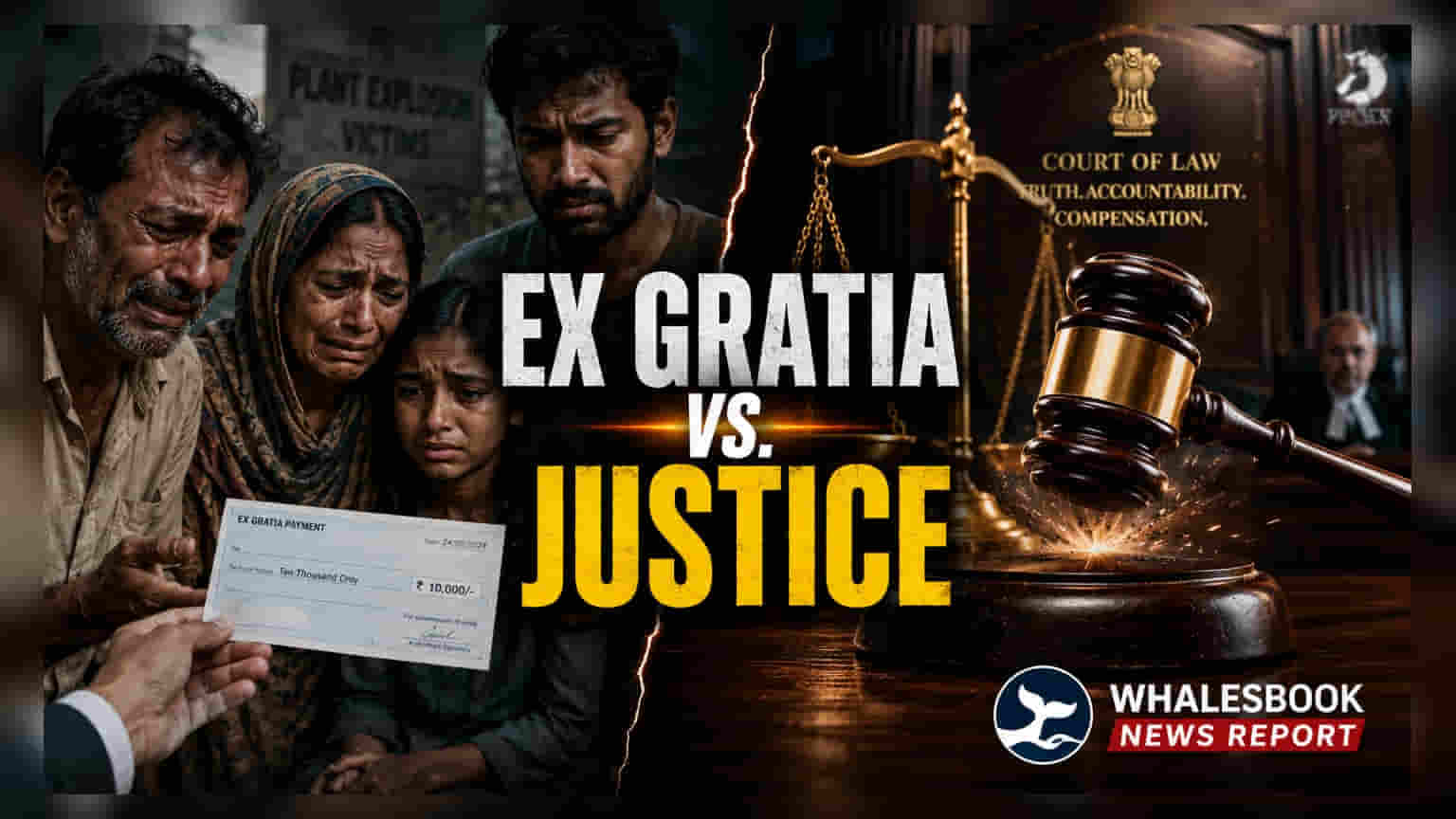
Recent tragedies in Tamil Nadu and Uttar Pradesh highlight a critical gap between 'ex gratia' government payments and court-mandated compensation. For investors, this distinction is vital. Legal precedents suggest that simple voluntary payouts do not clear a company of 'absolute liability' or constitutional tort claims, potentially exposing businesses to significant legal and financial risks long after the initial event.
What Happened
Following recent disasters in India, including an ammonia leak at a seafood facility in Tiruvallur, Tamil Nadu, and a fire at a coaching center in Lucknow, Uttar Pradesh, the government announced 'ex gratia' payments to the affected families. While these payments offer immediate financial support, legal experts are highlighting a fundamental issue: this 'ex gratia' (voluntary) compensation does not replace the legally enforceable damages that courts can mandate. For investors, understanding this distinction is essential, as these tragedies often stem from operational or regulatory failures that can trigger massive, long-term legal liabilities for private and public entities alike.
The 'Absolute Liability' Risk
Investors in hazardous industries—such as chemicals, manufacturing, and energy—should be aware of the MC Mehta v. Union of India precedent. This ruling established that hazardous enterprises hold 'absolute liability' for the risks they create. This means companies cannot easily defend themselves by claiming acts of God or third-party interference. When a disaster occurs, a company’s financial capacity and the scale of the hazard become factors in determining compensation. Simply paying a small, voluntary amount after a tragedy does not protect a company from lawsuits demanding compensation that reflects the true financial impact and negligence involved.
Regulatory Failure as a Financial Threat
The Lucknow coaching center fire serves as a stark example of regulatory risk. The building involved had previously faced an unauthorized construction demolition order, yet it continued to operate commercially for years. When such regulatory failures occur, they can lead to 'constitutional tort' claims. Under legal precedents like Nilabati Behera v. State of Orissa, the state—and potentially private parties linked to regulatory negligence—can be held accountable for violations of fundamental rights. For investors, this means that projects or facilities operating on shaky regulatory grounds carry a hidden, unpriced risk that could result in heavy court-mandated payouts rather than manageable, voluntary settlements.
Moving Beyond Surface-Level Compliance
'Ex gratia' is a payment made by grace, without admitting fault. However, history—such as the Uphaar Cinema fire case—shows that courts often treat these payments as merely a first step. In that case, the Supreme Court awarded final compensation that was significantly higher than initial payouts, clearly separating the government’s initial gift from the legal liability established by the court. Relying on quick, administrative crisis management may temporarily soothe public perception, but it does not resolve the underlying legal and financial exposure.
What Investors Should Track
Investors should look beyond a company's public relations response to disasters and focus on long-term legal and operational indicators. Key factors to monitor include the quality of safety audits, the strictness of regulatory compliance (such as building usage permissions and environmental clearances), and the robustness of liability insurance. When a company is involved in an incident, the most critical monitorable is whether it is merely offering ex gratia payments or if it is addressing the root cause of negligence to prevent future litigation that could impact profit margins and balance sheets for years to come.