

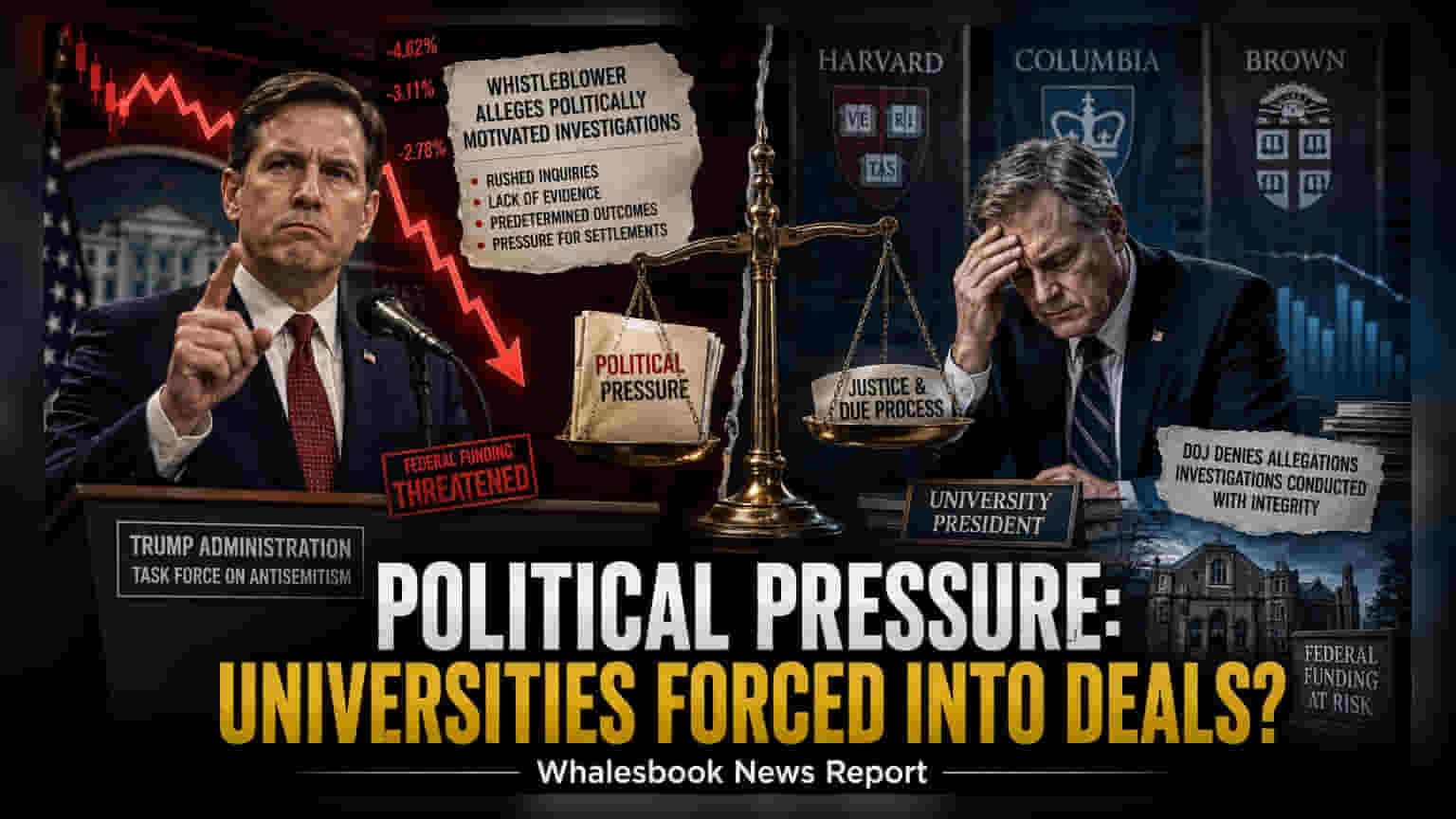
A former US Justice Department lawyer has filed a complaint alleging that a federal task force conducted politically motivated investigations into major universities like Harvard and Columbia. The whistleblower claims the probe was designed to force settlements and freeze federal funding. This situation highlights rising regulatory risks for academic institutions dependent on government support.
A whistleblower complaint filed by former Justice Department attorney Haley Van Erem has sparked a controversy regarding federal investigations into elite American universities. The complaint alleges that a multi-agency task force, established by the Trump administration to address campus antisemitism, conducted rushed and politically motivated inquiries into institutions including Harvard, Columbia, and Brown.
According to the complaint, these investigations were characterized by procedural irregularities and lacked sufficient factual or legal evidence. Van Erem, who previously worked in the Civil Rights Division of the Justice Department, claims that the task force’s primary objective was to secure financial settlements and leverage the threat of federal funding freezes against universities. The whistleblower alleged that the outcomes of these investigations were often predetermined, ignoring internal legal standards to satisfy political goals.
The document specifically points to instances where universities were pressured to settle despite a lack of verified Title VI violations. For example, the complaint highlights scenarios where funding for research and operations was reportedly threatened, creating significant financial and operational instability for these academic institutions. The allegations suggest that this approach marked a shift from traditional regulatory oversight toward a more aggressive use of administrative power.
In response to these claims, the US Justice Department has officially denied the allegations. A department spokesperson stated that the task force’s investigations were conducted with integrity and adhered to all legal requirements. The DOJ also noted that Van Erem was not directly involved in the specific university investigations she describes in her complaint, challenging the basis of her claims.
The matter has moved into the political arena, with Representative Jamie Raskin raising concerns about the investigations and launching a formal review. The controversy underscores a period of increased friction between federal agencies and academic institutions, particularly regarding how Title VI, a law prohibiting discrimination in programs receiving federal financial assistance, is enforced.
For investors and stakeholders observing the education sector, the situation highlights the unpredictability of federal funding. When regulatory bodies are perceived to be using funding as a tool for political or administrative pressure, it introduces a layer of uncertainty for universities that rely heavily on federal research grants and financial aid programs. The core issue for observers is whether these investigations will result in long-term changes to how federal agencies oversee academic institutions or if the current administration will maintain its current enforcement strategy.
The next step in this matter will be the ongoing review by the House Oversight Committee, which is expected to examine the evidence provided by the whistleblower. Further updates on this investigation, along with any subsequent legal or administrative responses from the universities and the Department of Justice, will determine the potential for long-term policy shifts.