

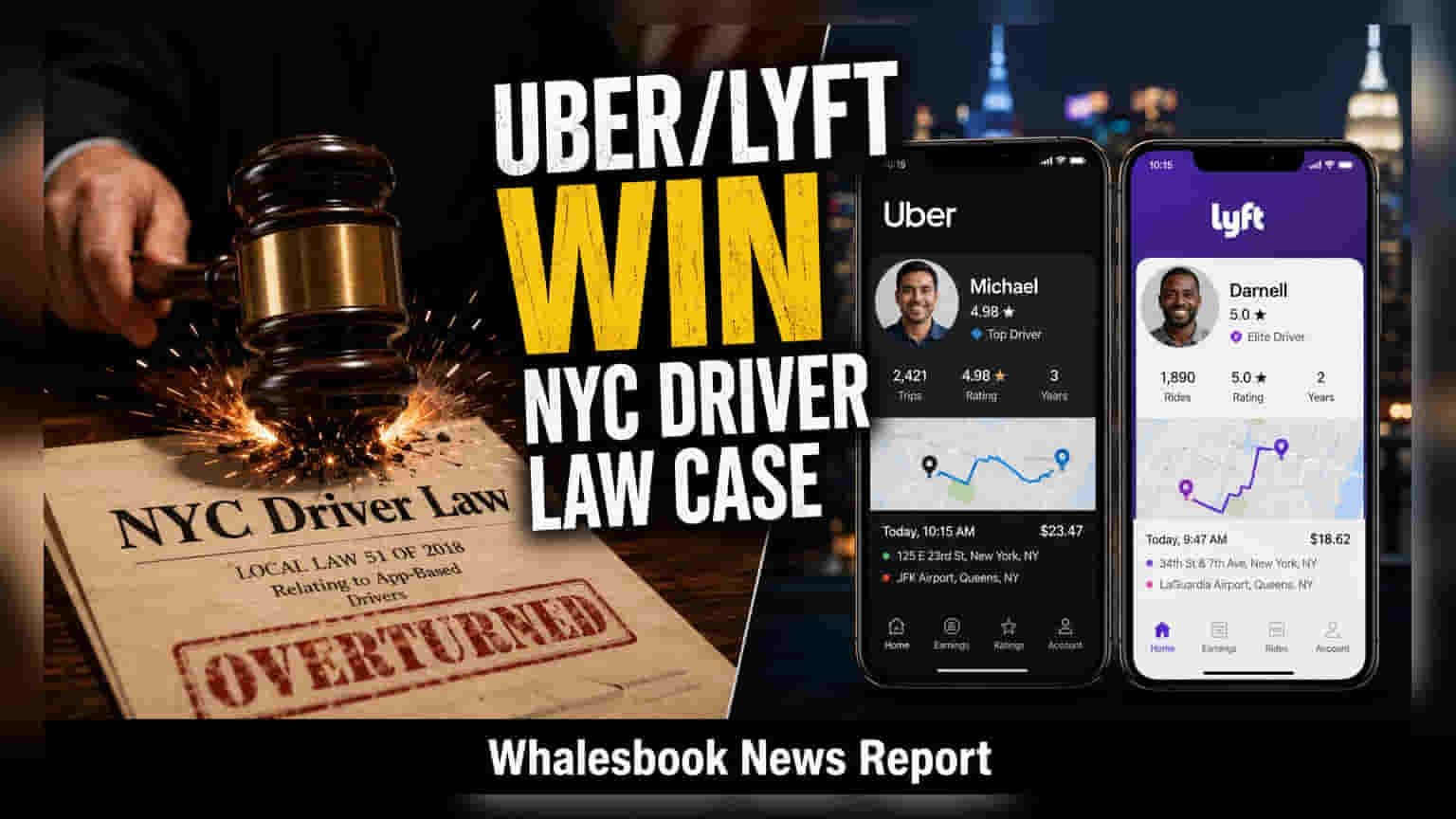
A U.S. federal judge has temporarily blocked a New York City law that would have forced ride-hailing companies to give drivers 14 days' notice before deactivation. The court ruled the legislation likely unconstitutional, as it limits the companies' ability to manage platform safety. This decision halts enforcement of the policy that was set to begin on July 28.
Detailed Coverage
A federal judge in Manhattan has issued a preliminary injunction, effectively pausing a new New York City regulation that would have significantly changed how ride-hailing platforms manage their driver networks. U.S. District Judge Gregory Woods ruled in favor of Uber Technologies and Lyft, determining that the law, which required a mandatory 14-day notice period before deactivating a driver, is likely unconstitutional.
In his decision, Judge Woods highlighted that the law could impair the ability of these companies to ensure the safety of their platforms. The ruling suggests that the legislation might violate the companies' contractual rights by forcing them to keep drivers on the platform even in cases where serious misconduct is alleged. The judge noted that the burden imposed on the businesses appears to outweigh the benefits intended for the driver pool.
This legal victory comes after Uber and Lyft filed consolidated lawsuits in June, challenging the city's authority to mandate these operational changes. Both companies argued that the law infringed upon their constitutional rights and limited their capability to act quickly to protect riders and other drivers. By issuing the injunction, the court has prevented the law from taking effect on July 28, allowing the companies to continue their current deactivation processes while the litigation continues.
For investors and market observers, the court’s focus on platform safety and operational control is a central point of interest. Maintaining the ability to remove drivers swiftly is a core component of the business model for ride-sharing platforms, as it directly impacts their liability and the perceived safety of their services. Previous regulatory disputes in the gig economy sector have often centered on the balance between worker protections and the companies' autonomy in managing their independent contractor relationships.
Both Uber and Lyft have publicly stated that the court’s decision validates their stance on the importance of maintaining safety standards. While the injunction provides temporary relief, the long-term impact on the companies' operational costs and regulatory environment will depend on the final outcome of the court proceedings. The New York City Law Department has not yet provided a formal response regarding potential next steps or plans to appeal the ruling. Investors may monitor future court hearings to see if the city attempts to modify the legislation or if the court moves toward a final decision that permanently strikes down the law.