

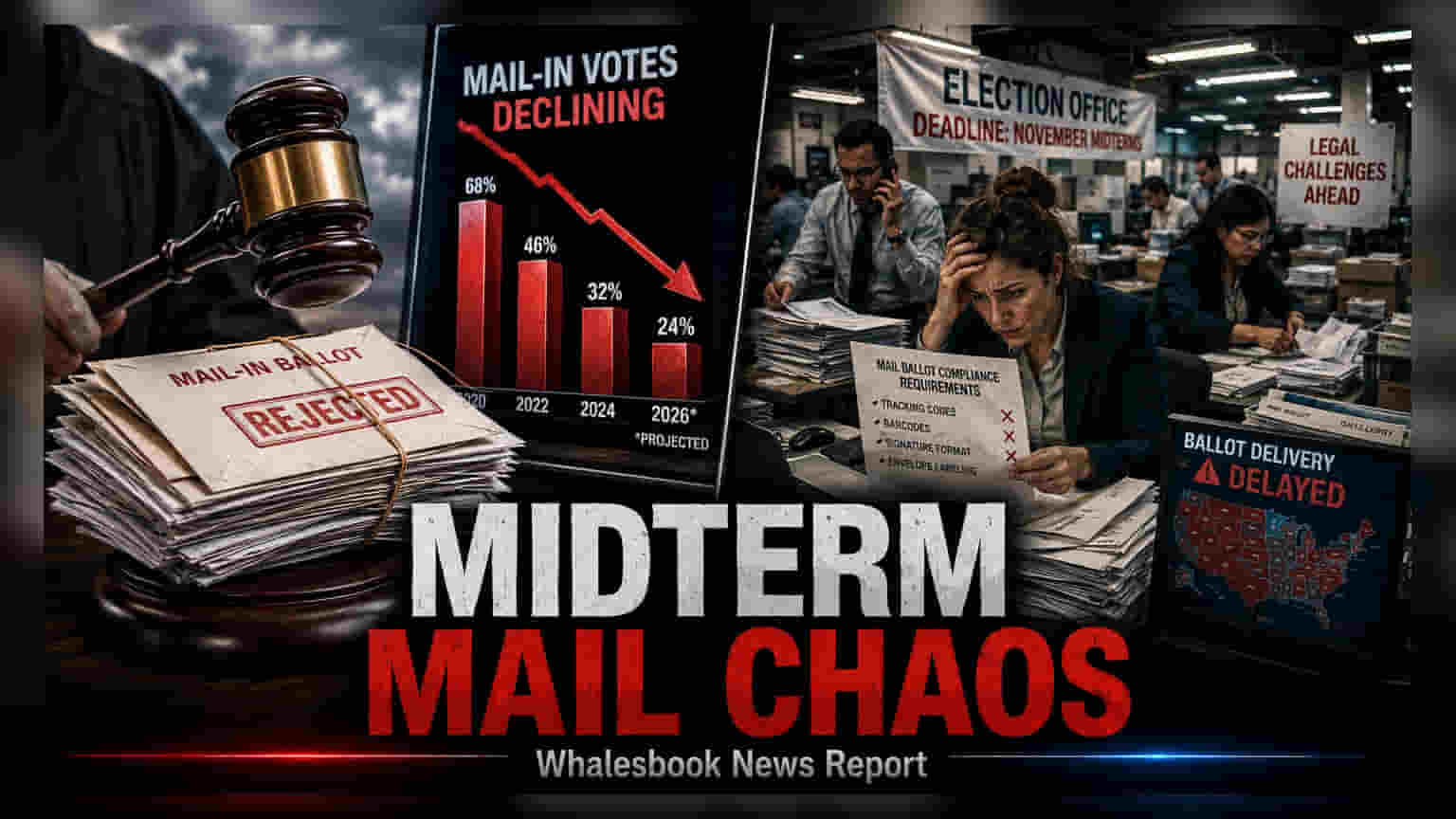
The U.S. Supreme Court has ruled that legal challenges to President Trump’s mail-in voting order were filed too early. This procedural decision allows some parts of the order to proceed, though a separate nationwide injunction still prevents the postal service from enforcing specific mail-ballot requirements. The ongoing legal uncertainty is a point of observation for investors tracking U.S. political stability ahead of the November midterms.
The U.S. Supreme Court issued a procedural ruling on August 24, 2026, regarding President Donald Trump’s executive order on mail-in voting. The court determined that the lawsuits filed by several states were premature because final federal regulations regarding the order had not yet been fully implemented. This decision, which focuses on legal 'standing' rather than the constitutionality of the measure, allows the administration to move forward with certain preparatory aspects of the directive.
While this ruling clears a procedural hurdle, it does not confirm the legality of the order itself. A separate nationwide injunction currently remains in effect, which continues to prohibit the United States Postal Service (USPS) from enforcing the specific mail-ballot requirements mandated by the order. This creates a complex legal environment where the policy is officially allowed to advance in some areas, yet remains blocked in its most critical enforcement mechanisms.
For investors and market observers, the primary interest lies in the potential for increased political and administrative uncertainty in the United States ahead of the November midterm elections. Stability in the U.S. political system is often a factor that influences global market sentiment and foreign investment flows. The prospect of renewed legal battles and the potential for administrative delays in election processes can occasionally lead to periods of volatility in global asset classes.
Election officials have expressed concerns that the requirements of the executive order, which include new tracking and formatting mandates for mail-in ballots, could be difficult to implement given the short timeline before the November midterms. The potential for logistical strain has led to calls for further clarity, and legal experts expect additional lawsuits to emerge as states continue to contest the order’s application. The final impact of this directive on the election process remains heavily dependent on these ongoing judicial proceedings and the eventual outcome of the remaining injunctions.
The key monitorable for those tracking the situation will be any upcoming court hearings that address the core legality of the executive order. Changes to the current nationwide injunction or new regulatory filings by the Department of Homeland Security could provide more certainty. Until then, the status of mail-in voting procedures will likely remain a significant point of political debate.