

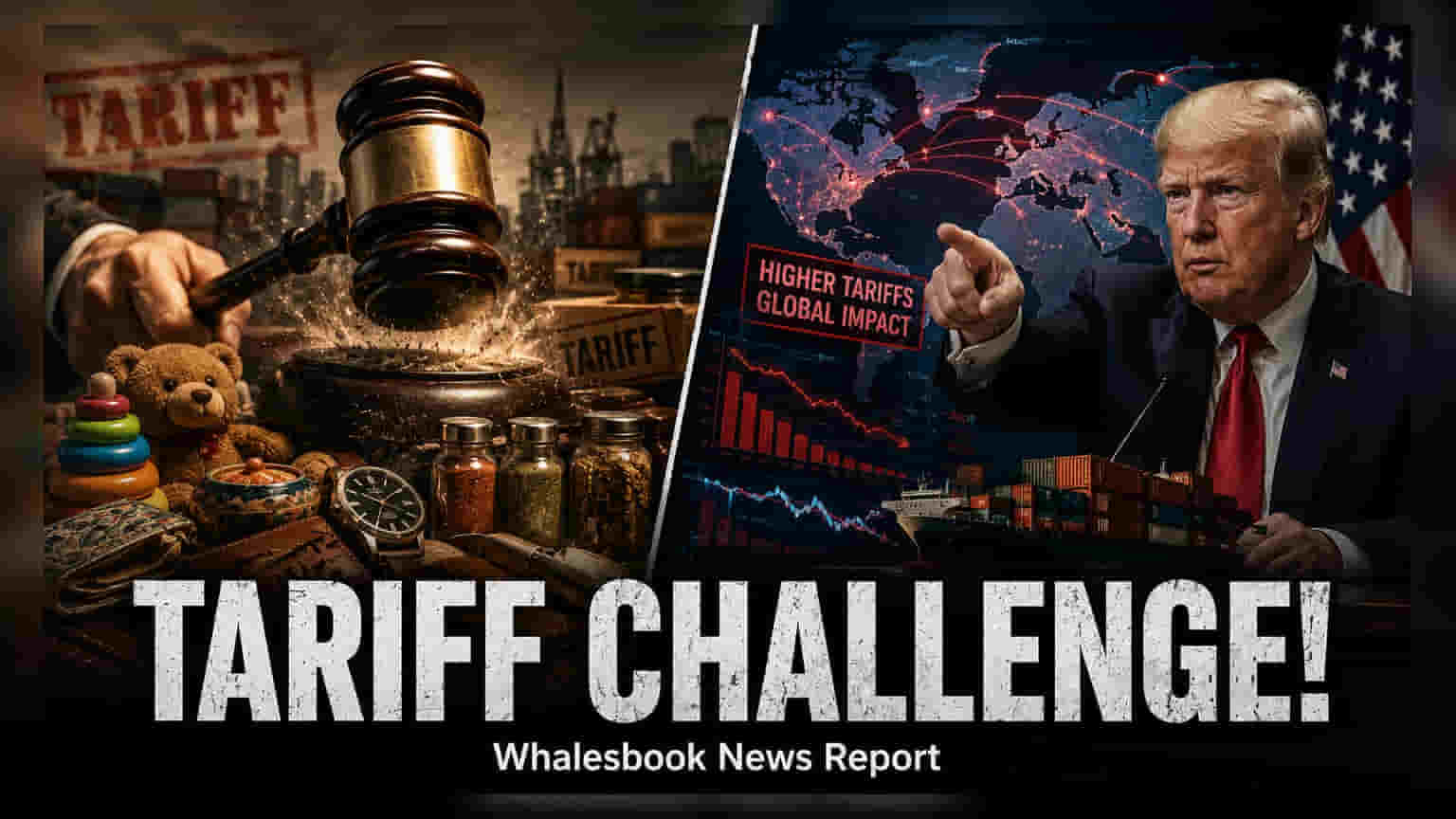
Small U.S. businesses have filed lawsuits challenging new tariffs imposed by the Trump administration on 60 trading nations. The plaintiffs argue the government failed to meet legal requirements under Section 301. Investors are tracking these cases as they could lead to prolonged trade uncertainty and higher import costs for companies relying on global supply chains.
Detailed Coverage
Small U.S. companies have launched legal challenges against the Trump administration's latest trade policy, which applies new tariffs to nearly all imports from approximately 60 trading partners. The government stated these measures were implemented to address concerns regarding forced labor in global supply chains. However, these new levies have immediately faced opposition in the Court of International Trade from businesses that claim the administration bypassed necessary legal steps.
Legal Arguments Against New Levies
The plaintiffs, including toy company Learning Resources, spice retailer Burlap and Barrel, and watch dealer Collective Horology, are questioning the government's authority to implement these broad measures. A central argument raised by these businesses is that the administration failed to provide the required evidence or justification for applying tariffs on a per-country basis, as mandated under Section 301 of the Trade Act. The Liberty Justice Centre, which is supporting these lawsuits, has argued that the administration is attempting to bypass previous legal setbacks by switching the statutory basis for these tariffs following the expiration of prior global measures.
Impact on Trade and Supply Chains
These lawsuits arrive as the U.S. trade environment remains in flux. While previous global tariffs were invalidated by the Supreme Court earlier this year, the current Section 301 measures are designed to be more permanent. Trade experts have noted that unlike the expired temporary levies, these new measures create a complex environment for importers. Even if trading partners address specific forced labor concerns, the process to remove these tariffs requires proving enforcement to U.S. officials, which could lead to an extended period of higher costs for businesses that depend on international materials or finished goods.
Potential Challenges for Investors
For investors, the legal battle creates uncertainty regarding the cost of goods sold and profit margins for companies with heavy exposure to international supply chains. While the Trump administration’s past use of Section 301 against China was legally successful, the breadth of these new measures across 60 countries adds a layer of complexity. The primary monitorable for the coming months will be the timeline of these court proceedings and whether the Court of International Trade grants an injunction or requires the administration to revise its implementation strategy. Until there is a court ruling, businesses may face pressure to either absorb these additional tariff costs or pass them on to consumers, which could influence demand trends in affected sectors.