

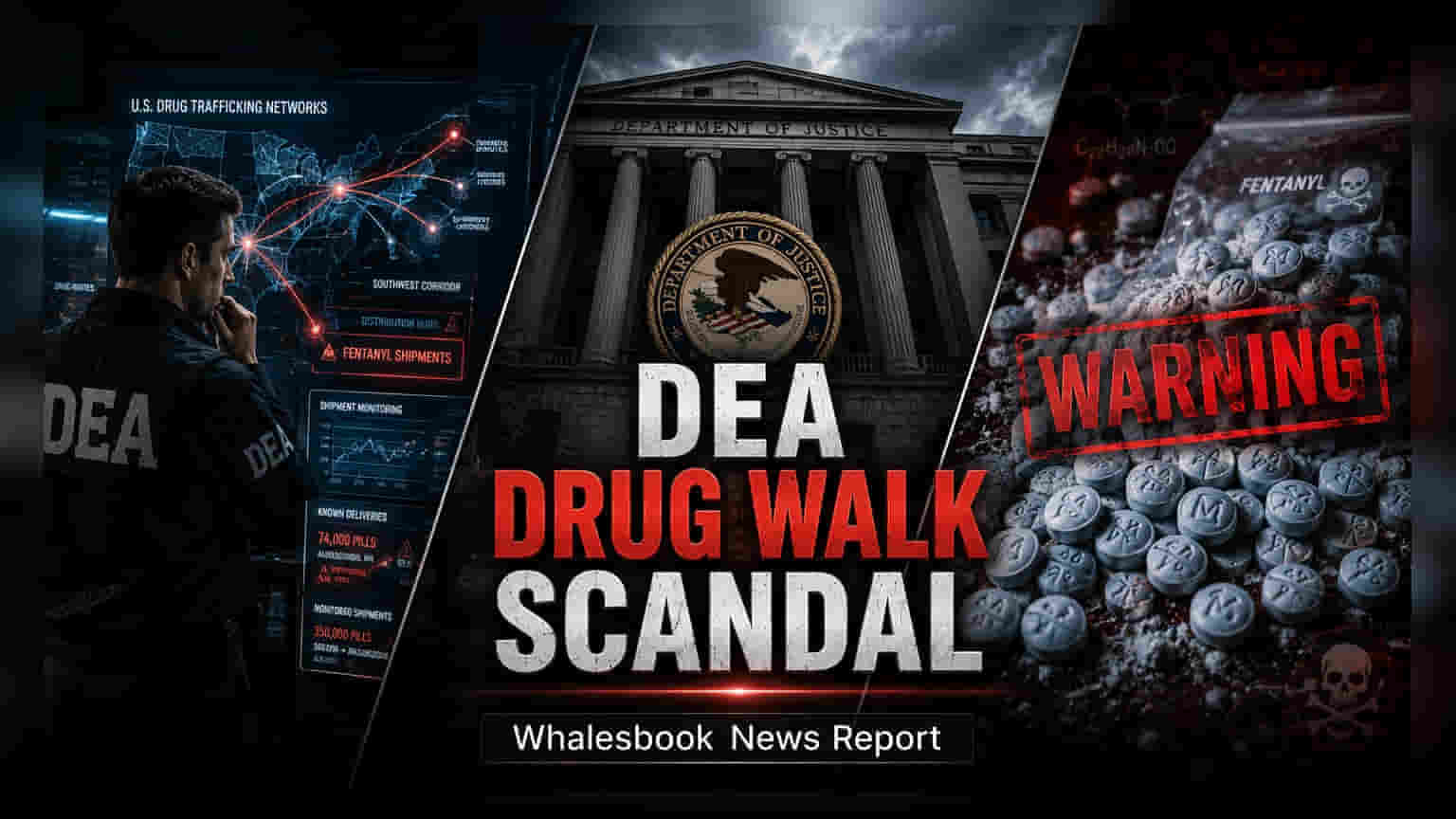
The US Justice Department's internal watchdog is investigating the Drug Enforcement Administration (DEA) over claims that agents allowed lethal fentanyl shipments to reach the streets to build larger trafficking cases. The probe follows reports that agents monitored massive drug deliveries without intervening, raising urgent questions about public safety and policy compliance.
The US Justice Department’s Office of the Inspector General has launched a formal review into a controversial law enforcement strategy used by the Drug Enforcement Administration (DEA). The investigation focuses on the practice of allowing fentanyl—a highly lethal synthetic opioid—to move through distribution networks without interception. Agents have allegedly used this strategy, sometimes called "fentanyl-walking," to monitor shipments in order to build larger, more significant drug trafficking cases.
The probe, announced this week, follows reports that DEA agents in New Mexico monitored substantial fentanyl deliveries between 2023 and 2025 without seizing them. These revelations have sparked intense debate regarding whether the agency prioritized case-building over community safety. The White House has previously labeled fentanyl as a weapon of mass destruction due to its high fatality risk, even in small doses.
This investigation is one of the first major actions by Inspector General Don Berthiaume, who recently took office. The review was triggered after an investigation by the Associated Press revealed that agents had opportunities to intercept large quantities of pills but chose not to, despite the agency's public health campaigns warning about the extreme dangers of even a single pill.
Several whistleblowers have come forward to support these allegations. One federal agent, David Howell, alleged that the agency’s inaction directly endangered local communities. Internal reports reportedly showed that the DEA was aware of a specific delivery of 74,000 fentanyl pills in Albuquerque but allowed the shipment to proceed. Other whistleblowers have alleged that agents monitored even larger quantities, including 350,000 pills and repeated shipments between Phoenix and Albuquerque, without making arrests.
Separately, New Mexico state officials are conducting their own investigation. State Attorney General Raul Torrez has expressed concerns that DEA agents may have violated state laws by permitting these shipments to circulate. The state is seeking access to records that federal authorities have reportedly been reluctant to provide. The conflict highlights the tension between federal investigative strategies and state-level public safety responsibilities.
Because the DEA is a US government agency and not a publicly traded company, this news does not involve stock market impacts or corporate financial performance. Instead, the focus remains on government accountability and the potential for shifts in federal law enforcement policies. The inspector general’s review will specifically assess whether the agency’s actions violated Justice Department rules and if similar tactics have been employed in other regions of the country.