

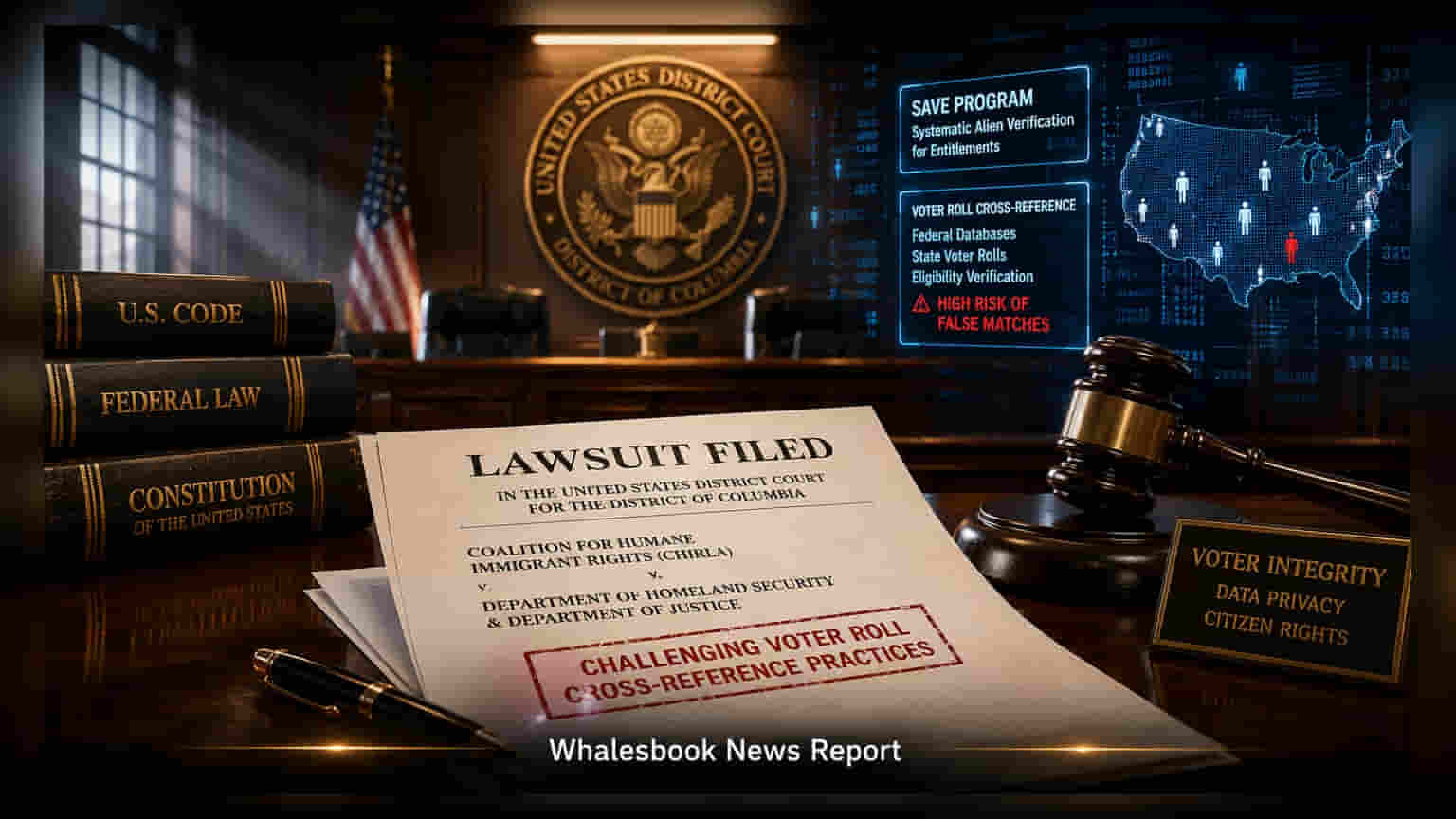
The Coalition for Humane Immigrant Rights has sued the US government, challenging the use of federal databases to verify voter eligibility. The legal action argues that relying on potentially flawed records to flag noncitizens could disenfranchise naturalized voters, setting up a significant clash over election data practices ahead of the midterms.
The Coalition for Humane Immigrant Rights (CHIRLA) has filed a lawsuit in the US District Court in Washington, D.C., challenging the federal government’s practice of using internal agency databases to verify the eligibility of registered voters. The legal action targets the Department of Homeland Security and the Department of Justice, specifically questioning the methods used to cross-reference state voter rolls against federal records.
Dispute Over Data Accuracy
At the center of the controversy is the use of the Systematic Alien Verification for Entitlements (SAVE) program and other undisclosed datasets. Federal authorities have claimed that approximately 190,000 potential noncitizens are currently listed on California's voter rolls. However, the plaintiffs argue that this figure is unsubstantiated and relies on outdated or flawed information. The lawsuit contends that these verification tactics lack congressional authorization and carry a high risk of wrongly disenfranchising eligible naturalized citizens.
For those tracking the US political and regulatory environment, this case underscores the intensifying friction between federal oversight mandates and state-level control over election administration. The plaintiffs argue that the federal government is bypassing established privacy and data-sharing limits, which they claim constitutes a form of voter intimidation.
Impact on Regulatory Landscape
This legal battle highlights the complexities of election integrity measures and how they intersect with federal administrative power. While the administration asserts that these cross-referencing efforts are necessary to maintain the integrity of the electoral process, the coalition is seeking an injunction to stop the ongoing review of state records.
The outcome of this litigation could have broader implications for how federal agencies interact with state electoral lists. The key monitorable for market and policy observers will be the court's decision regarding the requested injunction. A ruling in favor of the plaintiffs could force a change in how federal verification programs operate, while a denial could solidify the current practice of using federal databases to screen voter rolls, potentially setting a precedent for future election-related data management.