 Whalesbook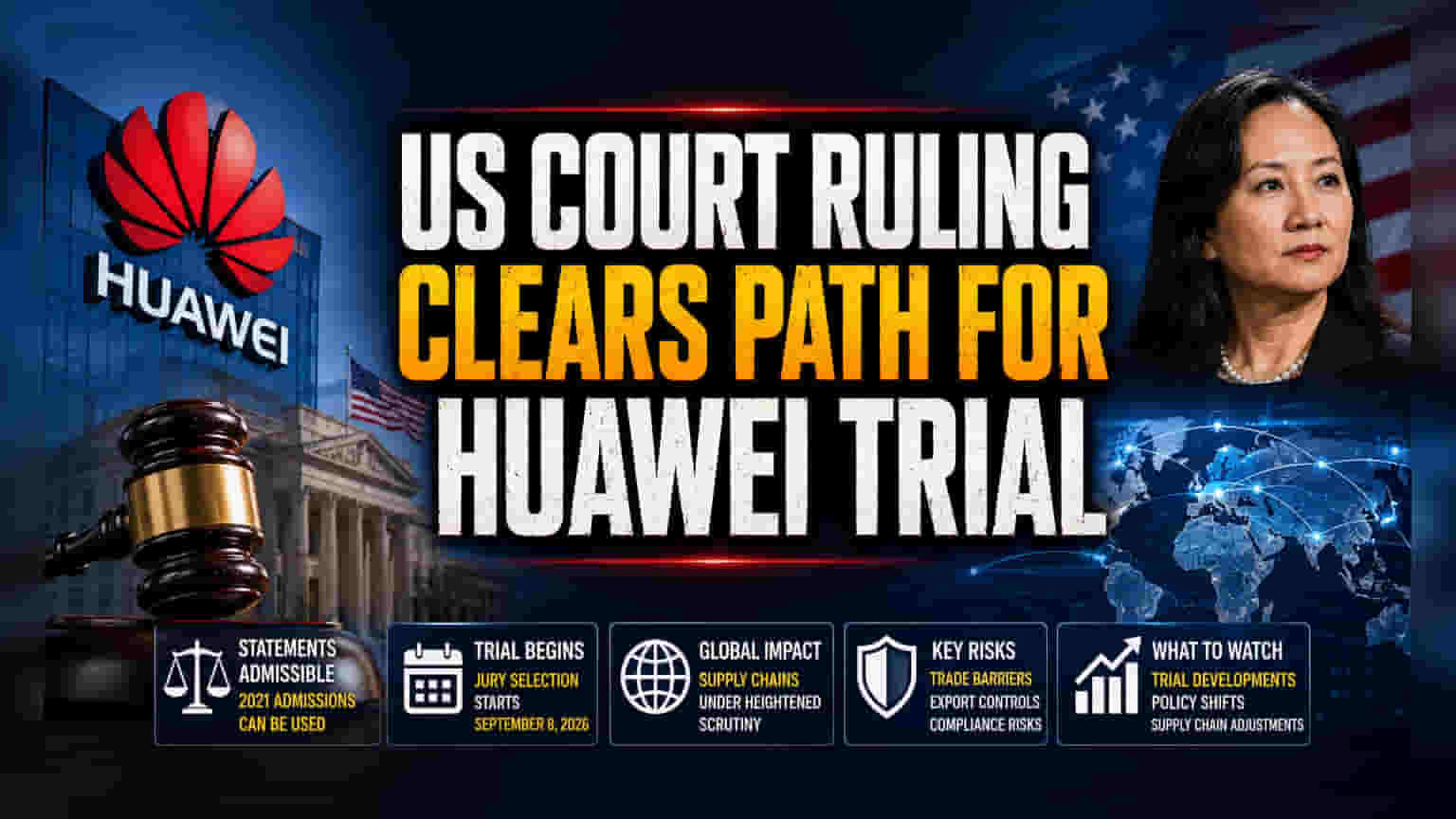
A US federal judge has ruled that admissions made by Huawei CFO Meng Wanzhou in a 2021 agreement can be used in the company’s upcoming criminal trial. The decision marks a significant development in the long-running legal battle involving trade secret theft and sanctions violations. For investors, this highlights the ongoing geopolitical tensions and regulatory hurdles impacting global technology supply chains.
What Happened
US District Judge Ann Donnelly has ruled that admissions made by Huawei Technologies’ Chief Financial Officer, Meng Wanzhou, as part of a 2021 agreement, are admissible in the company’s upcoming criminal trial. The court rejected Huawei's request to block prosecutors from using statements Meng made in 2021, where she acknowledged misleading financial institutions regarding the company's business activities in Iran.
The ruling clarifies that Huawei cannot object to the use of these statements, even though the company itself was not a direct signatory to the personal agreement Meng reached with the US government at the time. Jury selection for the criminal trial is scheduled to begin on September 8, 2026.
Why This Matters For Investors
The ongoing legal battle involving Huawei serves as a case study for the heightened regulatory scrutiny facing major technology firms with global operations. The case has been a central point in the strained trade and diplomatic relationship between the United States and China. For investors, these developments illustrate the persistent nature of regulatory and compliance risks that can affect large multinational corporations.
While Huawei is a private company, the outcome of this trial and the broader US-China technology standoff carries implications for the global telecom and electronics supply chain. Companies across the world have been forced to navigate complex rules regarding where they source their technology and which partners they work with to avoid similar regulatory crosshairs.
How Investors May Read This
The legal friction between US regulators and Chinese tech majors is one of many factors driving the global shift in supply chains. Many international businesses are adopting a strategy often referred to as 'China Plus One,' where they seek to diversify their manufacturing and technology sourcing to reduce reliance on any single region. This trend has been a significant point of interest for market analysts monitoring the growth of the electronics manufacturing and semiconductor sectors in other regions, including India.
Investors typically track these geopolitical updates to understand potential shifts in global trade flows. Increased scrutiny on technology companies can lead to sudden changes in market access, import restrictions, or export controls, which may alter the cost structure and competitive landscape for tech and telecom firms globally.
Risks and Concerns
The primary risk highlighted by this case is the potential for ongoing regulatory or legal action against global tech entities. When such major disputes occur, it can create uncertainty for shareholders of companies that rely on international partnerships or access to global markets.
Investors often monitor whether such disputes lead to further trade barriers or restrictions on critical technologies like artificial intelligence and smart components. Any escalation in these tensions could impact the operational efficiency of technology companies, potentially leading to increased costs or supply delays.
What Investors Should Track
The key monitorable for the market is the progress of the trial starting in September. Developments in the courtroom could influence future policy decisions regarding technology transfers and sanctions. Additionally, investors may continue to watch how global technology firms adjust their business models and supply chains to comply with evolving international standards and maintain market access across different regions.

