

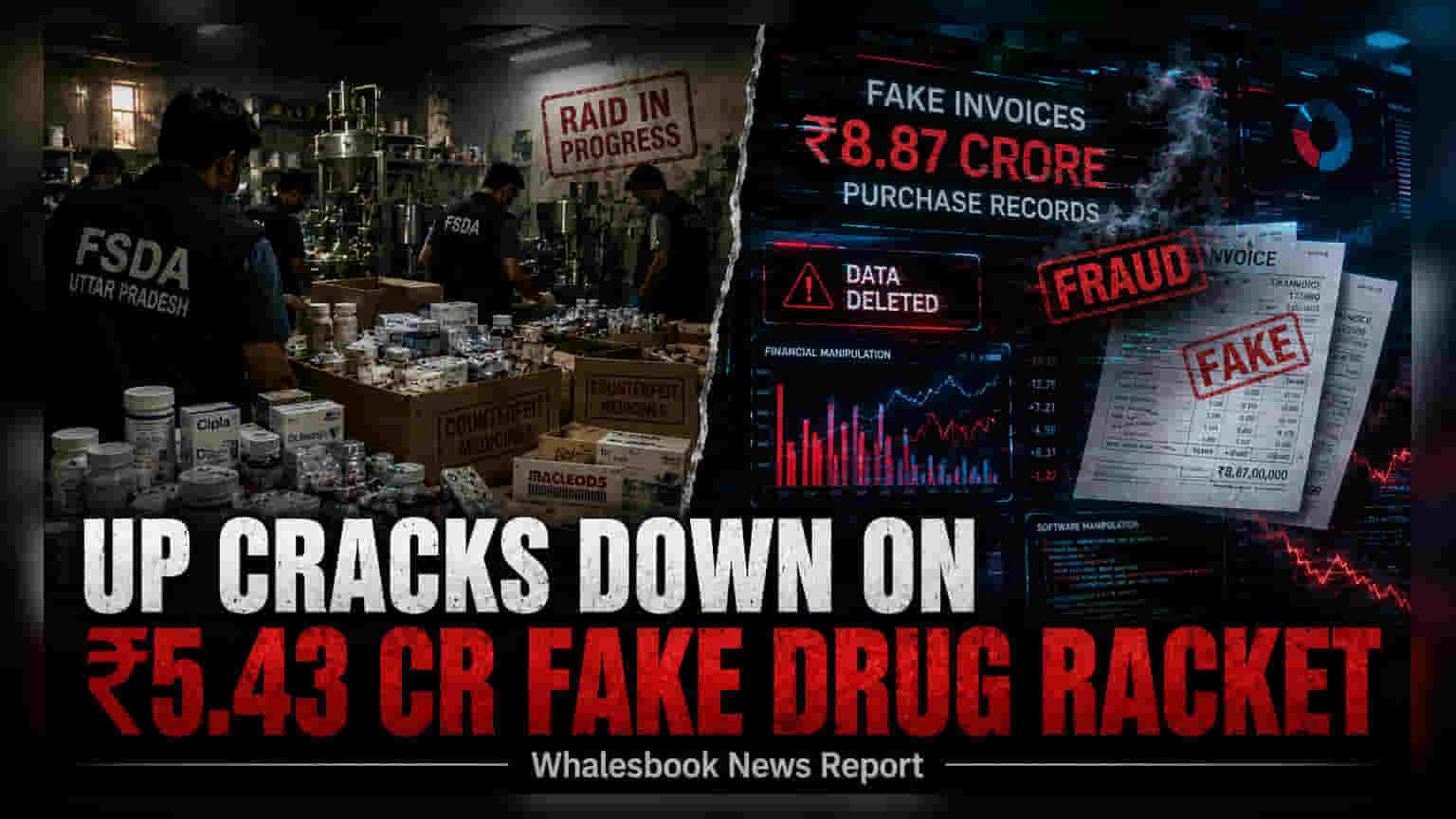
Uttar Pradesh authorities have dismantled a major counterfeit drug network, seizing illicit medicines valued at ₹5.43 crore. The probe revealed fake billing and illegal manufacturing, with several firms under scrutiny. For investors, the event highlights supply chain risks and the need for stricter brand protection for pharmaceutical companies whose labels were misused.
The Uttar Pradesh Food Safety and Drug Administration (FSDA) has dismantled an extensive counterfeit drug network following a series of raids across the state. Authorities seized spurious medicines with an estimated value of ₹5.43 crore, exposing a sophisticated system of fake invoices, software manipulation, and unlicensed manufacturing.
The crackdown centers on several firms, including Health Plus, MK Pharma, Ram Pharma, and Patient Care Surgical House. In one specific instance, investigators flagged MK Pharma for allegedly fabricating approximately ₹8.87 crore in purchase records during the 2025-26 financial year. Evidence suggested that digital data was deleted to conceal these activities, complicating the audit trail for regulatory bodies.
Impact on Pharmaceutical Brands
The investigation uncovered an unlicensed factory producing counterfeit versions of products from several major pharmaceutical companies, including Dr. Reddy's, Cipla, Elder, Macro, and Intas. Additionally, reports from Agra and Lucknow indicated the presence of forged labels for popular brands such as Torrent Pharma's Chymoral Forte and Aciloc, as well as government-supplied drugs like Zostum-O. The counterfeiters also reportedly dealt in fake insulin and vaccines.
Why This Matters for Investors
For investors in the pharmaceutical sector, this incident underscores the ongoing challenge of supply chain integrity. When counterfeiters use the brand names of reputable companies, it creates two primary risks. First, there is a clear danger to brand equity and consumer trust. Second, pharmaceutical firms may face increased costs related to implementing stronger anti-counterfeiting technologies, such as advanced packaging and track-and-trace systems, to secure their distribution channels.
While major pharmaceutical companies are victims in this scenario, the presence of such a widespread racket suggests that wholesale distribution channels remain vulnerable. Markets often react negatively when brand security is compromised, as it can lead to temporary sales disruption or increased regulatory scrutiny.
Authorities have registered FIRs against numerous individuals and firms involved in the syndicate. The next important updates to watch will be the progress of the legal proceedings against the accused firms and any potential directives from health regulators regarding stricter verification of wholesale pharmaceutical distribution records across the state.