 Whalesbook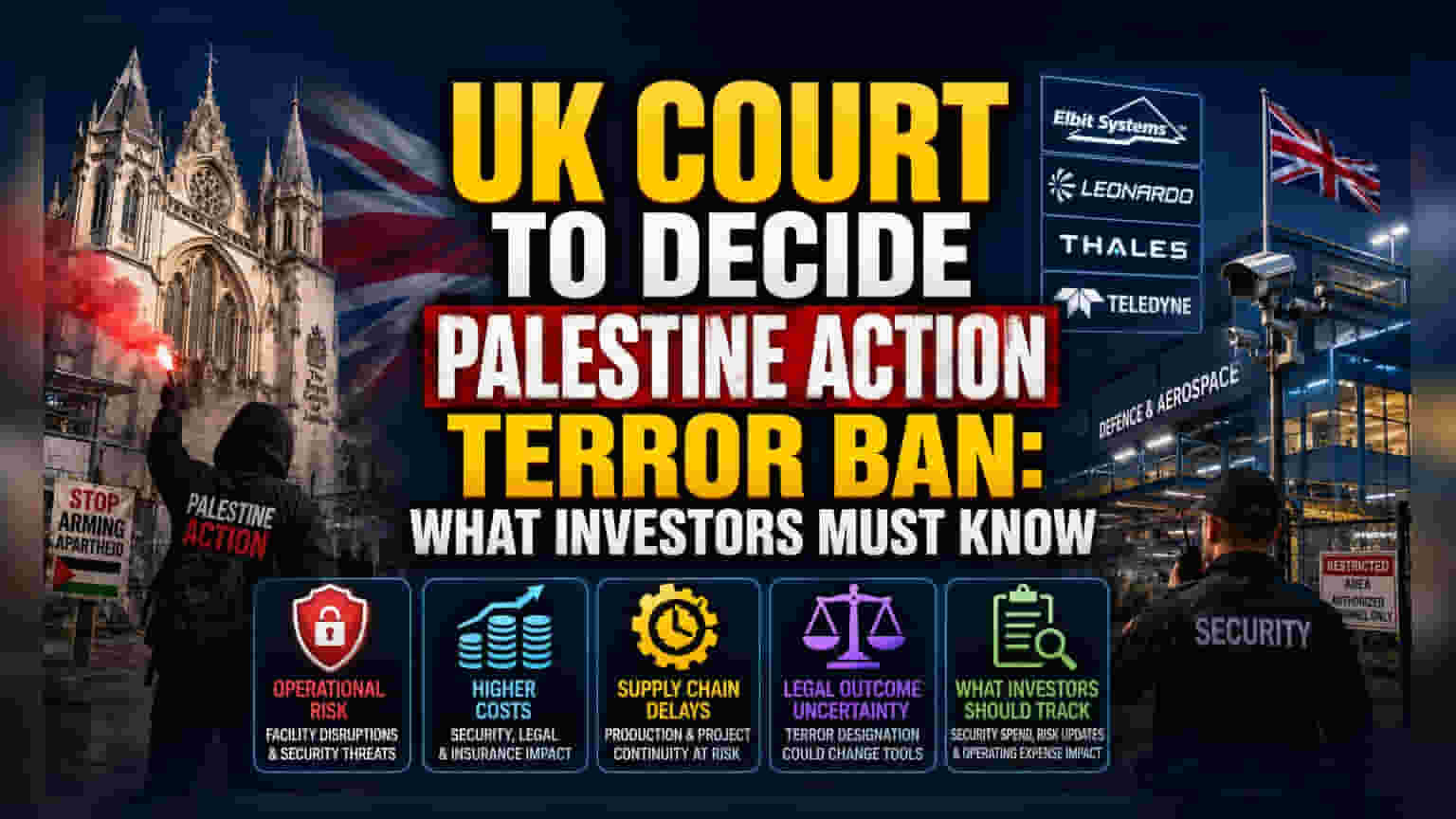


A UK Court of Appeal will rule this week on whether the activist group 'Palestine Action' should be legally designated as a terrorist organization. This case is important for investors in defense manufacturers like Elbit Systems, Leonardo, and Thales, which have been frequent targets of the group's protests. The final court decision could influence how these companies manage security risks, operational costs, and legal protections in the face of facility disruptions and property damage.
What Happened
The UK Court of Appeal is scheduled to deliver a judgment regarding the government's decision to proscribe the activist group known as Palestine Action as a terrorist organization. This legal battle follows a government appeal against an earlier High Court ruling that had deemed the initial ban on the group unlawful. While the legal proceedings continue, the proscription remains in effect, and the court's upcoming decision will determine whether this classification stands permanently.
The Corporate Connection
Palestine Action has focused its protests on companies involved in the defense and aerospace sector, particularly those with supply chains linked to Israel. Several major international defense contractors, including Elbit Systems, Leonardo, Thales, and Teledyne, have been named as targets in the group's campaigns. These actions have included occupations of factory rooftops, break-ins, and other forms of protest that have led to significant legal and security interventions.
Why This Matters For Investors
For shareholders in companies within the defense and aerospace sector, this situation is primarily an operational risk issue. These companies have faced repeated challenges related to security at their UK facilities. Reports indicate that past incidents, such as facility occupations and break-ins, have resulted in property damage, requiring companies to invest more in security measures and legal fees.
If the court upholds the terrorist designation, it may provide companies with greater legal grounds to address these disruptive activities. Conversely, if the court rules in favor of the activists, it could create uncertainty regarding the legal tools available to corporations to protect their facilities from future disruptions. Investors should note that increased security spending often impacts operating costs, and persistent facility disruptions can lead to supply chain or production delays.
Operational Risk and Security Costs
Defense firms often operate with tight production schedules and high-security requirements. The disruption caused by protests can necessitate higher capital spending on site security, insurance, and defensive measures. Financial reports from companies often cite operational continuity as a priority, and any long-term, high-profile protest activity creates administrative and operational pressure. Furthermore, the sentencing of individuals involved in these protests has sparked debates about the balance between protest rights and criminal damage, adding a layer of complexity to how companies manage public relations and site security.
What Investors Should Track
Investors may want to monitor how companies in this sector update their risk assessments regarding site security and operational continuity in the UK. The key monitorable is not just the court's verdict, but how the companies adjust their security strategies and insurance coverage in response to the outcome. Continued focus on the impact of these protests on quarterly operating expenses and any potential project delays remains relevant for those tracking the operational efficiency of firms heavily exposed to UK manufacturing facilities.