

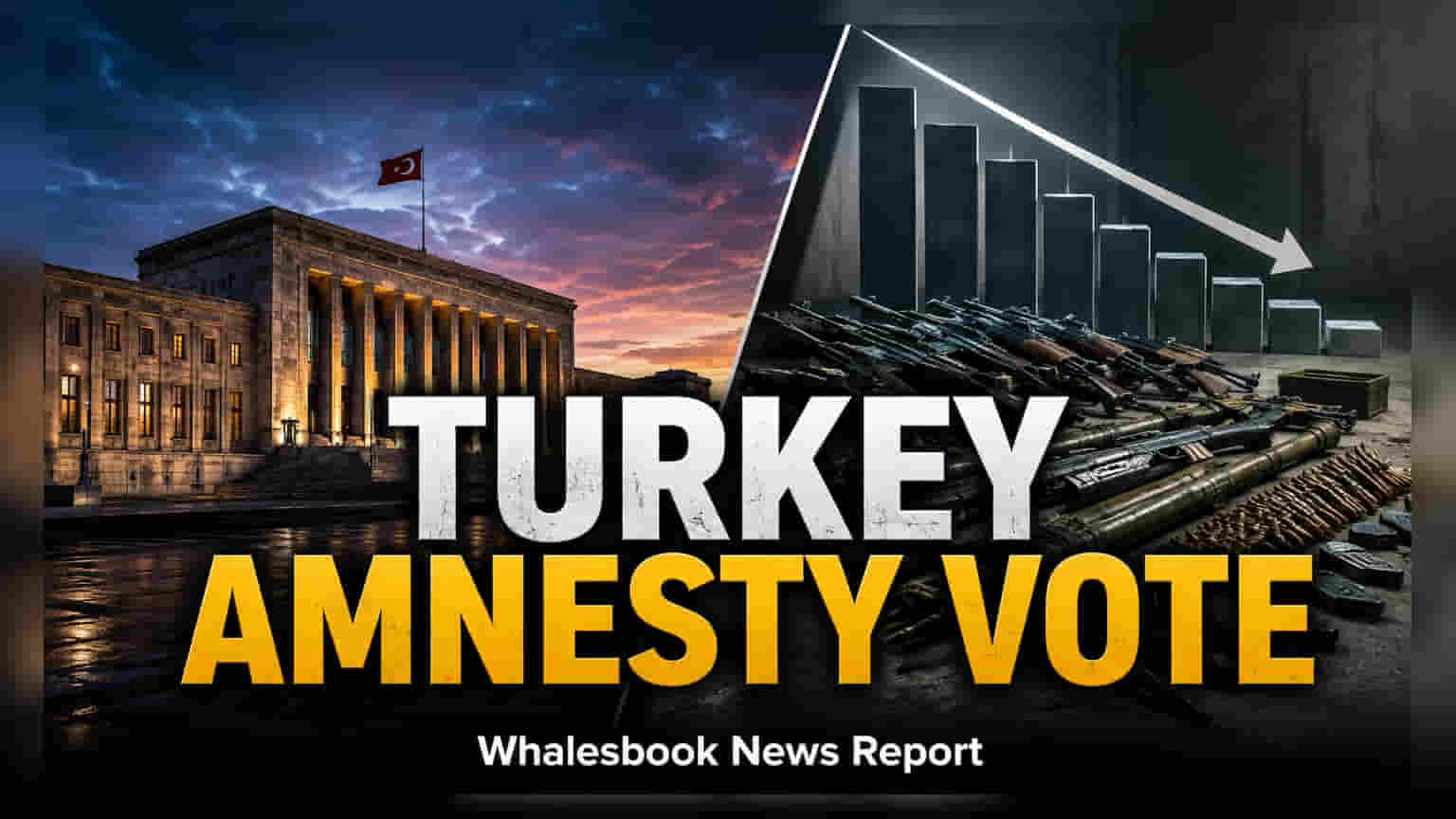
Turkey has initiated parliamentary discussions on a conditional amnesty bill aimed at facilitating the disarmament of the Kurdistan Workers' Party (PKK). While the move targets regional stability, its success depends on verified disbandment and the resolution of long-standing political tensions. Investors are monitoring the situation as a signal for potential reduction in geopolitical risks.
The Turkish parliament has begun formal deliberations on a 12-article draft law, officially titled "Strengthening National Solidarity and Social Integration." This legislative move represents a significant step in the government's efforts to address the decades-long armed conflict involving the Kurdistan Workers' Party (PKK).
The proposed bill offers a conditional amnesty to thousands of PKK members, allowing for the suspension of prison sentences and ongoing legal investigations for up to 10 years. However, these protections are strictly linked to the PKK's total disarmament and disbandment. The implementation of the law is contingent upon the National Security Council verifying that the group has surrendered all its weaponry and ceased its armed activities.
Scope and Legal Exclusions
The legislation is limited in its application. It specifically excludes individuals convicted of intentional killings and those serving life sentences for offenses committed before June 1, 2005. This means that the status of imprisoned PKK leader Abdullah Öcalan remains unaddressed by this bill, which has become a point of contention. The proposal does not outline any plans for his release, focusing instead on the rehabilitation of rank-and-file militants.
Political and Regional Context
The bill has gained significant political momentum, with 360 out of 592 parliamentary deputies signing it. The support spans across the ruling AKP, the MHP, and the pro-Kurdish DEM party, indicating a rare moment of legislative consensus. For Turkey, which continues to navigate complex macroeconomic challenges, including high inflation rates that reached 31.75% in July 2026, the pursuit of domestic stability is vital. Reduced internal conflict could theoretically allow for a reallocation of national resources and improved regional trade conditions, though the economic benefits depend heavily on the long-term success of the peace process.
Risks and Market Outlook
Despite the legislative support, the initiative faces substantial hurdles. PKK leadership has publicly criticized the bill, labeling it as potentially flawed and ineffective if it fails to address the Kurdish issue comprehensively or secure the release of Abdullah Öcalan. There is a tangible risk that the law could become ineffective if the militant group rejects the terms. Additionally, the main opposition party has raised concerns regarding the lack of transparency in the drafting process.
Investors and observers are now waiting for the National Security Council's formal assessment and the final voting outcome in parliament. The success of this initiative will be measured by whether the PKK actually follows through with disarmament, as promised, or if the process remains stalled by the current disagreement over key leadership figures.