

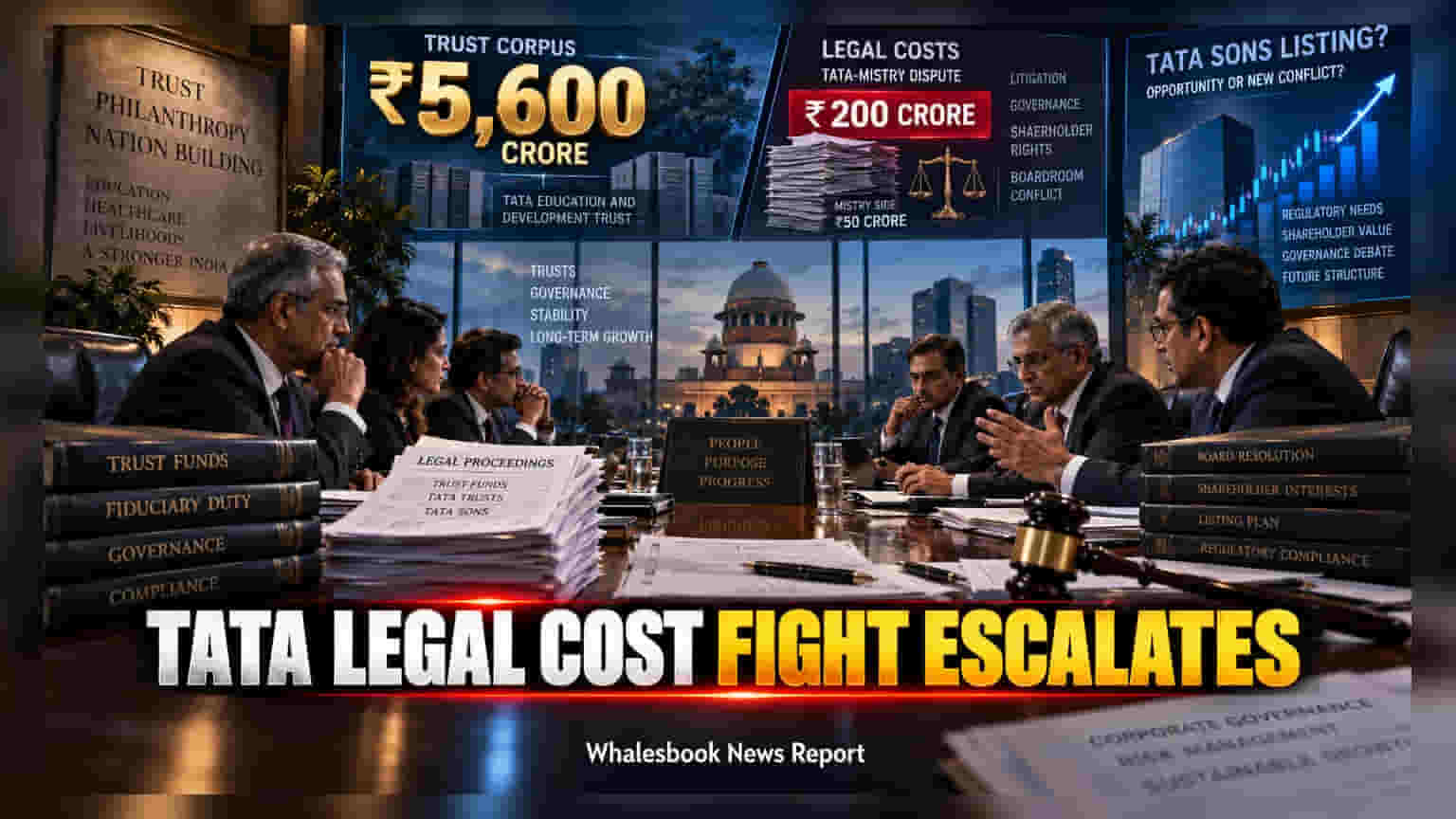
Mehli Mistry has contested the use of Tata Education and Development Trust (TEDT) funds for litigation involving Tata Trusts and Tata Sons. The objection highlights internal friction over Chairman N Chandrasekaran’s term and the ongoing debate regarding the potential listing of Tata Sons. This dispute revives concerns about group governance and the financial impact of legal battles.
Mehli Mistry, a trustee of the Tata Education and Development Trust (TEDT), has formally objected to the use of trust funds for legal proceedings related to Tata Trusts and Tata Sons. In a communication to the board, including Tata Trusts chairman Noel Tata, Mistry stated that TEDT should not bear the financial burden of these disputes. His core argument is that TEDT does not hold any equity in Tata Sons, and therefore, it should not be responsible for funding litigation involving the group holding company.
This objection adds a new layer to the ongoing internal conflict within the Tata Group. The tension has escalated following the Tata Sons board’s approval of a fresh five-year term for chairman N Chandrasekaran. Although trustees, including Mistry and Noel Tata, had previously signed a resolution supporting this extension, Tata Trusts is now indicating it may legally challenge that decision.
Another significant point of friction is the debate over a possible public listing of Tata Sons. The directors at Tata Sons have favoured an initial public offering, partly to ensure compliance with Reserve Bank of India requirements for large non-banking financial companies. However, Noel Tata has opposed this move, creating a clear divide between the holding company’s management and the trust leadership.
Financial and governance experts are noting the potential costs associated with such disagreements. The group has a history of protracted legal battles, most notably during the dispute involving former chairman Cyrus Mistry. Historical estimates from that period suggest that Tata Sons and the trusts together incurred legal expenses of approximately ₹200 crore, while the Mistry side spent around ₹50 crore. Mistry has requested that his objection to using TEDT funds for the current legal matters be formally recorded at the upcoming board meeting, which may force a clearer decision on how legal costs are allocated across the network of trusts.
For investors and market observers, the primary interest lies in how these governance tensions affect the stability of the conglomerate. While Tata Group companies, such as TCS and Tata Motors, operate with independent professional management, disputes at the level of the promoter trusts can create uncertainty regarding long-term strategy and decision-making. The most significant event to monitor remains the potential listing of Tata Sons, which is a major corporate action. If the disagreement over this listing and leadership terms continues, it may lead to regulatory or operational complications. The market will look for updates on board resolutions and any signs of consensus among the trustees regarding the company’s future structure.