 Whalesbook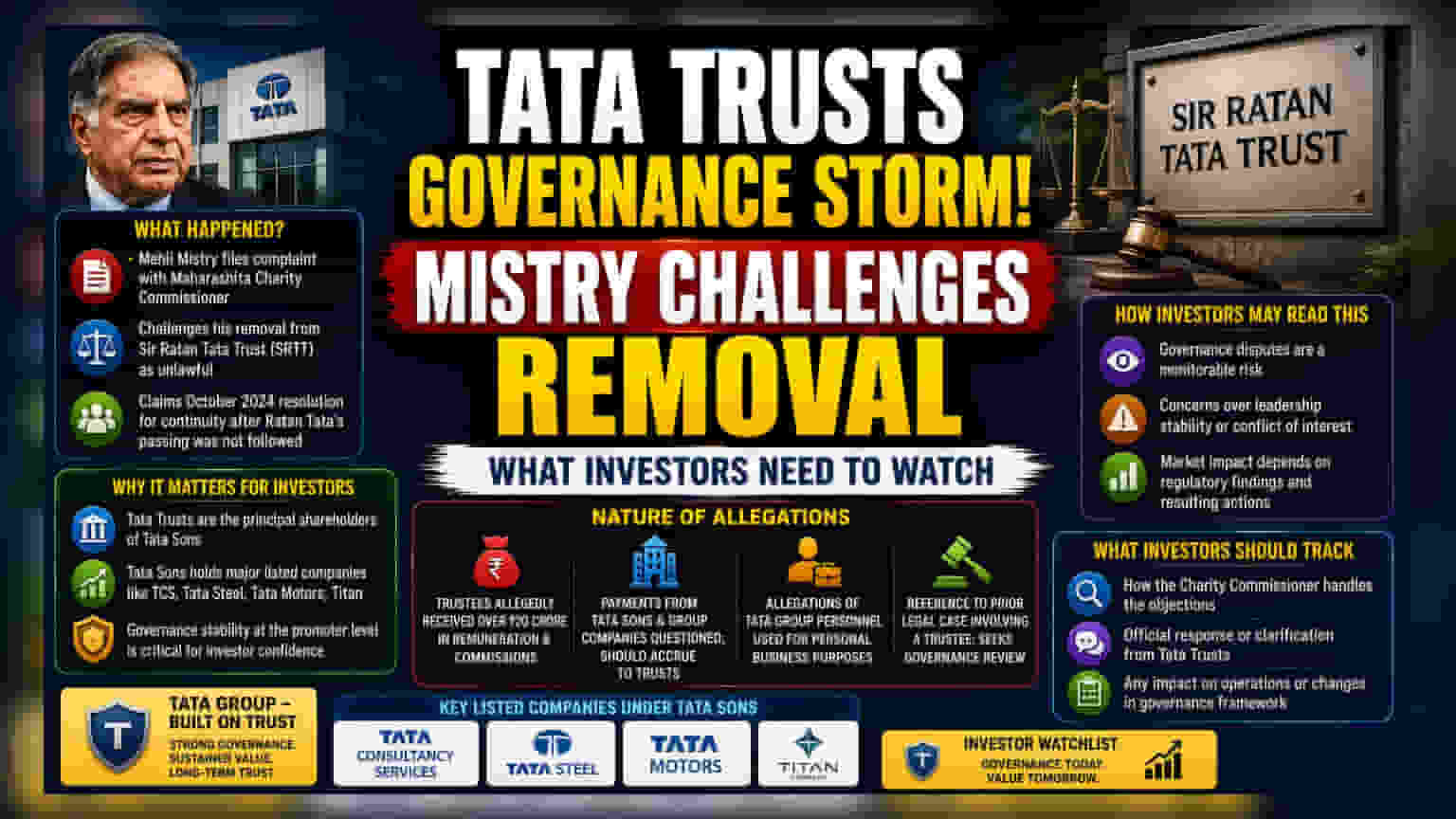


What Happened
Mehli Mistry, a former trustee of Tata Trusts, has lodged a formal complaint with the Maharashtra Charity Commissioner regarding his removal from the Sir Ratan Tata Trust (SRTT). Mistry argues that his ouster from the trust was unlawful and has challenged the change report filed by the organisation. He contends that a resolution passed in October 2024 to ensure continuity following the passing of Ratan Tata was not followed, and that his tenure was terminated after he raised concerns about internal governance and operational matters.
Why This Matters For Investors
For stock market investors, the importance of this dispute lies in the ownership structure of the Tata Group. Tata Trusts are the principal shareholders of Tata Sons, which is the holding company for the major listed entities of the Tata Group, such as Tata Consultancy Services, Tata Steel, Tata Motors, and Titan Company. Because the Trusts represent the promoter group, any internal discord or allegations regarding governance at the Trust level are closely watched by market participants. Stability and sound governance at the promoter level are generally considered essential for maintaining trust in the management and strategic direction of the underlying listed companies.
The Nature of Allegations
In his filing, Mistry has raised several specific points that he believes require regulatory investigation. One primary concern involves the remuneration and commissions allegedly received by other trustees. Mistry claims that some trustees received substantial payments, exceeding ₹20 crore, from Tata Sons and group companies for serving as nominee directors. He argues that these earnings should rightfully accrue to the Trusts rather than being retained by individuals. Furthermore, the complaint alleges that Tata group personnel were used for personal business purposes by another trustee. The filing also references a prior legal matter involving a trustee, which Mistry suggests should be examined from a governance perspective.
How Investors May Read This
Investors typically view governance-related disputes as a monitorable risk. When allegations of poor internal administration or conflict of interest surface within a parent entity, the primary concern is whether it could lead to management instability or distract leadership from business operations. However, it is important to note that these are allegations made by a former trustee. The market impact often depends on whether such concerns are substantiated by regulators or if they lead to changes in leadership or governance policies. Investors generally look for clarity and resolution in such high-profile disputes to gauge the long-term impact on the promoter group's stability.
What Investors Should Track
The next critical steps will be how the Maharashtra Charity Commissioner handles the objections and whether the Tata Trusts issue any official response or clarification regarding these claims. The outcome of this inquiry will be the main update to watch. Investors and analysts will also keep an eye on whether these allegations affect the day-to-day operations of the group or lead to any broader changes in the board or governance framework of the Trusts.