

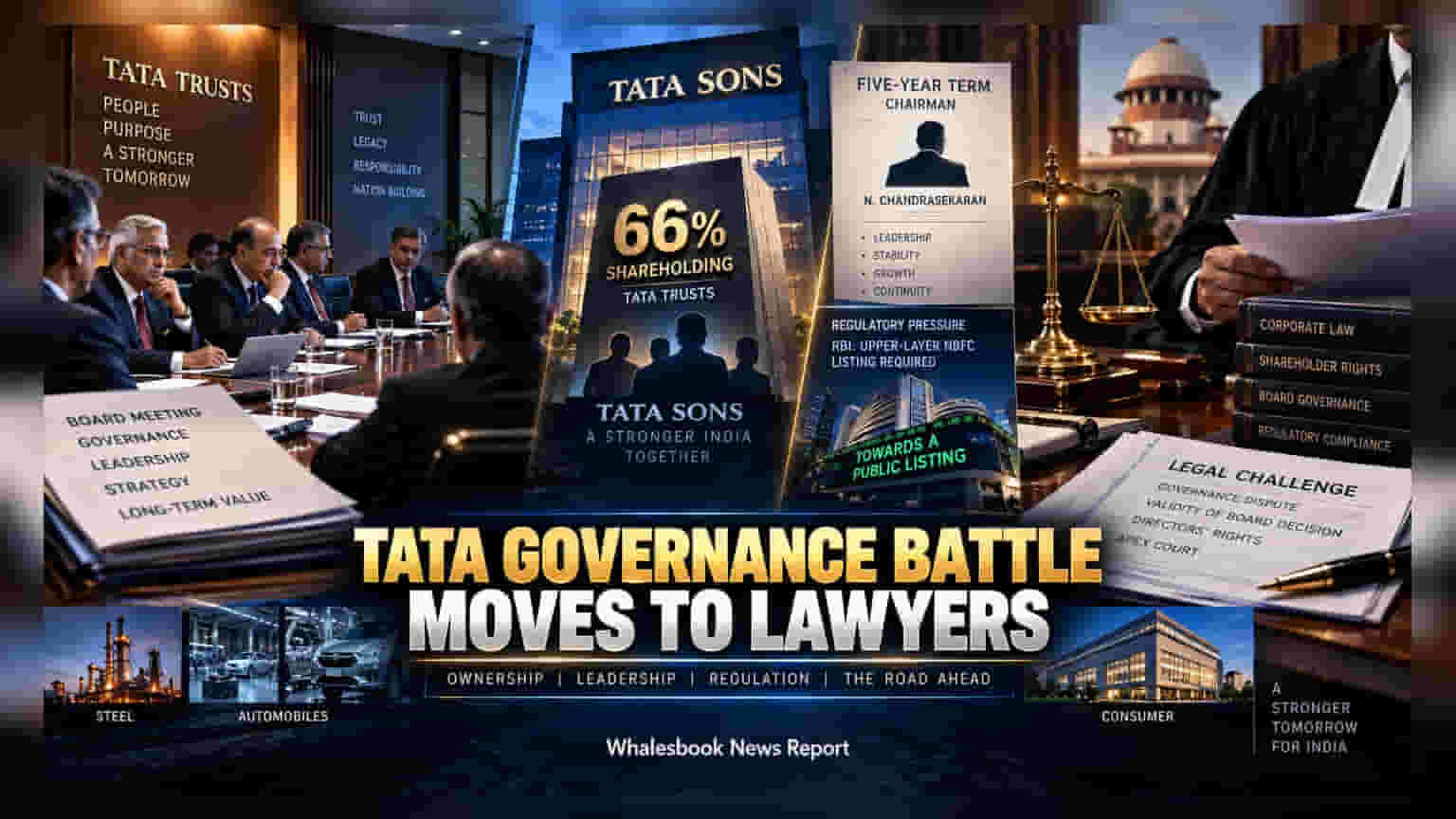
Tata Trusts has hired senior advocate Abhishek Manu Singhvi to challenge governance decisions at Tata Sons, including the reappointment of Chairman N. Chandrasekaran. The disagreement also involves strategic concerns regarding a potential public listing mandated by the Reserve Bank of India. Investors should monitor legal filings and board developments that may influence the group's long-term decision-making.
Tata Trusts, the majority shareholder in Tata Sons, has engaged senior Supreme Court advocate Abhishek Manu Singhvi to address ongoing governance disagreements at the group’s holding company. This move marks a shift from internal discussions to a more formal approach regarding the leadership and structural direction of the conglomerate.
Leadership and Voting Dispute
The friction centres on the board of Tata Sons, which approved a new five-year term for Executive Chairman N. Chandrasekaran on September 17. Tata Trusts, which holds approximately 66% of the equity in Tata Sons, has challenged the validity of this decision. The disagreement involves the interpretation of governance protocols and the rights of directors nominated by the Trusts to participate in or approve key leadership appointments. While the Trusts contest the vote, Tata Sons’ board decision remains the operative corporate action pending any legal resolution.
Regulatory Pressure and Listing Strategy
The governance conflict is complicated by external regulatory requirements. Tata Sons was classified by the Reserve Bank of India as an upper-layer non-banking financial company. The central bank has rejected the company’s request to surrender this registration, which effectively mandates that the company must pursue a public listing to comply with regulations.
While management is evaluating the steps needed to meet these regulatory requirements, the leadership of Tata Trusts has expressed reservations about treating a public listing as the only viable path forward. This difference of opinion regarding the group's capital structure and future ownership framework adds significant complexity to the governance struggle between the holding company and its largest shareholder.
Implications for Investors
For investors in the various listed Tata group companies, the current dispute is contained at the holding company level. It does not directly alter the day-to-day operations, cash flows, or profitability of the group's individual operating entities in sectors like steel, technology, or automobiles. However, governance uncertainty at the apex of a major conglomerate can sometimes lead to delays in strategic decision-making or capital allocation.
The most important monitorables for the market include any formal court proceedings regarding the leadership vote, the official response from Tata Sons to the RBI's regulatory directives, and whether the two sides can reach a resolution. Clarity on these fronts will be essential to determine if the internal disagreements will have any lasting impact on the stability and direction of the group.