

A voting restriction on the Sir Ratan Tata Trust (SRTT) is altering the shareholder arithmetic at Tata Sons, potentially influencing future board resolutions. The shift affects how ordinary resolutions are passed, with implications for the leadership continuity of the group's executive chairman.
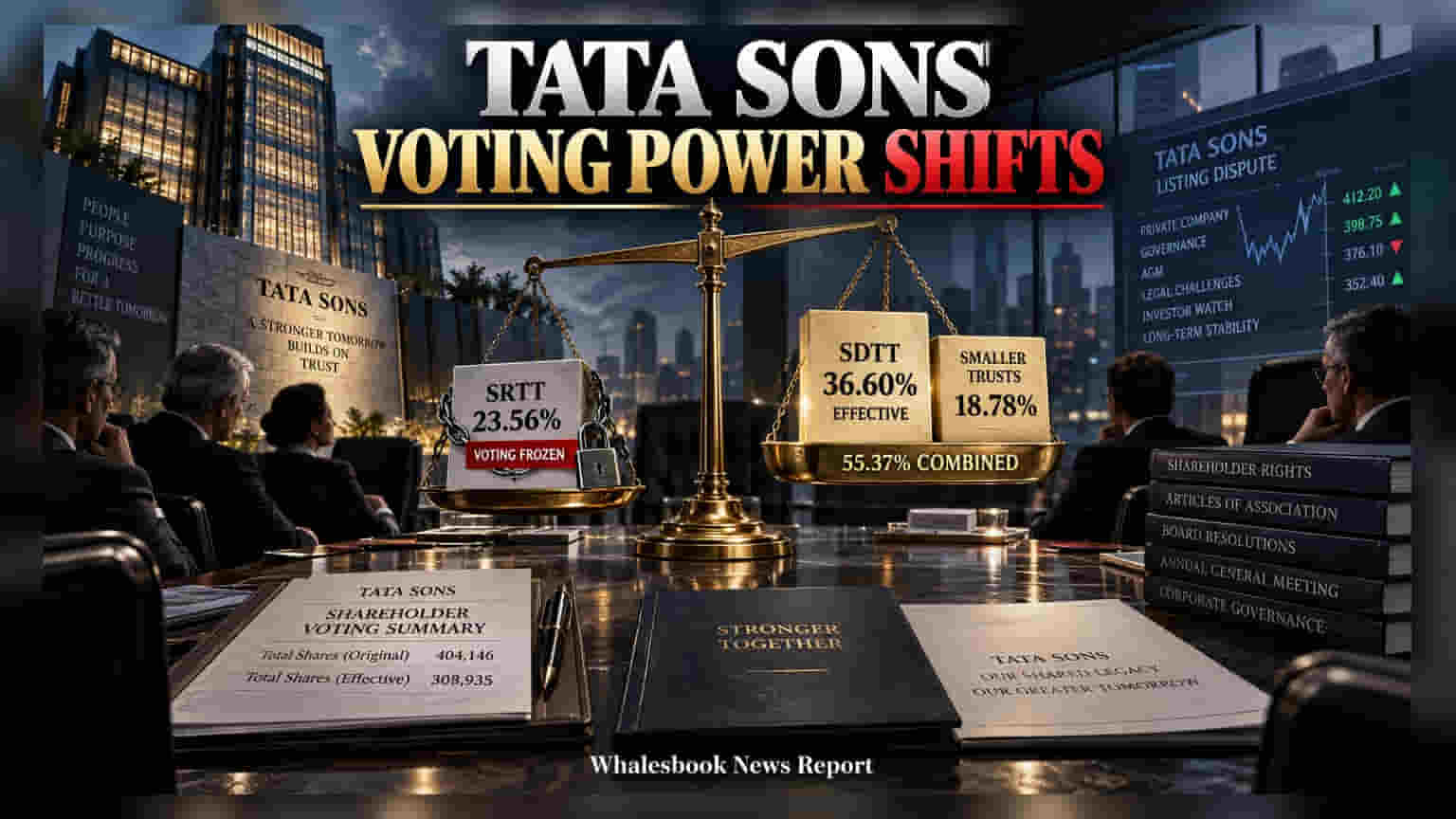
Tata Sons is navigating a shift in its internal voting structure following a voting restriction on the Sir Ratan Tata Trust (SRTT). With SRTT unable to vote its 23.56% equity stake, the shareholder arithmetic at the group’s unlisted holding company has changed, creating new dynamics for decision-making and board resolutions.
The exclusion of SRTT’s 95,211 shares effectively reduces the voting pool at Tata Sons from 404,146 shares to 308,935 shares. Under this revised calculation, the Sir Dorabji Tata Trust (SDTT) would control 36.60% of the effective votes. If the smaller Tata trusts join forces with SDTT, the combined bloc could control 55.37% of the voting power, which is sufficient to pass ordinary resolutions that require a simple majority.
This arithmetic is particularly relevant to the ongoing governance disputes within the group. The reappointment of N Chandrasekaran as a director and the extension of his chairmanship have been points of contention. The August 18 annual general meeting (AGM) was previously adjourned after the company could not resolve procedural hurdles regarding the SRTT voting restriction, which had prevented the two principal trusts from appointing a joint representative as required by the Articles of Association.
The voting power of smaller trusts—specifically the JRD Tata Trust, Tata Education Trust, and Tata Social Welfare Trust—has become increasingly significant. These entities hold a combined 46,350 shares, giving them enough influence to affect the outcome of shareholder votes. Meanwhile, the Shapoorji Pallonji Group would represent 24.07% of the effective voting base. Additionally, nine listed Tata group companies, such as Tata Motors, Tata Steel, and Tata Power, would see their combined effective weight increase to 16.84% due to the reduced voting pool.
While Tata Sons is a private holding company, its governance decisions are critical for the broader Tata group. The situation highlights the challenges of internal shareholder disputes at the promoter level. Investors may monitor future updates regarding the reconvened AGM and any legal or procedural resolutions to the voting restrictions, as these events define the stability of the group's leadership and its long-term strategic direction.