

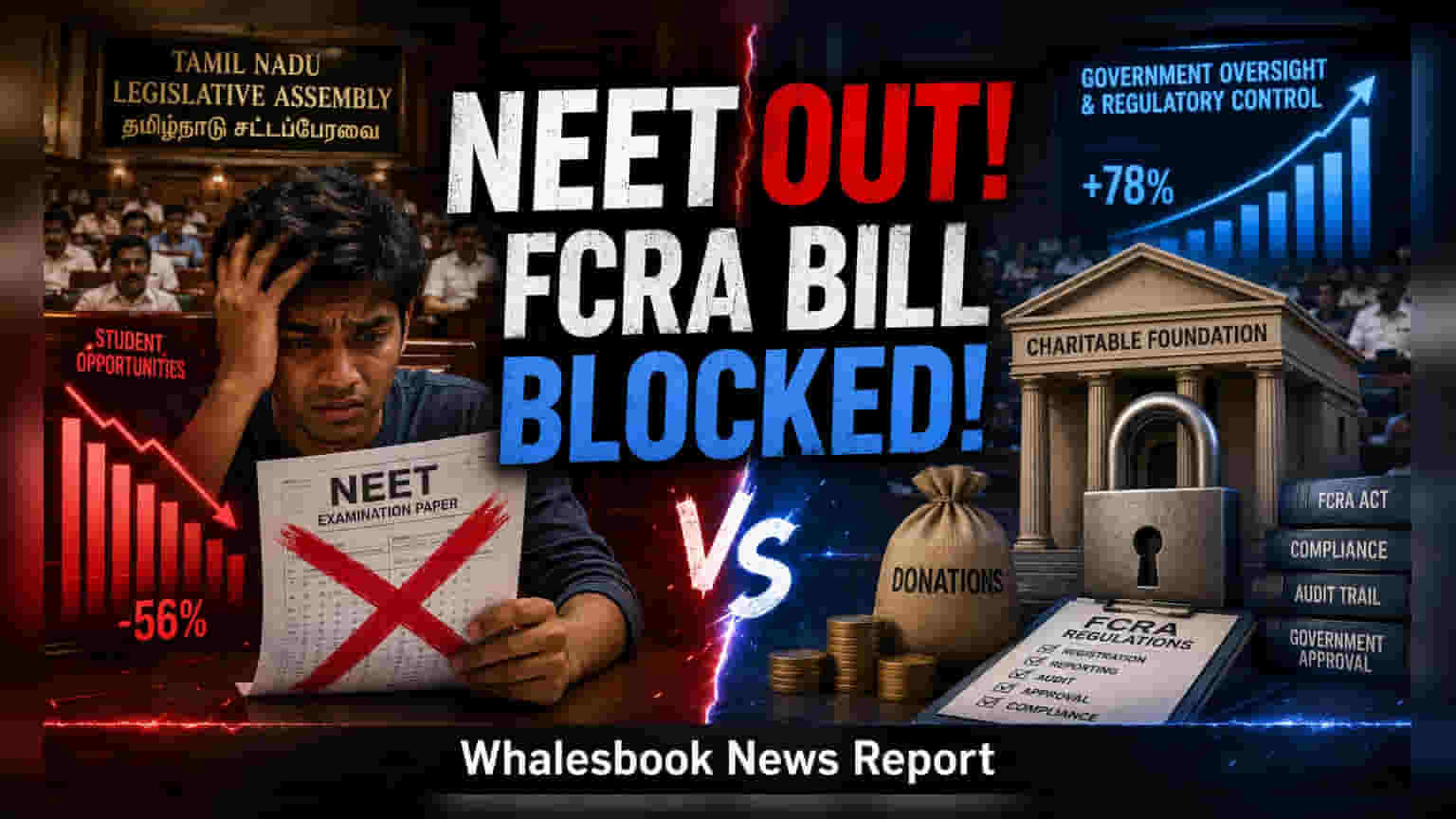
The Tamil Nadu Assembly has moved resolutions against the National Eligibility-cum-Entrance Test (NEET) and the Union government’s FCRA Amendment Bill, 2026. These legislative moves highlight ongoing policy friction between the state and the center. For market observers, the developments underscore potential regulatory uncertainty for educational institutions and broader impacts of state-level political dynamics on governance.
The Tamil Nadu Legislative Assembly convened on August 10, 2026, to move formal resolutions opposing the National Eligibility-cum-Entrance Test (NEET) and the Foreign Contribution (Regulation) Amendment Bill (FCRA), 2026. These motions are part of a broader legislative push by the state government to assert its position on central laws that impact local healthcare admission policies and the operation of charitable organizations.
The resolution regarding NEET seeks an exemption for the state from the uniform entrance exam for undergraduate medical admissions. The state government argues that the current exam structure disadvantages students from rural and socio-economically weaker backgrounds. The resolution also cites concerns over examination irregularities and paper leaks, arguing that these issues erode confidence in the centralized process and prioritize test-prep coaching over standard school curricula.
Simultaneously, the Assembly is opposing the FCRA Amendment Bill, 2026. The primary concern raised by the state government relates to provisions that could allow the Union government to designate an authority to manage or seize the assets of charitable organizations if their FCRA registration is cancelled or expires. Opponents of the bill argue that these measures could compromise the operational autonomy of minority-run educational and social welfare institutions.
While these legislative actions are state-level policies and do not directly result in corporate stock exchange filings or immediate market movements, they are relevant for stakeholders monitoring the regulatory environment. Consistent political friction between the state and the central government can occasionally influence the sentiment surrounding the implementation of national policies within the region. Investors and analysts often monitor such developments as they can lead to delays or legal challenges in policy execution.
Beyond these specific bills, the macroeconomic backdrop of the state remains a monitorable factor. Reports indicate that Tamil Nadu’s outstanding debt and liabilities have reached approximately ₹13.18 lakh crore. The state’s ability to manage its fiscal health while navigating complex interactions with central government policies is often a point of analysis for those evaluating the broader investment climate in the region.
The immediate impact of these resolutions will depend on how the Union government responds to the state’s demands. The situation remains a fluid policy matter, and stakeholders in the education and social welfare sectors may follow whether these resolutions lead to further legal or administrative negotiations between the state and the central authorities.