 Whalesbook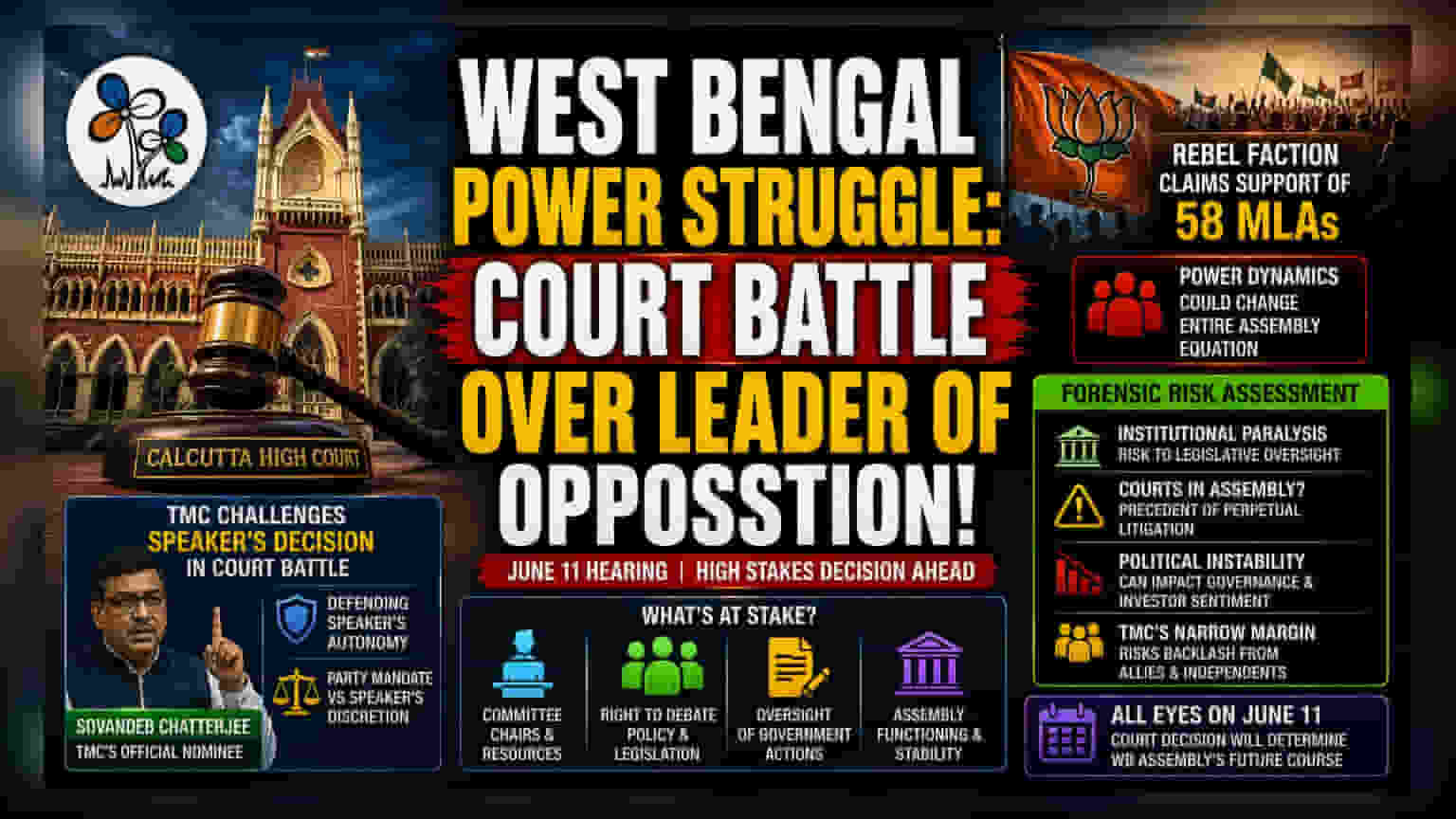


The Constitutional Dispute
The move to challenge the Speaker’s decision represents a direct assault on the procedural autonomy of the West Bengal legislative chair. By forcing judicial intervention into the selection of the Leader of Opposition, the Trinamool Congress is effectively arguing that internal party mandates supersede the Speaker's discretionary power to recognize cross-bench alliances. The reliance on Sovandeb Chatterjee as the party’s official nominee highlights a strategic attempt to marginalize the influence of the rebel faction, which currently claims the backing of 58 legislators.
Parliamentary Implications
The appointment of a Leader of Opposition is far from a symbolic gesture. It dictates the allocation of committee chairs, the right to initiate debates on critical policy shifts, and the distribution of administrative resources within the house. If the judiciary rules in favor of the TMC, the entire opposition structure established post-election would effectively collapse. Conversely, a victory for the Speaker's choice would solidify the rebel faction’s legitimacy, fundamentally altering the power dynamics between the incumbent government and those currently occupying the opposition benches.
The Forensic Risk Assessment
The broader political stability of West Bengal is currently compromised by this legal uncertainty. Institutional paralysis is a significant risk, as the assembly may find it impossible to conduct meaningful oversight if the opposition leadership remains contested. Market participants and regional stakeholders should note that such legal friction often precedes broader administrative instability. The precedent being set here—inviting the High Court to adjudicate internal legislative appointments—risks transforming the assembly into a venue for perpetual litigation rather than governance. Furthermore, the TMC's narrow seat count compared to the BJP’s dominant 207-seat majority leaves little room for such maneuvers to succeed without triggering a significant backlash from coalition partners or independent legislators who have aligned with the rebel bloc.
Future Outlook
All eyes are now on the June 11 hearing before Justice Krishna Rao. If the court refuses to intervene, the rebel faction will likely cement its hold on the opposition office, forcing the TMC into a defensive legislative posture. Should the court grant an injunction, however, the Speaker will be forced to reconsider the appointment, likely throwing the assembly into a period of deep procedural vacuum that could delay legislative progress for the remainder of the session.