

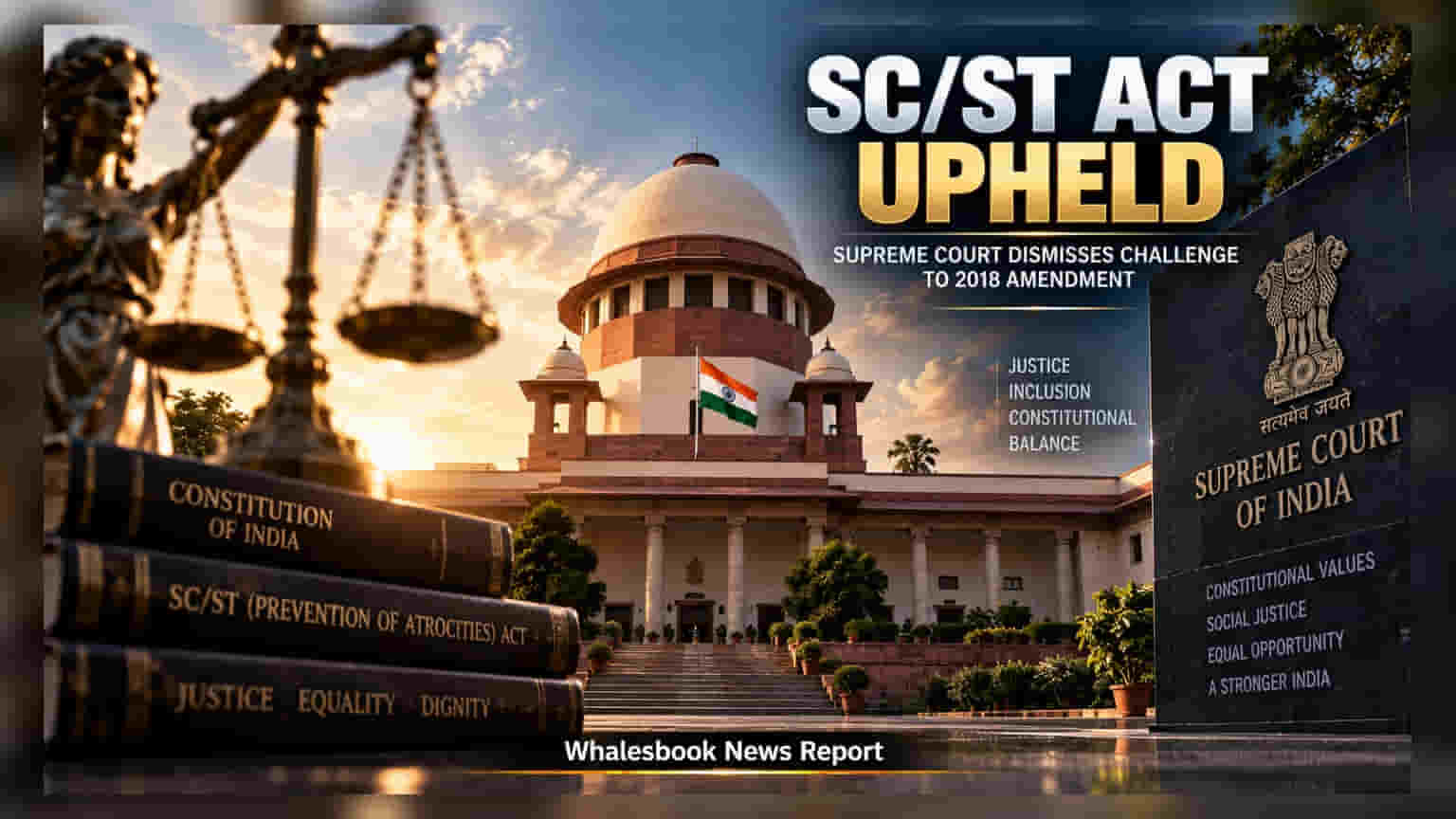
The Supreme Court has dismissed a challenge to the SC/ST Act, maintaining the 2018 amendment. This ruling provides legal certainty, as the court reaffirmed that existing judicial safeguards balance the protection of marginalized communities with checks against misuse.
The Supreme Court of India has concluded a constitutional challenge regarding the Scheduled Castes and Scheduled Tribes (Prevention of Atrocities) Act, 1989. A three-judge bench, led by Chief Justice Surya Kant along with Justice Joymala Bagchi and Justice V. Mohana, dismissed the petition that sought to strike down the 2018 amendment.
The legal challenge had argued that the restoration of Section 18A—which restricts the provision for anticipatory bail—infringed upon fundamental rights. The petitioner raised concerns that such regulations could potentially lead to misuse. However, the bench maintained that the legislative intent behind these amendments remains within the authority of Parliament, and the judiciary should not override legislative choices.
Crucially for the broader business and social landscape, the court highlighted that this dismissal does not leave individuals without legal recourse. The judgment pointed to existing legal principles and the application of the Bharatiya Nagarik Suraksha Sanhita, which require law enforcement to confirm that a valid case exists before making an arrest. The bench reiterated that courts maintain the power to review and quash cases on an individual basis if there is clear evidence of procedural abuse or a lack of legal grounds.
For investors and corporate entities, this ruling is significant as it provides clarity on the prevailing legal framework. A stable regulatory environment is important for business planning, as it reduces uncertainty regarding compliance and workforce management. By confirming that the current judicial safeguards are sufficient, the Supreme Court has preserved the existing regulatory status quo, preventing the potential volatility that would have arisen from a major change in social legislation.
Moving forward, the legal system will continue to apply these safeguards to ensure that the Act functions as intended—protecting marginalized communities while maintaining constitutional checks against arbitrary action. The consistency of this ruling serves to reinforce the current framework, with no immediate changes expected in how these provisions are implemented by the authorities.