

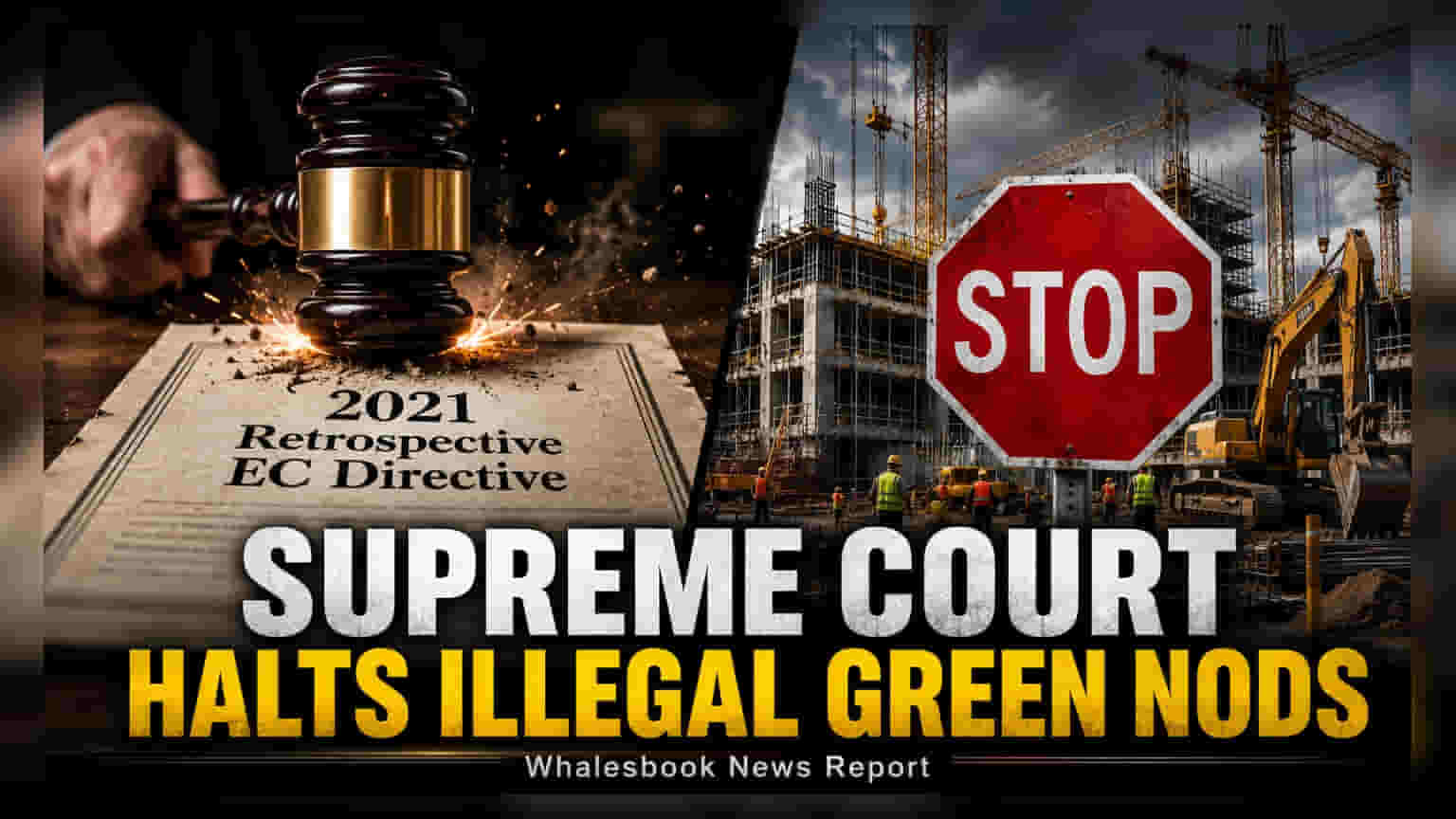
The Supreme Court has quashed a 2021 order that allowed projects to obtain environmental clearances after starting construction. This ruling restores the strict requirement for prior green nods, impacting how companies plan infrastructure and industrial projects. Existing clearances granted under the previous rule remain valid.
The Supreme Court of India has issued a significant verdict, setting aside a 2021 government memorandum that permitted companies to secure environmental clearances (ECs) after they had already begun construction. This decision marks a return to the mandatory 'prior approval' framework, which requires firms to secure all green permits before breaking ground on projects.
Impact on Project Planning and Compliance
For the Indian corporate sector, particularly in infrastructure, mining, and manufacturing, this ruling changes the regulatory environment. Companies often face delays in securing approvals, and the 2021 directive had provided a window for those who had initiated work prematurely to regularize their status. By invalidating this mechanism, the court has signaled that such bypasses are no longer acceptable as standard operating procedure. Businesses will now need to ensure more rigorous compliance timelines, as the risk of facing legal hurdles for starting work without prior approval has increased significantly.
Limited Amnesty Pathways
While the court emphasized that prior approval is the legal norm, it did acknowledge the need for a mechanism to address exceptional cases involving the larger public interest. However, the bench made it clear that such exceptions cannot be created through simple executive office memoranda. If the government wishes to provide amnesty for project violations in the future, it must do so through a formal statutory notification. This distinction is crucial, as a statutory notification undergoes more rigorous legislative scrutiny than an executive order, limiting the government's ability to offer blanket retrospective relief.
Scope and Legal Standing
The court clarified that this ruling applies prospectively, meaning projects that already secured environmental clearances under the 2021 memorandum will not be disturbed. Furthermore, the Supreme Court noted that it retains the power under Article 142 of the Constitution to grant post-facto clearances in specific, extraordinary cases if it deems such action necessary. For investors, this means the regulatory uncertainty regarding past projects has been largely settled, but the bar for new project approvals has been raised.
The most important monitorable for stakeholders will be how the Ministry of Environment, Forest and Climate Change updates its approval processes to align with this judgment. Investors should watch for new guidelines or statutory notifications that might be issued to replace the scrapped memorandum, as these will define the future boundaries for project execution and compliance.