

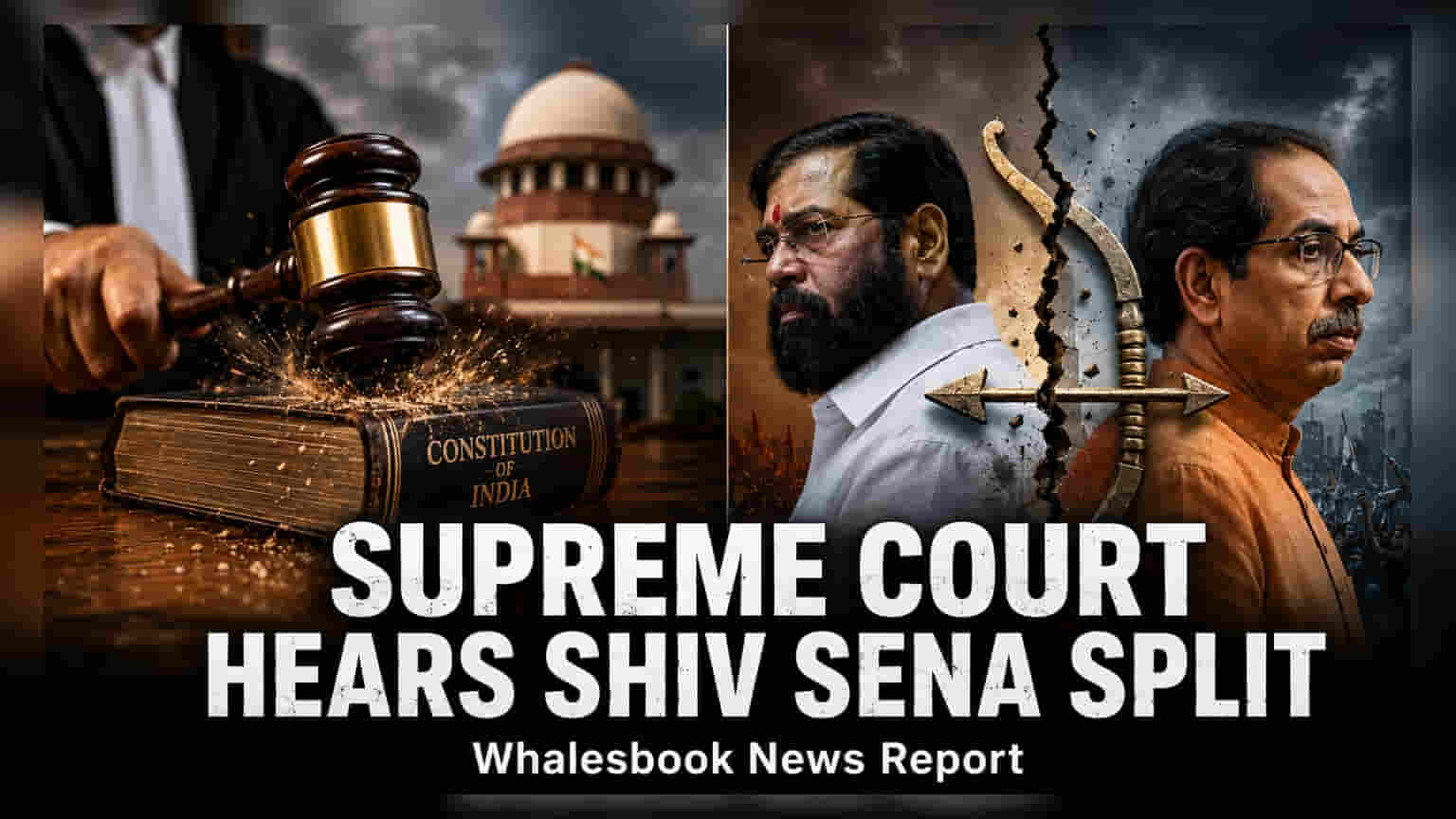
The Supreme Court has begun hearing petitions challenging the recognition of the Eknath Shinde-led Shiv Sena faction. The case, which examines the anti-defection law and the role of the Election Commission, has significant implications for political stability in Maharashtra. Further arguments are scheduled for August 4.
The Supreme Court of India on Thursday commenced a significant hearing regarding the legal dispute over the split within the Shiv Sena party. The bench, led by Chief Justice of India Surya Kant, is reviewing challenges filed by the Uddhav Balasaheb Thackeray (UBT) faction against the political events that led to the formation of the current Maharashtra government.
Challenges to Regulatory and Assembly Rulings
At the center of the legal battle is the 2023 decision by the Election Commission of India (ECI), which recognized the faction led by Eknath Shinde as the legitimate Shiv Sena and allocated the party's official 'bow and arrow' symbol to them. The petitioners are also challenging the Maharashtra Assembly Speaker’s earlier decision not to disqualify Eknath Shinde and several other MLAs.
Representing the UBT faction, senior advocate Kapil Sibal argued that the actions taken by the rebel group undermine the Tenth Schedule of the Constitution, commonly known as the anti-defection law. The legal team contended that the rebellion, which began with legislators moving to Guwahati, was an act by a subset of members rather than a formal decision by the political party itself. Sibal questioned whether a group of legislators can unilaterally claim the identity of the entire political party and its organizational structure.
Implications for Parliamentary Democracy
During the proceedings, the arguments focused on the distinction between a legislative party—the members elected to the assembly—and the political party as an organization. The core of the argument presented was that the Tenth Schedule is designed to prevent legislators from abandoning the platform on which they were elected by voters. Sibal characterized the situation as a major challenge to the principles of representative democracy, suggesting that allowing such shifts could create instability in the political system.
Next Steps in the Legal Process
This hearing follows a series of political developments in Maharashtra that have been under judicial scrutiny for some time. The court has scheduled the next session for further arguments on August 4. For observers and market participants, the outcome of this case is significant as it touches upon the stability of the current governing coalition in India's most industrialized state. The final judgment could set a precedent for how political parties and legislative groups are treated under the anti-defection law in future disputes.