 Whalesbook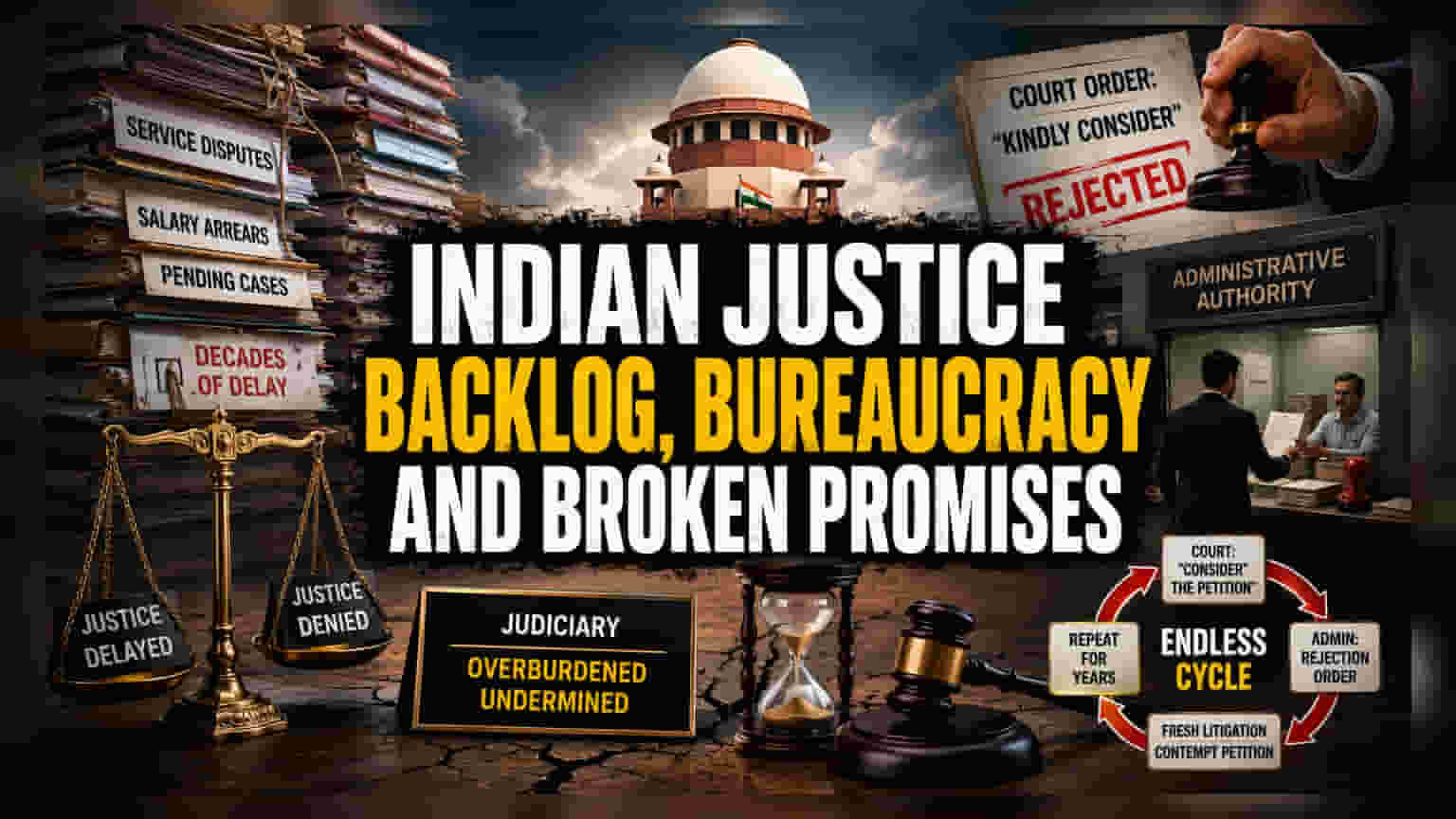


The Mechanical Disposal Crisis
The Indian legal system is grappling with an internal crisis where substantive adjudication is increasingly sidelined in favor of procedural efficiency. By directing administrative bodies to "consider" a petitioner's grievance, High Courts effectively dodge the responsibility of deciding cases on their merits. While this maneuver helps artificially deflate pending caseload numbers, it functions as a transfer of power from the judiciary to the executive, creating a bottleneck that yields little more than repetitive rejection letters from government departments.
Systematic Litigation Inflation
The reliance on these non-decisive orders creates a circular feedback loop that strains judicial resources. Once an administrative authority issues a mandatory rejection following a court directive, the aggrieved party is frequently forced to initiate a fresh round of litigation, often supplemented by contempt petitions. This cycle can span decades, as seen in cases involving prolonged service disputes and salary arrears. Rather than resolving conflict, this judicial pattern acts as a catalyst for redundant filings, which further clogs already overburdened court registries and prevents the judiciary from addressing more complex constitutional matters.
The Erosion of Statutory Boundaries
A particularly dangerous side effect of this trend is the exploitation of the law of limitation. Petitioners, aware of the court's willingness to entertain re-representations, often use the resulting administrative order as a springboard to restart the clock on stale claims. This circumvents the foundational principles of laches and delays. Higher judicial benches have repeatedly intervened to clarify that the cause of action remains anchored to the initial grievance rather than the subsequent administrative response, yet the practice persists due to a culture of administrative convenience masquerading as legal process.
Institutional Accountability and Risk
The shift toward passive adjudication masks a deeper risk: the dilution of the separation of powers. By abdicating the duty to weigh evidence and interpret statutes, the courts provide executive authorities with an opportunity to solidify discretionary control over policy, often shielding them from genuine judicial oversight. This misalignment creates significant institutional friction, where the judiciary risks losing public confidence by appearing unable or unwilling to issue firm rulings. Future judicial efficacy depends on curbing these mechanical habits; without a return to direct, final-judgment adjudication, the backlog will likely continue to swell, rendering the promise of timely justice increasingly unreachable.